News Citation : 2026 LN (HC) 9
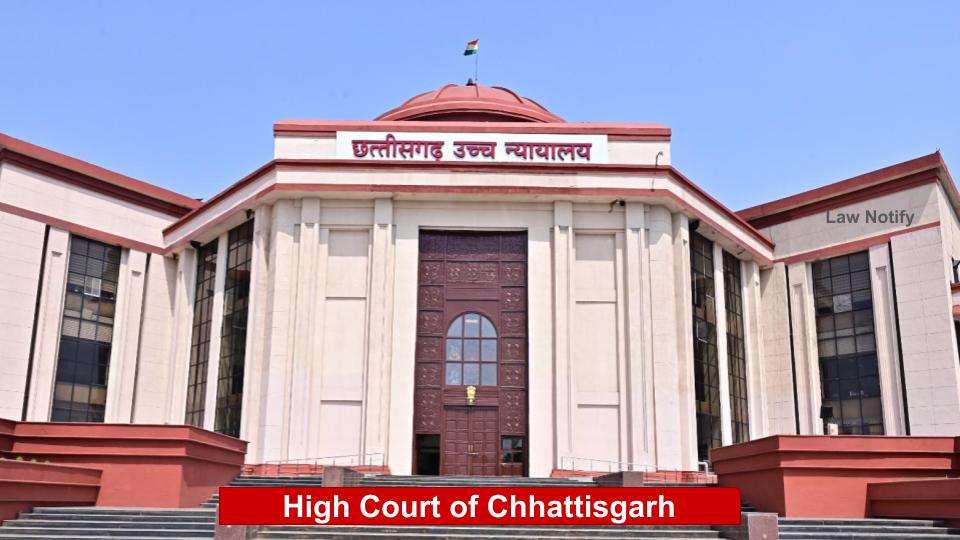
Bilaspur, 02.01.2026 : The High Court of Chhattisgarh at Bilaspur has refused to condone a delay of 113 days in a petition filed by the State seeking leave to appeal against the acquittal of three accused in an NDPS case, reiterating that government departments cannot claim special indulgence in matters of limitation.
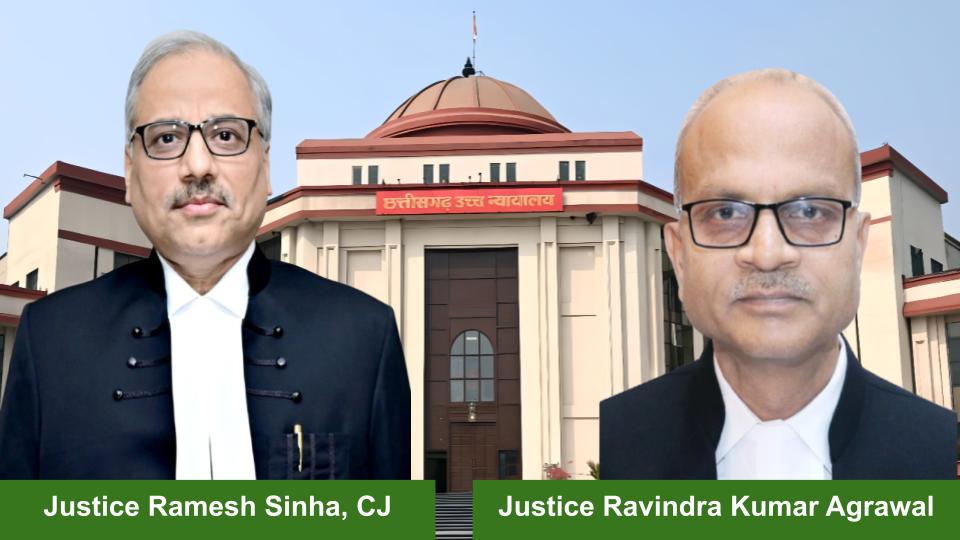
A Division Bench of Justice Ramesh Sinha and Justice Arvind Kumar Verma dismissed the Criminal Miscellaneous Petition filed by the State of Chhattisgarh, holding that no “sufficient cause” was shown to justify the delay. The order was passed on January 2, 2026, in CRMP No. 3826 of 2025 9.
The case arose from an order dated May 14, 2025, passed by the Special Judge under the NDPS Act at Jashpur, which acquitted the accused of charges under Section 20(b)(ii)(b) of the Narcotic Drugs and Psychotropic Substances Act. The State sought leave to appeal under Section 419(3) of the Bharatiya Nagarik Suraksha Sanhita, 2023, but approached the High Court well beyond the prescribed limitation period.
During the hearing, the State attributed the delay to procedural formalities, internal correspondence between departments, and the time taken to appoint an officer-in-charge after the Law and Legislative Affairs Department approved the proposal to challenge the acquittal. The government relied on earlier Supreme Court judgments that allow a liberal approach in condoning delays where bona fide reasons exist.
The High Court, however, was not persuaded. Referring to a consistent line of Supreme Court decisions, including Postmaster General v. Living Media India Ltd. and the recent ruling in State of Madhya Pradesh v. Ramkumar Choudhary, the Bench underscored that limitation laws apply equally to the State and private litigants. The Court observed that routine explanations based on bureaucratic processes, file movement, or administrative delays cannot be accepted without specific and convincing reasons.
The judges emphasized that condonation of delay is an exception, not a rule, and cannot be treated as an anticipated privilege for government authorities. They noted that the State failed to explain what prevented it from filing the appeal within the limitation period itself, as opposed to narrating events that occurred after the delay had already set in.
Finding the explanation vague and lacking in bona fides, the Bench declined to exercise its discretionary powers and rejected the petition at the threshold. As a result, the State’s attempt to challenge the acquittal of the accused stands closed on the ground of delay and laches.
The ruling once again signals judicial impatience with casual approaches to limitation by public authorities and reinforces the principle that diligence is a legal obligation, not a matter of convenience, even for the State.
Case Reference : CRMP No. 3826 of 2025, State of Chhattisgarh vs Ajay Rajwade and Others
Counsels : For State/Applicant : Mr. S.S. Baghel, Govt. Advocate.