News Citation : 2026 LN (HC) 2
Bilaspur, 02.01.2026 : The High Court of Chhattisgarh at Bilaspur has dismissed a writ petition filed by a senior employee of the Chhattisgarh State Power Generation Company Limited, upholding the recovery of excess salary paid to him after he was wrongly granted a second higher pay scale in 2008 despite not having completed mandatory accounts training. The ruling clarifies that employees cannot retain financial benefits obtained without fulfilling essential eligibility conditions and that recovery is legally permissible when the employee is not on the verge of retirement.
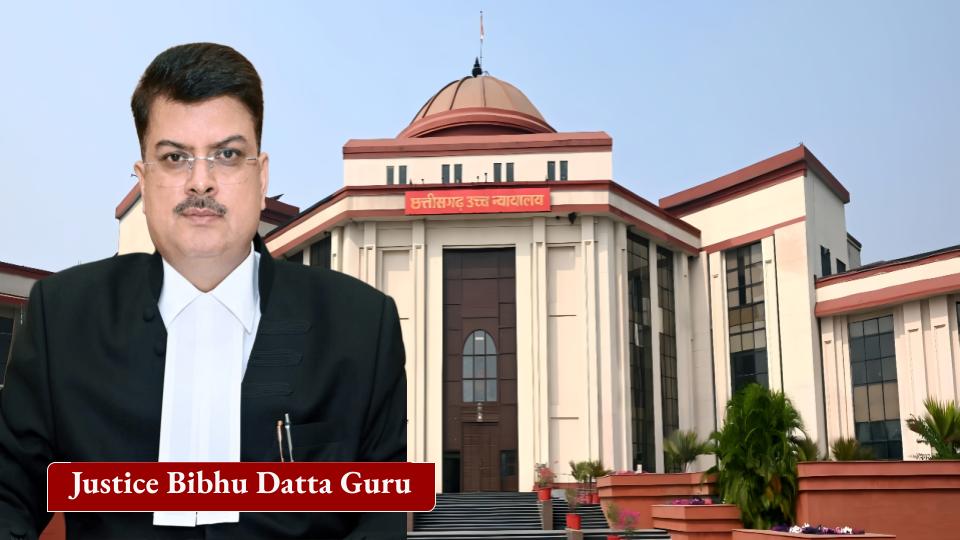
The case was decided by Justice Narendra Kumar Vyas in WPS No. 5136 of 2024, with the judgment delivered on January 2, 2026. The petitioner, T.P. Gupta, had approached the court under Article 226 of the Constitution challenging an order dated August 13, 2024, by which the power company not only withdrew the second higher pay scale granted to him with retrospective effect from 2008 but also ordered recovery of the excess amount paid over the years.
According to the record, the petitioner joined service as a peon in 1985 and was promoted to Office Assistant Grade III in 1990. After not receiving timely promotions, he was granted the first higher pay scale in 1999 and a second higher pay scale in 2008. However, at the time of grant of the second benefit, he had not completed the compulsory three-month accounts training, a requirement clearly laid down in various circulars governing promotions and financial upgradations.
The petitioner argued that the relevant circulars did not make accounts training mandatory for the grant of a higher pay scale and that he was eventually allowed three attempts to clear the training, which he successfully completed in August 2023. He also contended that initiating recovery after such a long delay was arbitrary and violated principles of natural justice. Relying on the Supreme Court’s ruling in State of Punjab vs. Rafiq Masih, he claimed that recovery from employees close to retirement is impermissible.
The respondents, however, pointed out that circulars dating back to 1989, and reiterated in subsequent policies, made accounts training an essential qualification not only for promotion but also for the grant of higher pay scales. They submitted that the petitioner was fully aware of his ineligibility in 2008 and had secured the benefit despite not having passed the required examination. An internal committee was constituted in 2024, a notice was issued, and only thereafter was the recovery order passed, ensuring compliance with natural justice.
After examining the circulars and the undisputed facts, the Court held that the petitioner was not entitled to the second higher pay scale in 2008 as he lacked the mandatory qualification at that time. The Court observed that the fact of non-completion of training was within the exclusive knowledge of the petitioner and that the benefit had been obtained by concealment of material facts. It reiterated the settled principle that a person who does not approach the court with clean hands cannot seek equitable relief.
On the issue of recovery, the Court relied on the Supreme Court’s decisions in Rafiq Masih and Union of India vs. N.M. Raut to hold that recovery is barred only in cases where the employee has retired or is due to retire within one year. Since the petitioner was far from retirement, with the age of superannuation being 62 years, the recovery was found to be legally permissible.
While dismissing the writ petition, the Court directed that the recovery should be effected in reasonable monthly instalments, proportionate to the petitioner’s salary, so as to avoid undue hardship. The interim protection granted earlier was also vacated. The judgment reinforces administrative accountability and underscores that financial upgradations cannot be sustained in the absence of prescribed qualifications.
Case Reference : WPS No. 5136 of 2024, T.P. Gupta vs Chhattisgarh State Power Generation Company Limited and Others
Counsels : For Petitioner(s) : Mr. Syed Mohammad Sohail Afzal, Advocate For Respondent(s) : Mr. Mayank Chandrakar, Advocate.