News Citation : 2026 LN (HC) 80 | 2026:CGHC:5631
January 02, 2026 : The High Court of Chhattisgarh has ruled that a complaint under Section 138 of the Negotiable Instruments Act can be validly filed through a power of attorney holder, provided the complaint and supporting affidavit clearly state that the attorney holder has knowledge of the underlying transaction.
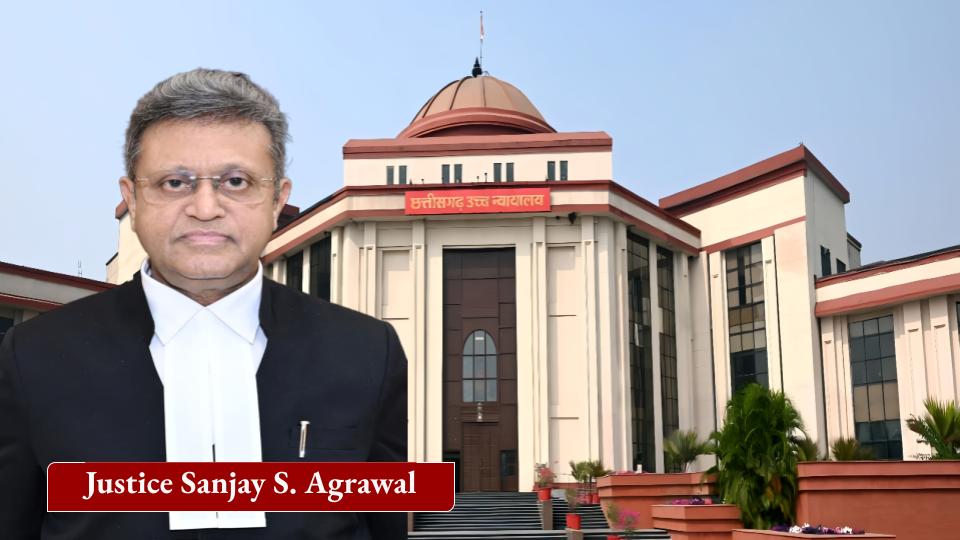
Justice Narendra Kumar Vyas delivered the judgment while allowing an acquittal appeal filed by Monalisa Agrawal, proprietor of Mahalaxmi Tractors, and restoring the conviction of the accused in a cheque dishonour case arising from a tractor sale transaction.
The case stemmed from a long-standing commercial dispute dating back to 2008, when the accused purchased a tractor and accessories on credit from the complainant. After multiple payment arrangements failed and the tractor was eventually returned, a registered agreement was executed in July 2011 acknowledging the accused’s liability. Pursuant to that agreement, a cheque for ₹7.75 lakh was issued in favour of the complainant but was dishonoured on presentation.
The trial court had convicted the accused under Section 138 of the Negotiable Instruments Act and awarded compensation. However, the Sessions Court overturned the conviction, holding that the power of attorney holder was not competent to depose and that there was no proof of the complainant’s proprietorship.
Setting aside the appellate court’s findings, the High Court held that the Sessions Judge had ignored crucial material on record. The Court noted that the power of attorney, the complaint, and the affidavit filed under Section 145 of the Act clearly established that the attorney holder was managing the business and had personal knowledge of the transaction leading to the issuance and dishonour of the cheque.
The Court explained that while a power of attorney holder cannot act as a complainant in their own name, they are legally competent to initiate and prosecute proceedings on behalf of the principal, so long as the complaint contains explicit assertions regarding authorisation and knowledge of the transaction.
Justice Vyas also rejected the Sessions Court’s view that part of the cheque amount related to rental charges and was therefore not recoverable. The High Court clarified that for the purposes of Section 138, the only relevant consideration is whether the cheque was issued towards a legally enforceable debt or liability and whether statutory notice requirements were complied with.
On the issue of notice, the Court held that refusal to accept a duly issued legal notice attracts the presumption of service under Section 27 of the General Clauses Act, and the accused had failed to rebut that presumption.
Allowing the appeal in part, the High Court restored the trial court’s conviction, enhanced the compensation, and directed the accused to pay a total sum of ₹8.75 lakh within two months. In default, the accused will undergo one month of simple imprisonment.
The ruling reiterates that cheque dishonour complaints filed through authorised representatives cannot be dismissed at the threshold merely on technical objections, so long as statutory requirements and evidentiary standards are met.
Case Reference : ACQA No. 84 of 2019, Smt. Monalisa Agrawal v. Devanand Patel and Another; Counsels: For the Appellant, Mr. Ayush Lal, Advocate; for Respondent No. 1, Mr. Arvind Shrivastava, Advocate; and for Respondent No. 2/State, Mr. Anant Bajpai, Panel Lawyer.