News Citation : 2026 LN (HC) 143 | 2026:CGHC:4363-DB
January 27, 2026 : The High Court of Chhattisgarh has dismissed cross appeals filed by two brothers in a long-running dispute over a shop in Korba, holding that neither side could claim exclusive ownership without a formal partition of joint family property.
The case arose out of a civil suit concerning Shop No. 4 at Transport Nagar Commercial Complex, Korba. The property had originally been leased in 1991 in the name of Deendayal Agrawal. His younger brother, Shiv Shankar Agrawal, later claimed that the shop was acquired from joint family income and had been allotted to him under a family arrangement. He sought a declaration of title and a permanent injunction.
Deendayal Agrawal contested the claim, arguing that the shop was leased in his name through a registered lease deed executed in 1992. He maintained that Shiv Shankar was allowed to use the premises only as a licensee and was required to vacate once he secured his own premises. He also filed a counter claim seeking possession of the shop.
The trial court had earlier dismissed both the suit and the counter claim. It found that Shiv Shankar failed to prove exclusive title over the shop, and that Deendayal, despite being the leaseholder, was not entitled to possession without seeking a declaration of title. Both brothers then approached the High Court through separate first appeals.
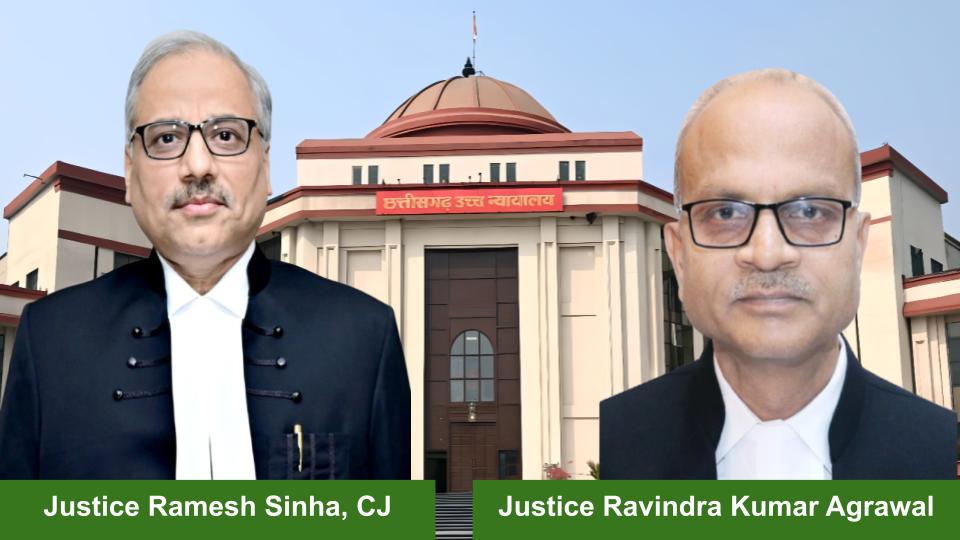
A division bench comprising Chief Justice Ramesh Sinha and Justice Ravindra Kumar Agrawal examined the oral and documentary evidence on record. The court noted that there was consistent testimony showing that the family had acquired properties from joint income and that the brothers had been managing their businesses separately. However, there was no clear evidence of a formal partition or a definitive family settlement granting exclusive ownership of the disputed shop to any one brother.
The court relied on principles laid down by the Supreme Court in Ravinder Kaur Grewal v. Manjit Kaur, which recognize that bona fide family arrangements can be valid and binding, even if oral. At the same time, such arrangements must clearly establish allocation of rights. In the present case, the bench observed that, at best, the father had permitted Shiv Shankar to run his business from the shop as part of a family arrangement. That did not amount to proof of exclusive title.
The High Court concluded that mere possession does not confer ownership rights, particularly when the property forms part of a joint Hindu family estate and no partition has taken place. Similarly, Deendayal could not claim possession solely on the strength of being a leaseholder when the shop had been used by his brother with consent under a family arrangement.
Holding that the trial court had correctly appreciated the evidence and committed no legal error, the High Court dismissed both appeals.
In essence, the ruling underscores a simple but important point: when family property remains undivided, individual members cannot seek exclusive declarations or possession without first establishing partition or a clearly proved settlement.
Case Reference : F.A. No. 31 of 2024, Deendayal Agrawal vs. Shiv Shankar Agrawal and Others; F.A. No. 62 of 2024, Shiv Shankar Agrawal vs. Deendayal Agrawal and Others; Counsels: Mr. Pushpendra Kumar Patel for the appellant in F.A. No. 31/2024; Mr. Manoj Paranjpe, Senior Advocate, with Mr. Shashwat Mishra for the appellant in F.A. No. 62/2024; Mr. Ashutosh Shukla for Respondents No. 2 and 3; and Dr. Sudeep Agrawal for Respondent No. 4, Municipal Corporation.