News Citation : 2026 LN (HC) 159 | 2026:CGHC:8454
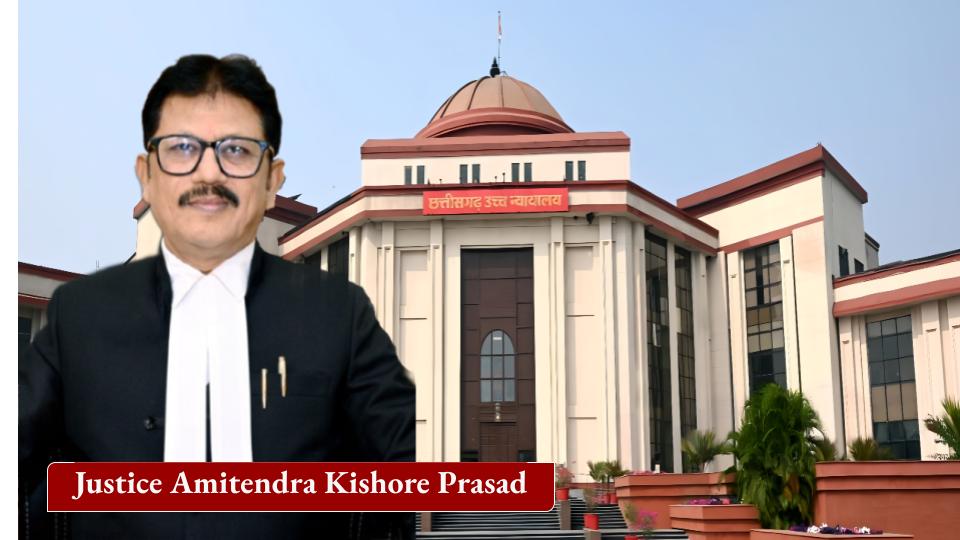
Februrary 17, 2026 : In a significant ruling on caste certificate verification, the High Court of Chhattisgarh has set aside an order that had cancelled the Scheduled Tribe status of a government employee from Surguja district. The court held that the High Power Certification Scrutiny Committee acted without jurisdiction while revoking the petitioner’s caste certificate. The order was passed by Justice Sanjay K. Agrawal on February 17, 2026, in WPS No. 834 of 2020.
Background of the Case
The petitioner, Ramashish Singh, had joined government service in 1982 as a Second Grade Clerk and was later promoted to Superintendent, Land Records. During his service, he was issued a caste certificate declaring him a member of the ‘Gond’ Scheduled Tribe community.
His caste certificate was verified by the District Level Certificates Verification Committee under Section 6 of the Chhattisgarh Scheduled Castes, Scheduled Tribes and Other Backward Classes (Regulation of Social Status Certification) Act, 2013. After due inquiry, the committee confirmed his Scheduled Tribe status and issued a verification certificate in 2014.
However, following a complaint by a local organization alleging that the certificate had been fraudulently obtained, the Commissioner of Surguja Division referred the matter to the High Power Certification Scrutiny Committee. In September 2019, the Scrutiny Committee revoked the petitioner’s caste certificates issued in 1976 and 2014, declaring that he did not belong to the Scheduled Tribe community. This led to the filing of the writ petition before the High Court.
Core Legal Issue
The central question before the court was whether the High Power Certification Scrutiny Committee had the authority to examine and cancel the petitioner’s caste certificate when the reference was made by the Commissioner, and not by the District Level Committee or the State Government.
The court closely examined Sections 6 and 7 of the 2013 Act. It noted that under Section 7(1), the High Power Certification Scrutiny Committee can conduct an inquiry only when a reference is made either:
- By the District Level Certificates Verification Committee under Section 6, or
- By the State Government.
In this case, the District Level Committee had already verified the petitioner’s caste certificate and had not referred the matter to the High Power Committee. The reference instead came from the Commissioner of Surguja Division.
The court emphasized that under the statutory definition, “State” means the State of Chhattisgarh, and executive actions of the State Government must comply with Article 166 of the Constitution of India. Referring to Supreme Court precedents, the judge clarified that actions taken by an individual officer cannot automatically be treated as actions of the State Government unless they are formally expressed and authenticated in the name of the Governor as required by law.
Court’s Findings
Justice Agrawal concluded that the Commissioner was not competent to refer the matter under Section 7 of the 2013 Act. Since the reference did not come from the District Level Committee or the State Government, the High Power Certification Scrutiny Committee lacked jurisdiction to initiate proceedings. As a result, the High Court quashed: The order dated September 7, 2019, cancelling the caste certificates, and The subsequent notice dated January 29, 2020, issued by the Commissioner. The writ petition was allowed to that extent.
Why This Ruling Matters
This judgment reinforces the procedural safeguards built into the 2013 Act governing caste certificate verification in Chhattisgarh. It makes it clear that jurisdictional requirements are not technicalities. Any inquiry into a government servant’s social status certificate must strictly follow the statutory framework. The ruling also underlines that administrative authorities cannot bypass the prescribed mechanism, even in cases involving serious allegations such as fraudulent caste claims.
Case Reference : WPS No. 834 of 2020, Ramashish Singh v. State of Chhattisgarh & Others; Counsel for Petitioner: Shri Manoj Paranjpe, Senior Advocate, with Shri Kabir Kalwani, Advocate; Counsel for Respondents: Shri Rahul Tamaskar, Government Advocate.