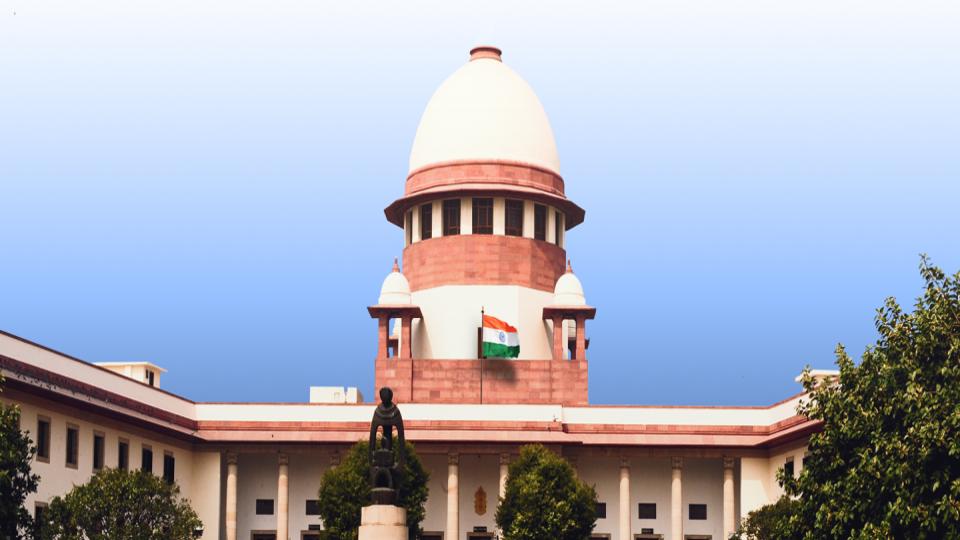
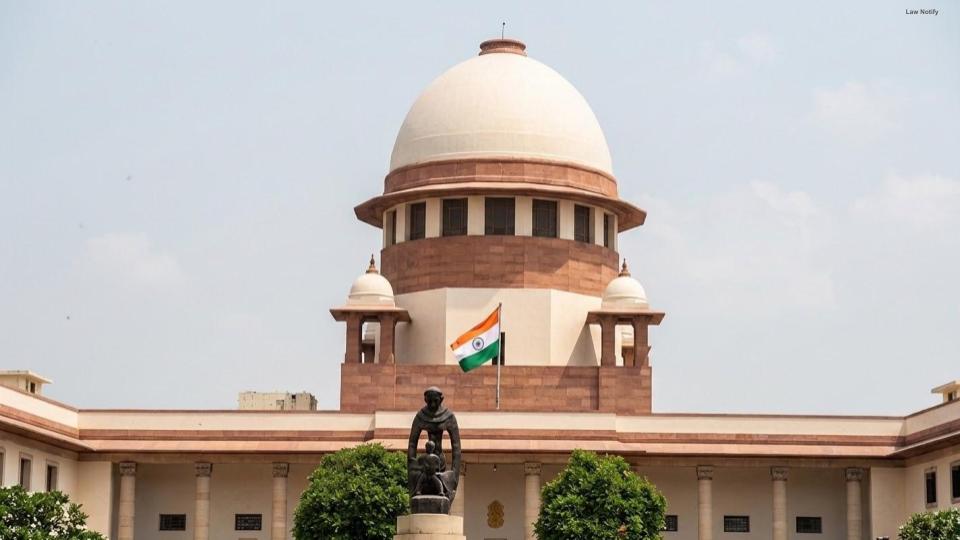
The Supreme Court has disposed of a writ petition challenging the Bar Council of India’s three-year moratorium on the establishment of new law colleges, after the BCI informed the Court that it had withdrawn the impugned notification.
A Bench comprising Justice Vikram Nath and Justice Sandeep Mehta noted that in view of the withdrawal, the substantive challenge to the moratorium no longer survived. The petition, filed by the Vocational Education Foundation Society, was accordingly disposed of as infructuous.
The Court granted the petitioner liberty to apply afresh for approval to commence BA-LLB (five-year) and LLB (three-year) programmes for the academic session 2025–26, in accordance with the prevailing statutory framework and the Rules of Legal Education framed under the Advocates Act, 1961.
The petition had assailed the Rules of Legal Education (Three-Year Moratorium) with respect to Centres of Legal Education, 2025, notified by the BCI on August 13, 2025. The rules imposed a blanket prohibition on the establishment of new law institutions across the country for a period of three years.
Challenging the vires of the notification, the petitioner argued that the moratorium was ultra vires the Advocates Act, 1961. It contended that while Sections 7 and 49 empower the BCI to prescribe standards of legal education, the statute does not authorise a complete embargo on new institutions.
The plea further submitted that the prohibition amounted to an unreasonable restriction on the fundamental right under Article 19(1)(g) of the Constitution to practise any profession or carry on any occupation, and failed the proportionality test under Article 19(6). It also invoked Article 14, alleging manifest arbitrariness and overbreadth, as the moratorium did not distinguish between non-compliant institutions and those that had already secured infrastructure, affiliation and inspection approvals.
Reliance was placed on the Punjab and Haryana High Court’s decision in Chandigarh Education Society v. Bar Council of India, where a similar three-year moratorium had been struck down as unconstitutional. The petitioner also pointed out that the validity of the 2025 moratorium was under consideration before the Supreme Court in Jatin Sharma v. Bar Council of India, in which notice had earlier been issued.
In addition to the constitutional challenge, the petitioner alleged administrative inaction on the part of the BCI. It claimed that the Council had failed to operationalise its online application portal and did not issue login credentials in time, preventing the submission of its proposal before the moratorium came into force. Although the rules provided an exemption for pending applications, the petitioner argued that it was effectively denied the benefit of that exemption due to the Council’s inaction.
The institution stated that it had secured the requisite land and infrastructure, obtained a No Objection Certificate from Chaudhary Charan Singh University, and received affiliation following inspection. It maintained that it had complied with all statutory requirements and that the moratorium, coupled with administrative delay, resulted in hostile discrimination.
The Bench declined to examine the constitutional issues raised and closed the matter, restoring the regulatory position to what prevailed prior to the August 13, 2025 notification.