February 17, 2026 : In a significant ruling, the Supreme Court of India has set aside the conviction of a man accused of murdering his six-year-old stepdaughter in Chhattisgarh, holding that the prosecution failed to establish a complete chain of circumstances proving guilt beyond reasonable doubt.
The judgment, delivered on February 17, 2026, in Criminal Appeal No. 689 of 2026 arising out of SLP (Crl.) No. 5624 of 2024, reversed the findings of the trial court and the High Court of Chhattisgarh, which had upheld the conviction primarily on circumstantial evidence.
The case stemmed from events in October 2018. Following a domestic dispute, the child’s mother left the matrimonial home. Soon after, the six-year-old girl was reported missing. Days later, charred bones and ashes were recovered from a field, and a skull and other remains were found in a nearby canal. The prosecution claimed that the accused stepfather had led police to these locations based on a disclosure statement.
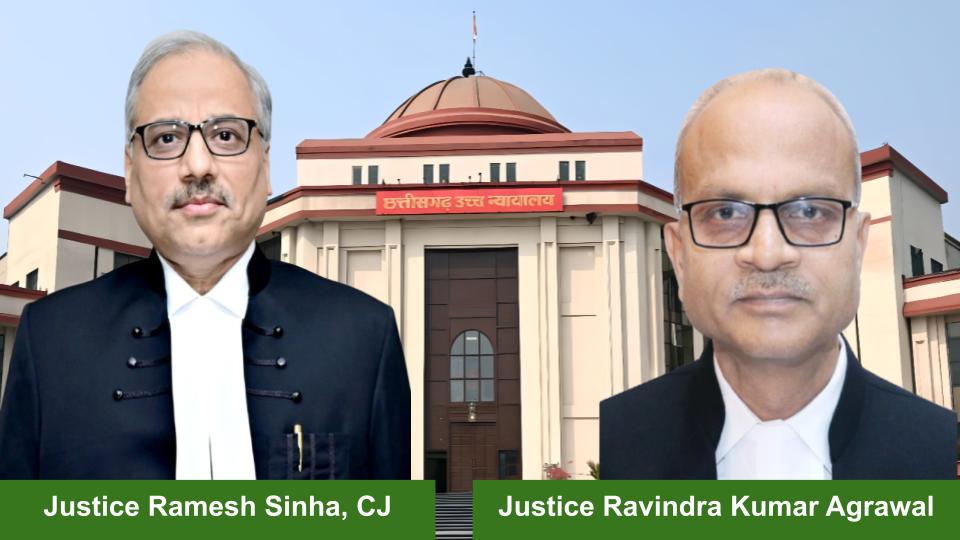
The High Court had affirmed the conviction on three key grounds: the “last seen together” theory, recovery of remains allegedly at the instance of the accused under Section 27 of the Indian Evidence Act, and DNA matching between certain bone samples and the biological parents of the deceased.
The Supreme Court found serious inconsistencies in the investigation and in the prosecution’s theory.
First, the Court noted doubts regarding the accused’s arrest timeline. Records showed interpolation in arrest documents, raising uncertainty about whether the accused was already in custody at a time when the prosecution claimed he was last seen with the child. This significantly weakened the “last seen” theory.
Second, the Court examined the alleged recovery under Section 27 of the Evidence Act. It observed that the disclosure statement leading to recovery was recorded before the accused was formally arrested. Since Section 27 applies only when information is given while in police custody, the Court held that the recovery could not strictly fall within its ambit.
However, relying on precedents including Jaffar Hussain Dastagir v. State of Maharashtra and Dharam Deo Yadav v. State of Uttar Pradesh, the Court clarified that such conduct could still be considered under Section 8 of the Evidence Act. Even so, it described this as a weak piece of evidence that could not independently sustain a conviction.
Third, on the forensic front, the Court acknowledged that DNA profiles of certain bone fragments and teeth recovered from the canal matched the biological parents. However, the skull and remains recovered from the field did not match. The Court concluded that while the DNA evidence established the child’s death, it did not conclusively link the accused to the act of murder.
The Court also highlighted troubling aspects: There was a delay in lodging the missing complaint, even though family members and police were aware that the child had gone with the accused. No clear time of death could be established since the complete body was not recovered.
The accused had been released from custody before the missing FIR was registered, which further complicated the prosecution’s timeline.
Given these gaps, the Court held that suspicion, however strong, cannot replace proof. The chain of circumstances was incomplete and did not exclude every hypothesis other than guilt.
Allowing the appeal, the Supreme Court set aside both the trial court’s conviction and the High Court’s affirmation. The accused was ordered to be released forthwith, if not required in any other case.
In a notable observation, the Court appreciated the efforts of both counsel but remarked that the investigation itself was deeply flawed. It noted that had the probe been conducted with greater care, the truth behind the child’s disappearance and death might have been uncovered.
Case Reference : Criminal Appeal No. 689 of 2026 (arising out of Special Leave Petition (Crl.) No. 5624 of 2024), Rohit Jangde v. State of Chhattisgarh (2026 INSC 162).