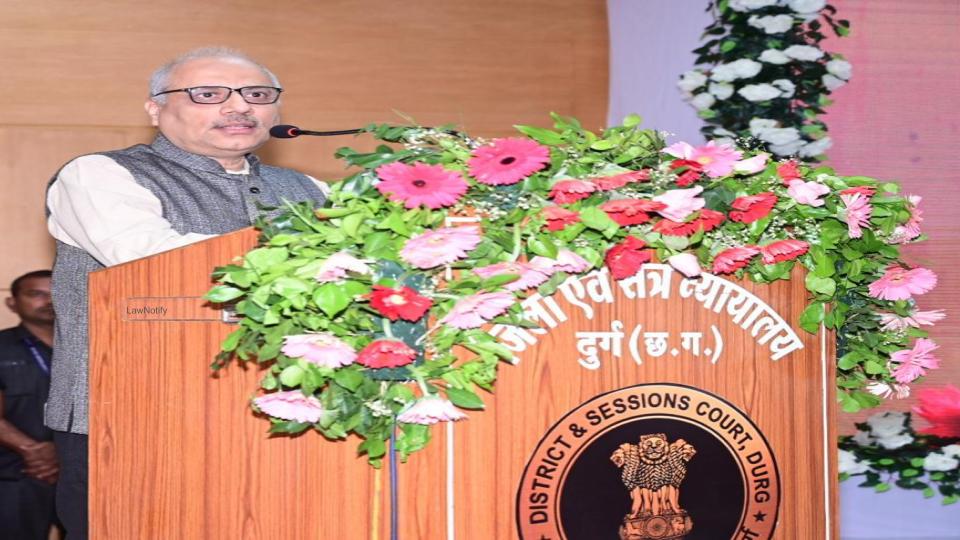
April 11, 2026 : The Divisional Judicial Seminar and Refresher Training Programme on New Criminal Laws concluded at the District and Sessions Court, Durg, marking a key moment in the judicial calendar for 2026–27. Judicial officers from Durg, Balod, Bemetara, Kabirdham, and Rajnandgaon participated in the programme, reflecting a collective effort to strengthen the justice delivery system through continuous judicial education and practical engagement with evolving legal frameworks.
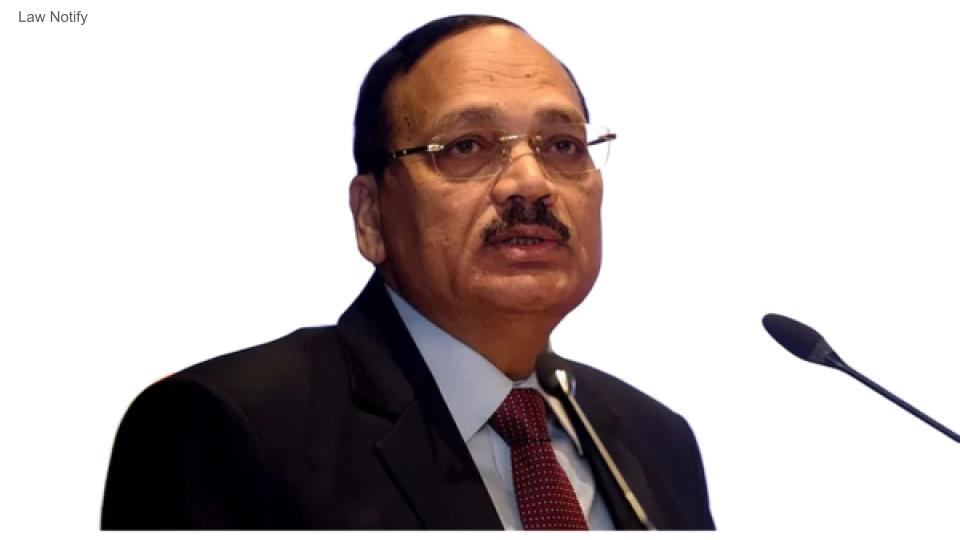
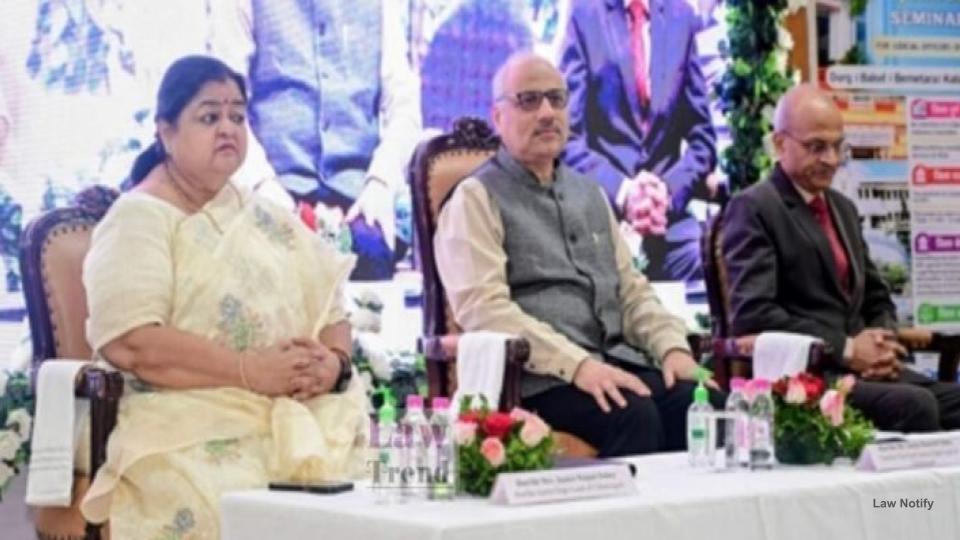
The seminar was presided over by Justice Ramesh Sinha, Chief Justice of the High Court of Chhattisgarh, whose presence and guidance shaped the proceedings. He was accompanied by Justice Rajni Dubey and Justice Ravindra Kumar Agrawal. The dignitaries were welcomed with ceremonial honours, including an NCC escort, followed by the national anthem and the traditional lighting of the lamp, setting a dignified tone for the seminar.
In his welcome address, Shri K. Vinod Kujur, Principal District and Sessions Judge, Durg, underlined that continuous judicial education remains essential for a responsive and effective judiciary. Smt. Nidhi Sharma Tiwari, Director of the Chhattisgarh State Judicial Academy, outlined the objectives of the programme, emphasising capacity building in a rapidly changing legal environment.
Addressing the gathering, the Chief Justice stressed that judicial officers must be well versed with statutory mandates governing electronic records and must adapt efficiently to the newly introduced criminal laws. He highlighted the importance of timely justice delivery and procedural discipline, while also underscoring the growing role of alternative dispute resolution mechanisms in reducing pendency and strengthening public trust.
A major highlight of the inaugural session was the unveiling of the publication titled “Mediation 2.0 IAISAGR – Mediation Strategy Model for Durg.” The initiative represents a structured push toward strengthening mediation as an effective alternative to litigation. Under this programme, the Durg District Judiciary has already referred 1,134 cases, with 275 cases disposed of between January and March 2026, indicating tangible progress in dispute resolution.
The formal proceedings concluded with a vote of thanks delivered by Shri Prashant Parashar, II District and Additional Sessions Judge, Durg. He expressed gratitude to the Chief Justice for his leadership and acknowledged the presence of the accompanying judges. He also recognised the contributions of judicial officers, institutional stakeholders, the district administration, the electricity board, and the media in ensuring the smooth conduct of the programme. The session ended with a reaffirmation of commitment toward judicial efficiency, institutional integrity, and infrastructure development across the region.
The seminar then moved into detailed technical sessions, where judicial officers from different districts presented research-based papers on pressing legal issues. Rajnandgaon district examined the doctrine of competency under Order VII Rules 10 and 11 of the CPC, focusing on the court’s power to return or reject plaints at the threshold. Bemetara district addressed execution proceedings, drawing from the Supreme Court ruling in Periyammal vs Rajamani (2025) and emphasising that justice is incomplete without effective enforcement of decrees. Balod district discussed cases under Section 138 of the Negotiable Instruments Act, proposing the use of digital tools, strict case management, and settlement mechanisms to tackle the backlog of cheque dishonour cases.
Kabirdham district presented an analysis of provisions under the Bharatiya Nagarik Suraksha Sanhita, particularly Sections 351, 180, and 183, clarifying the evidentiary value of statements and confessions. Durg district focused on electronic evidence and e-Sakshya under the Bharatiya Sakshya Adhiniyam, highlighting the need for strict compliance with admissibility standards in a digital-first judiciary.
A dedicated refresher training session was conducted on the new criminal law framework, covering the Bharatiya Nyaya Sanhita, BNSS, and BSA. The training emphasised digitisation of criminal procedure, mandatory forensic involvement in serious offences, and the introduction of timelines for delivering judgments, reflecting a shift toward a more efficient and technology-driven justice system.
The seminar concluded with the distribution of the “Mediation 2.0 IAISAGR” handbook and a renewed commitment to judicial reform. The programme highlighted a clear direction toward integrating traditional judicial processes with modern statutory and technological developments, ensuring that justice delivery remains accessible, timely, and effective.