News Citation : 2026 LN (HC) 286 | 2026:CGHC:19855
April 29, 2026 : The Chhattisgarh High Court has upheld the dismissal of a police constable who remained absent from duty for over a year without authorization, reinforcing that prolonged absenteeism in a disciplined force constitutes serious misconduct warranting strict action.
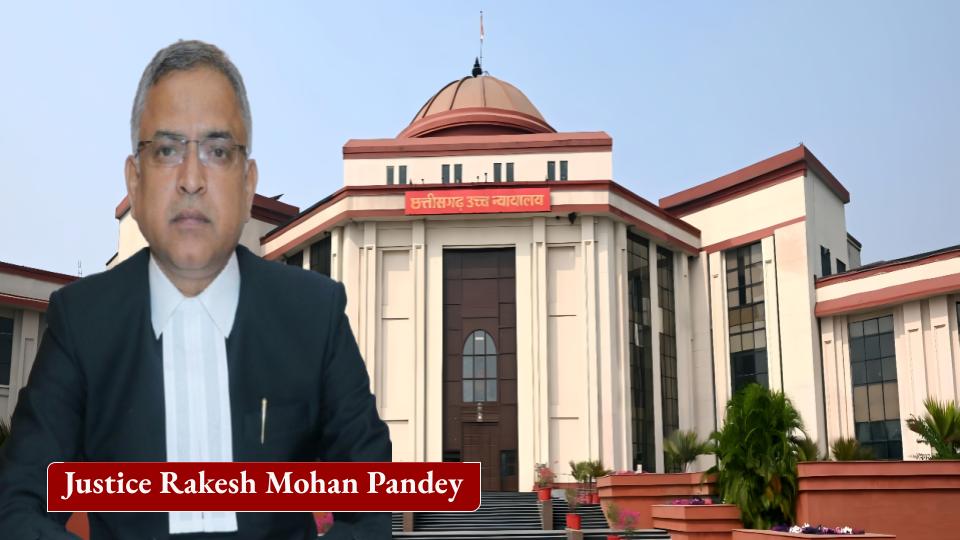
In a judgment delivered on April 29, 2026, Justice Rakesh Mohan Pandey dismissed a writ petition filed by Naresh Kumar Netam, a former constable who had challenged orders of the disciplinary, appellate, and revisional authorities terminating his services.
The case arose from Netam’s transfer from Police Station Mainpur to Devbhog in July 2017. Although he was formally relieved from his earlier posting, he failed to report at the new station and remained absent from July 10, 2017, to September 18, 2018, a period of 434 days. Despite repeated notices and a formal charge sheet served through official channels, he did not participate in the departmental inquiry, leading the proceedings to continue ex parte.
The inquiry officer found the charges of unauthorized absence, negligence, and indiscipline proved based on oral and documentary evidence. The disciplinary authority accepted these findings and ordered his removal from service in February 2019, also applying the “no work, no pay” principle for the period of absence. His subsequent appeal and revision were rejected by higher authorities.
Before the High Court, Netam argued that the punishment was disproportionate and that he had not been given a fair opportunity to be heard. He also cited his father’s medical condition as a mitigating factor. The State, however, maintained that due process had been followed and emphasized the importance of discipline in uniformed services.
The Court examined the record and noted that multiple notices had been issued and duly served, but the petitioner failed to respond or participate. It held that the inquiry was conducted in accordance with law and that there was no violation of principles of natural justice.
Relying on established precedents of the Supreme Court of India, the Court reiterated that judicial review in service matters is limited. It cannot reassess evidence or interfere with disciplinary findings unless there is procedural illegality, perversity, or a punishment that is shockingly disproportionate.
Addressing the issue of proportionality, the Court observed that members of disciplined forces such as the police are held to a higher standard of conduct. Unauthorized absence for such an extended period was termed a grave act of indiscipline. The Court concluded that removal from service in such circumstances cannot be considered excessive.
Finding no legal infirmity in the orders passed by the authorities, the High Court dismissed the writ petition and declined to interfere with the punishment.
Case Reference : WPS No. 6785 of 2021, Naresh Kumar Netam vs State of Chhattisgarh & Others; Counsels: Mr. Jitendra Nath Nande, Advocate for Petitioner; Mr. Anil Pandey, Government Advocate for State.