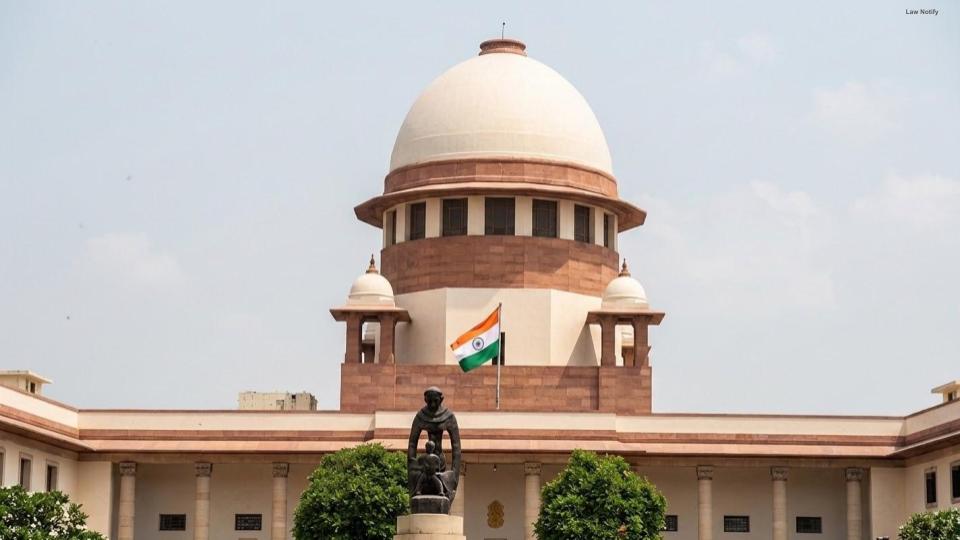
July 24, 2026 : The Supreme Court on Friday passed an important interim order prohibiting the unauthorised extraction, editing, modification, dissemination, reposting, uploading, sharing and monetisation of audio and video recordings of judicial proceedings on social media and digital platforms without prior approval from the competent authority. At the same time, the Court made it clear that the order will not affect fair and accurate reporting of court proceedings by the media.
A Bench comprising Chief Justice of India (CJI) Surya Kant, Justice Joymalya Bagchi and Justice V. Mohana directed that no individual or organisation shall extract, modify, upload, repost, share or monetise audio or video recordings of judicial proceedings without obtaining prior permission from the Registrar General of the concerned High Court or the Secretary General of the Supreme Court, as applicable.
The interim order was passed while hearing a public interest litigation (PIL) filed under Article 32 of the Constitution by journalist Harshita Grover, who sought comprehensive guidelines to regulate the clipping, editing, redistribution and commercial exploitation of audiovisual recordings of court proceedings.
According to the petition, selectively edited courtroom clips circulated with misleading captions and sensational commentary have distorted judicial proceedings, damaged the dignity of courts and weakened public confidence in the justice delivery system.
The Supreme Court issued notice on the petition and impleaded all High Courts as parties. It also directed the Union Government to identify the nodal Ministries responsible for implementing any future regulatory framework governing judicial recordings.
The Court further directed every High Court to submit reports explaining the extent of implementation of the Supreme Court’s live-streaming guidelines and the impact of continuous live-streaming on the administration of justice. Notices were also issued to major social media platforms, including Meta and X, considering their role in hosting and distributing courtroom-related digital content.
Appearing for the petitioner, Senior Advocate Vikas Singh clarified that the plea does not seek to stop live-streaming of court proceedings or dilute the constitutional principle of open justice. Instead, it challenges the growing misuse of selectively edited courtroom clips that are circulated with misleading narratives, clickbait headlines and sensational commentary.
Referring to a recent incident involving proceedings before Justice K.V. Viswanathan, Singh submitted that isolated courtroom exchanges had gone viral after being taken completely out of context, resulting in public ridicule of judicial proceedings.
Justice Joymalya Bagchi observed that regulation of digital data has emerged as one of the biggest challenges in the modern digital ecosystem. He remarked that unrestricted live-streaming may require reconsideration, observing that court proceedings should not become a continuous public broadcast similar to an entertainment channel. The Bench also indicated that unrestricted sharing of virtual hearing links requires appropriate safeguards.
The Court emphasised that while judicial proceedings must remain accessible in accordance with the constitutional principle of open courts, technological facilities should not be allowed to become tools for misinformation and abuse.
Supporting the plea, Solicitor General Tushar Mehta warned that artificial intelligence and deepfake technology now pose a serious threat to the integrity of judicial proceedings. He informed the Court that advanced AI tools can manipulate courtroom videos by altering spoken words while preserving judges’ and advocates’ facial expressions, voices and lip movements, creating fabricated videos that appear authentic.
He further submitted that selectively edited courtroom clips are increasingly circulated with predetermined narratives that misrepresent court proceedings and mislead the public.
Chief Justice Surya Kant also expressed concern over inaccurate reporting of judicial proceedings. Referring to his own experience, he observed that even print media had, on certain occasions, attributed statements to him that he had never made. He also referred to recent reporting relating to student protest cases, stating that inaccurate reporting had contributed to public misunderstanding of judicial observations.
The petition argues that although live-streaming and virtual hearings were introduced to promote transparency, accountability and public access under the constitutional principle of open justice, the absence of a regulatory framework has enabled misuse of courtroom recordings for sensationalism, trolling, misinformation and commercial profit.
According to the petitioner, tentative oral observations made during hearings are frequently extracted from lengthy proceedings and circulated without legal context through misleading captions and clickbait content, exposing judges, advocates and litigants to reputational harm and creating distorted public narratives.
The plea clarified that it does not seek to restrict legitimate journalism or transparency in the judicial process. Instead, it seeks reasonable safeguards to prevent unauthorised editing, redistribution and commercial exploitation of judicial recordings while preserving public access and confidence in the justice delivery system.
To support its case, the petition referred to several instances of alleged misuse of courtroom recordings, including controversy surrounding remarks made by a Karnataka High Court judge in 2024 that were later clarified as being reported out of context. It also relied upon the Bar Council of India’s March 2025 statement regarding unethical legal advertising on social media and a July 2025 representation submitted by the Supreme Court Advocates-on-Record Association (SCORA) seeking guidelines on videography and social media content inside the Supreme Court premises.
The petitioner additionally cited a Delhi High Court order directing removal of a selectively edited courtroom video and referred to controversy surrounding oral observations made by the Chief Justice of India during proceedings on May 15, 2026, which were later clarified after edited clips circulated online.
Highlighting the commercial exploitation of judicial proceedings, the petition alleged that several YouTube channels and social media accounts earn significant advertising revenue, subscriptions and memberships by publishing edited courtroom videos designed to maximise viewership through controversy and sensationalism. It argued that judicial proceedings are made publicly accessible to strengthen transparency and public understanding of the legal process, not to serve as monetisable digital content.
Drawing a comparison with the United Kingdom Supreme Court’s copyright and licensing framework governing audiovisual recordings, the petitioner urged the Supreme Court to introduce similar safeguards in India to prevent distortion, unauthorised commercial exploitation and copyright violations while maintaining the constitutional principles of open justice and fair reporting.