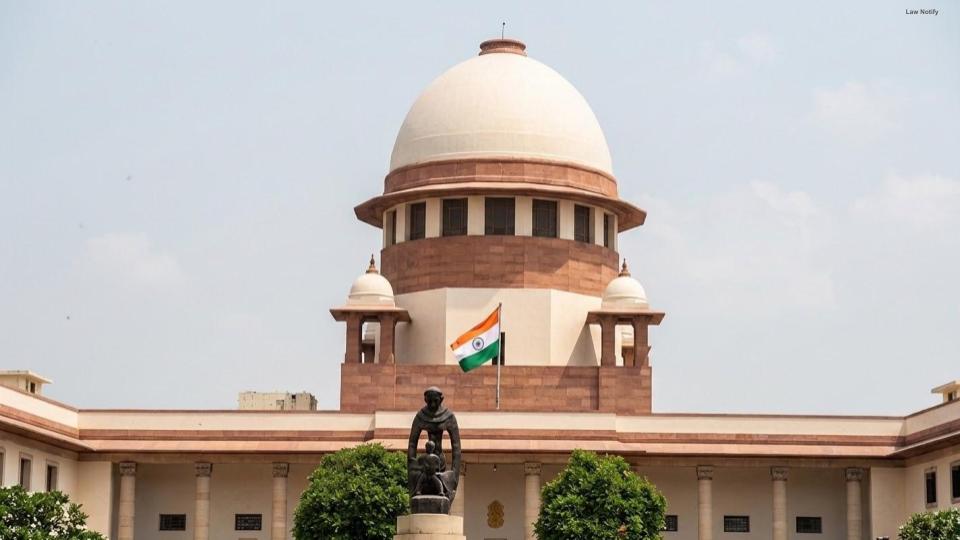
July 27, 2026 : The Supreme Court on Monday indicated that it may seek responses from all States and Union Territories on the absence of adequate protective equipment for police personnel deployed during large public demonstrations. The Court observed that ensuring the safety of law enforcement officials is as important as protecting the constitutional rights of citizens to hold peaceful protests.
A Bench comprising Chief Justice of India Surya Kant, Justice Joymalya Bagchi and Justice V. Mohan was hearing a batch of petitions relating to alleged police brutality during student protests over the NEET paper leak and examination irregularities, along with petitions highlighting attacks on police personnel during the same demonstrations.
The matter was mentioned for urgent hearing, following which Solicitor General Tushar Mehta suggested that all connected petitions be heard together. Accepting the suggestion, the Bench directed that the matters be listed together on Tuesday.
During the hearing, counsel representing the families of certain police personnel submitted that several officers had been assaulted, kicked and even lynched while performing law and order duties during the protests. Responding to the submissions, Justice Joymalya Bagchi observed that injuries suffered by both protesters and police personnel deserved equal judicial attention and warranted a fair examination.
The Bench indicated that it may ask all States and Union Territories to explain why police personnel deployed for crowd control are not routinely provided with adequate protective equipment such as helmets and other safety gear. The Court observed that the safety of law enforcement personnel is an essential component of effective crowd management and public order policing.
Chief Justice Surya Kant also stressed the need for a uniform nationwide protocol to regulate public demonstrations while balancing the constitutional right to peaceful assembly with the safety of police personnel. He observed that citizens have a fundamental right to peacefully express their grievances and should be given sufficient opportunity to hold lawful protests without unnecessary restrictions.
At the same time, the Chief Justice clarified that authorities are fully empowered to take action, in accordance with law, against anti-social elements or individuals who indulge in violence, vandalism or other unlawful activities during protests.
The Bench further observed that allegations of excessive use of force by police, if found to be true, should be subjected to an independent inquiry. Such an inquiry, the Court said, should identify those responsible, assess the nature and extent of any excesses, and recommend mandatory preventive measures, standard operating procedures (SOPs) and uniform operational guidelines to avoid similar incidents in future.
The Chief Justice noted that the issue extends far beyond Delhi and has nationwide implications. According to the Court, there is a pressing need to develop a common framework governing crowd control, use of force, protection of protesters as well as police personnel, and maintenance of public order across the country. He also observed that while peaceful protest is a vital democratic right, it must be accompanied by self-discipline and responsible conduct.
Solicitor General Tushar Mehta assured the Bench that the Union Government would assist the Court objectively and without taking an adversarial stand. Recording the assurance, the Supreme Court agreed to hear all connected petitions together on Tuesday.