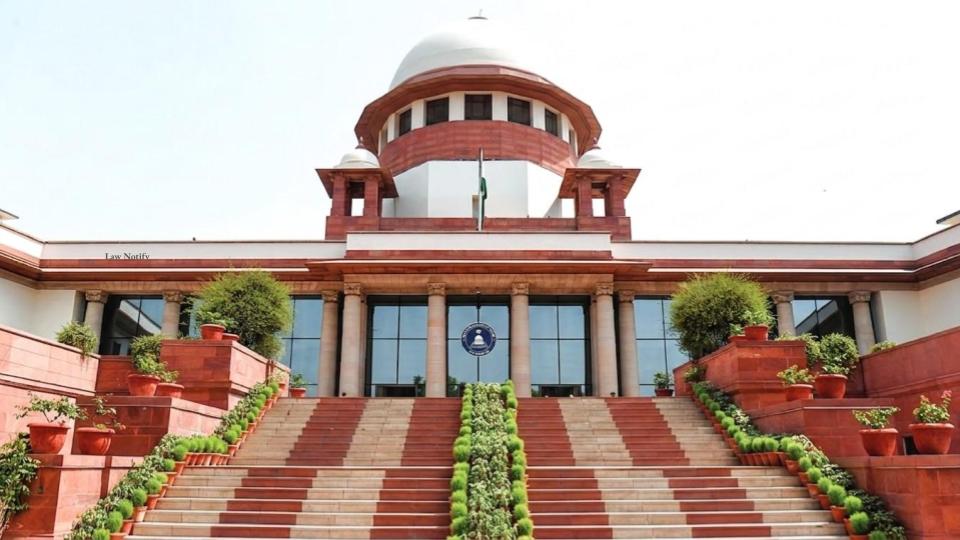
New Delhi, August 17: The Supreme Court on Monday granted interim relief to the Aam Aadmi Party (AAP), directing Meta to restore the Instagram and Facebook pages of its Gujarat unit, subject to the removal of objectionable posts.
A Bench comprising Justice P. S. Narasimha and Justice Alok Aradhe passed the order on an interlocutory application filed by AAP in its main petition challenging the blocking of its social media accounts.
The interim application sought restoration of AAP Gujarat’s Instagram account, “@aapgujarat,” and its Facebook page. According to the party, the two accounts had collectively accumulated more than 10.39 lakh followers before being blocked in April 2026.
AAP argued that blocking the accounts had effectively deprived a national political party of an important channel for communicating with the public and disseminating political content.
Supreme Court Directs Restoration of Accounts
Senior Advocate Shadan Farasat, appearing for AAP, urged the Supreme Court to grant interim relief, particularly in view of repeated requests for adjournment by the Union.
When the matter was initially taken up, it was passed over as Solicitor General Tushar Mehta was appearing before another court. The Bench had indicated that it would consider the request for interim relief before adjourning the matter.
When the matter was subsequently taken up, an advocate appearing for the other side sought an adjournment until Wednesday. The Bench, however, proceeded to hear and decide the interim application.
The Court ultimately directed restoration of the Gujarat unit’s Instagram and Facebook accounts, while making it clear that objectionable posts must be removed. The main matter has been posted for further hearing after two weeks.
Social Media Accounts Were Blocked in April
The accounts were suspended on April 25, 2026, shortly before local body elections in Gujarat.
The action was reportedly linked to alleged copyright violations involving the use of scenes and clips from Gujarati films in political campaign material without permission.
AAP leaders had alleged that the blocking was politically motivated and claimed that Meta had taken the action at the instance of the BJP. These allegations remain part of the broader dispute before the Supreme Court.
AAP Challenges Section 79(3)(b) of IT Act
In its main petition, AAP has challenged the legal basis for blocking or suspending its social media accounts. The party has sought a declaration that Section 79(3)(b) of the Information Technology Act, 2000, cannot be treated as an independent source of power for authorities to direct the blocking of online information.
Section 79 provides certain exemptions from liability to intermediaries for third-party content hosted on their platforms. Under Section 79(3)(b), this protection is not available where an intermediary, after receiving actual knowledge through a court order or government notification that unlawful information is being used to commit an unlawful act, fails to expeditiously remove or disable access to that material.
AAP has argued that this provision cannot itself be interpreted as conferring a general power on authorities to order the blocking of information or entire social media accounts.
The party has also challenged consequential directions, rules and notifications issued under the provision to the extent that they relate to blocking of online information.
Plea Seeks Procedural Safeguards for Political Parties
AAP has sought the production of records concerning the directions allegedly issued to Meta for blocking its Gujarat unit’s accounts.
It has also sought a declaration that blocking the “@aapgujarat” Instagram account and Facebook page was arbitrary, illegal and unconstitutional.
A significant aspect of the petition is AAP’s request for clear procedural safeguards governing the blocking or suspension of official social media accounts belonging to registered political parties.
The party has argued that such action should ordinarily be preceded by notice, an opportunity of hearing and disclosure of written reasons. It has further contended that any restriction must satisfy the constitutional requirements under Article 19(2) and the statutory framework under Section 69A of the Information Technology Act.
Section 69A and Article 19(2) at the Centre of the Dispute
Section 69A empowers the government to direct the blocking of public access to online information on specified grounds. These include the sovereignty and integrity of India, defence and security of the State, friendly relations with foreign States, public order and preventing incitement to certain cognisable offences.
AAP’s petition raises the broader question of whether and how these statutory powers can be exercised against the official social media accounts of political parties.
The dispute also involves the constitutional protection of freedom of speech and expression under Article 19(1)(a), subject to the reasonable restrictions permitted under Article 19(2).
Larger Legal Questions Remain Pending
The Supreme Court’s August 17 order provides immediate interim relief to AAP’s Gujarat unit but does not finally decide the broader legal questions raised in the main petition.
The Court will subsequently examine the legality of the directions issued for blocking the accounts, the statutory authority relied upon for such action and the procedural safeguards that may be required before political parties’ official social media accounts are suspended.
The case could have wider implications for the regulation of political communication on social media, particularly where government directions, intermediary obligations and constitutional freedom of speech intersect.
The matter is now scheduled to be considered after two weeks.