News Citation : 2026 LN (HC) 439
September 7, 2026 : The Chhattisgarh High Court has dismissed a writ petition challenging the cancellation of a Sarpanch election, holding that a candidate who has not attained the mandatory age of 21 years on the date of filing nomination papers is disqualified from contesting a Panchayat election.
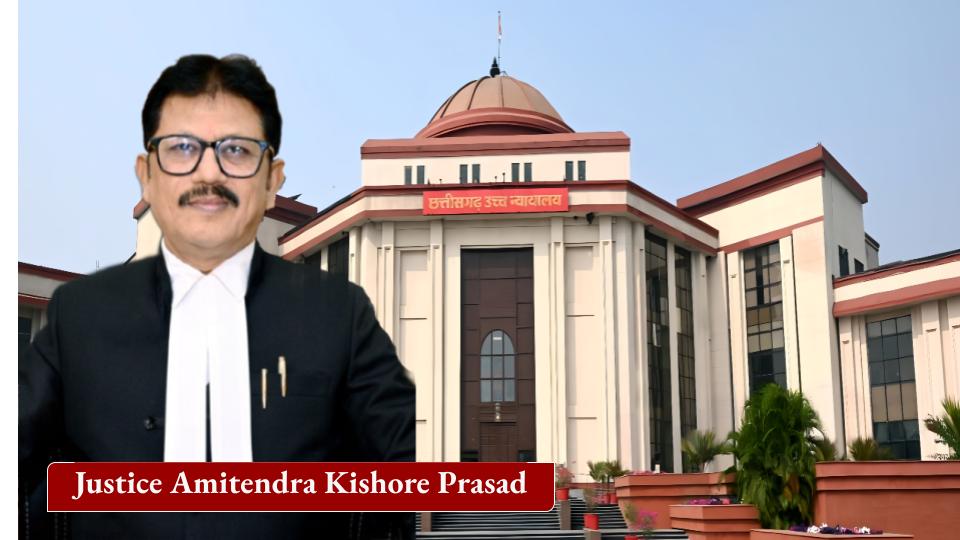
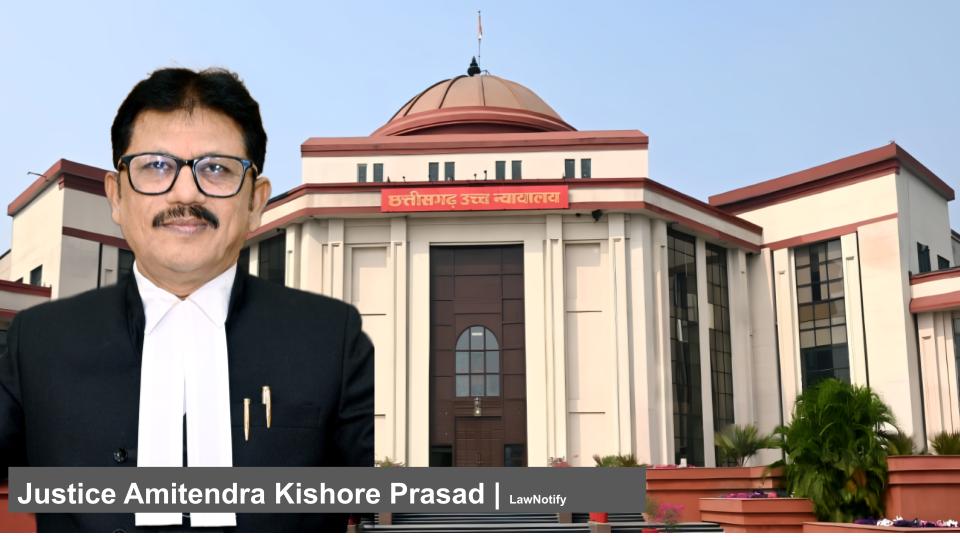
Justice Amitendra Kishore Prasad, in an order pronounced on September 7, 2026, upheld the Election Tribunal’s decision declaring the election of Jasila Thithiyo as Sarpanch of Gram Panchayat Krishnanagar in Balrampur-Ramanujganj district null and void. The Court found that her date of birth was April 12, 2004, as consistently recorded in her school and matriculation records, and therefore she had not completed 21 years when she contested the election.
The dispute arose after Thithiyo contested the Sarpanch election held on February 22, 2025. Her nomination was accepted during scrutiny and she subsequently secured the highest number of valid votes. She was declared elected and issued a Certificate of Election.
Respondent No. 6, Surajpati Ram, subsequently filed an election petition under Section 122 of the Chhattisgarh Panchayat Raj Adhiniyam, 1993, challenging Thithiyo’s election on the ground that she was underage. The election petitioner alleged that Thithiyo’s actual date of birth was April 12, 2004, making her only 19 years old at the relevant time. It was further alleged that documents such as her Aadhaar Card and Voter ID reflected April 12, 2002.
The Election Tribunal accepted the challenge and declared Thithiyo’s election void. It relied principally on her Class X marksheet issued by the Chhattisgarh Board of Secondary Education, which recorded her date of birth as April 12, 2004.
Before the High Court, Thithiyo argued that the Election Tribunal had acted in breach of the prescribed procedure because it had not framed specific issues concerning the disputed date of birth and had not properly recorded the evidence of the parties. Her counsel also argued that the election petition suffered from non-joinder of necessary parties and that the disputed documents had not been properly proved through evidence.
The respondents, however, maintained that the petitioner had been given several opportunities to contest the allegations and lead evidence but failed to do so. They also argued that the Class X record was more reliable for determining age than identity documents such as Aadhaar and Voter ID.
High Court Rejects Objection on Maintainability
The High Court first considered whether the writ petition under Article 226 of the Constitution was maintainable despite the existence of an alleged alternative remedy.
The Court relied on its earlier decision in Cheti Bai Yadav v. Smt. Bhupeshwari Sahu, holding that Rule 25 of the Chhattisgarh Panchayats (Election Petitions, Corrupt Practices and Disqualification for Membership) Rules, 1995 gives finality to the decision of the specified officer. Therefore, according to the Court, an aggrieved party can approach the High Court under Articles 226 or 227 rather than pursuing an appeal or revision under Section 91.
The Court consequently held that the writ petition was maintainable.
Non-Framing of Issues Did Not Vitiate Proceedings
The Court next examined the argument that the Election Tribunal had failed to frame issues.
It noted that Order XIV Rule 1 of the Code of Civil Procedure, as applicable through Rule 11 of the 1995 Election Petition Rules, generally requires issues to be framed so that the precise dispute between the parties is identified.
However, relying on Supreme Court decisions including Kalyan Singh Chouhan v. C.P. Joshi and Arikala Narasa Reddy v. Venkata Ram Reddy Reddygari, the High Court observed that failure to frame an issue is not automatically fatal where both parties clearly understood the controversy and participated in the proceedings with knowledge of the case they had to meet.
The Court observed, “non-framing of a specific issue regarding the date of birth of the petitioner was not fatal.”
According to the Court, both sides were fully aware that the central question before the Tribunal was whether the petitioner had attained 21 years of age on the date of nomination.
Court Finds Petitioner Had Opportunity to Lead Evidence
The High Court also rejected the petitioner’s contention that she was denied an opportunity to produce evidence.
After examining the Tribunal’s order sheets, the Court found that the election petition had been filed on March 11, 2025, and that the petitioner appeared before the Tribunal on July 16, 2025. The matter was thereafter listed for evidence on several dates.
The Court noted that the petitioner repeatedly sought time to file objections or cross-examine the election petitioner. On August 28, 2025, she was granted a final opportunity. On September 8, 2025, however, she declined to cross-examine the election petitioner or produce rebuttal evidence, following which the matter was fixed for final orders.
The High Court therefore concluded that the allegation of denial of an opportunity to lead evidence was not supported by the record. The Court held that adequate opportunities had been provided but were not availed of by the petitioner.
Class X Certificate Preferred Over Aadhaar and Voter ID
The central issue before the High Court was which document should be relied upon to determine the petitioner’s actual date of birth.
The Court referred to several Supreme Court judgments concerning proof of age and noted that matriculation or equivalent educational certificates, school records and birth certificates issued by competent authorities are generally important primary documents for determining date of birth.
The Court specifically noted that Aadhaar is an identity document and does not, by itself, constitute conclusive proof of date of birth. It also relied on the principles discussed in Saroj & Ors. v. Iffco-Tokio General Insurance Co. & Ors., where the Supreme Court recognized that an Aadhaar Card cannot by itself establish a person’s date of birth.
The High Court also considered the evidentiary value of Voter ID and electoral records and referred to the decision in Ram Kripal alias Chirkut v. Deputy Director of Consolidation & Others, observing that such records cannot automatically be treated as reliable proof of actual age where the basis of the recorded entry has not been established.
Updated Birth Certificate Also Not Accepted
An important aspect of the case was that the petitioner produced a Birth Certificate showing her date of birth as April 12, 2002.
The High Court, however, declined to rely on this document because the Birth Certificate had been updated and issued only on July 5, 2025, after the election petition had already been instituted. The Court also noted that the petitioner had not relied upon the document before the Election Tribunal or produced evidence establishing the authenticity of the updated entry.
In contrast, the Court found that the date of birth recorded as April 12, 2004 appeared consistently in the petitioner’s educational records from Class I through matriculation. Her Class X certificate issued by the Chhattisgarh Board of Secondary Education in March 2021 also carried the same date.
The Court observed that “the Matriculation Certificate issued by the Chhattisgarh Board of Secondary Education remains the reliable and admissible document for determining her date of birth.”
The Court further noted that if the petitioner already possessed a Birth Certificate showing April 12, 2002, it raised a question as to why that document was not produced at the time of filing the nomination papers.
Article 243F Makes 21-Year Age Requirement Mandatory
The High Court emphasized that the minimum age requirement is constitutionally significant. Article 243F(1)(a) of the Constitution provides that a person cannot be disqualified merely for being below 25 years of age if they have attained 21 years. The provision therefore establishes 21 years as the minimum age for contesting Panchayat elections.
The Court held that this requirement operates as a mandatory qualification and that a person who has not completed 21 years on the date of filing nomination papers cannot validly contest for the office of Sarpanch.
Since the Court accepted April 12, 2004 as the petitioner’s correct date of birth, she was only 19 years old when she filed her nomination for the 2025 Panchayat election.
Election Cancellation Upheld
The High Court ultimately found no merit in the writ petition and confirmed the Election Tribunal’s order cancelling the petitioner’s election.
The Court held that the updated Birth Certificate could not be relied upon and that the Class X marksheet, supported by the consistent date of birth appearing in earlier educational records, established April 12, 2004 as the petitioner’s date of birth.
As she had not attained 21 years of age at the relevant time, her election as Sarpanch was legally invalid.
The Court accordingly dismissed WPC No. 5343 of 2025 and confirmed the Election Tribunal’s decision.
The case also has a practical dimension. During the pendency of the writ petition, fresh election proceedings had been initiated after a notification issued by the State Election Commission on May 8, 2026. The Court was informed that respondent No. 6 had subsequently contested the fresh election, was declared elected and received the Certificate of Election on June 4, 2026.
The judgment underscores the importance of establishing eligibility at the nomination stage and makes clear that identity documents such as Aadhaar and Voter ID cannot automatically override consistent educational records when a candidate’s age is disputed. It also reiterates that constitutional eligibility requirements for Panchayat elections must be satisfied on the date of nomination itself.