Bilaspur : The Chhattisgarh High Court has dismissed two writ petitions seeking appointment to the post of Junior Engineer (Electrical) in the state power companies, holding that vacancies created after selected candidates joined service and subsequently resigned cannot be filled by operating the earlier selection or waiting list. The Court said such vacancies are fresh vacancies and must be dealt with through the applicable recruitment procedure.
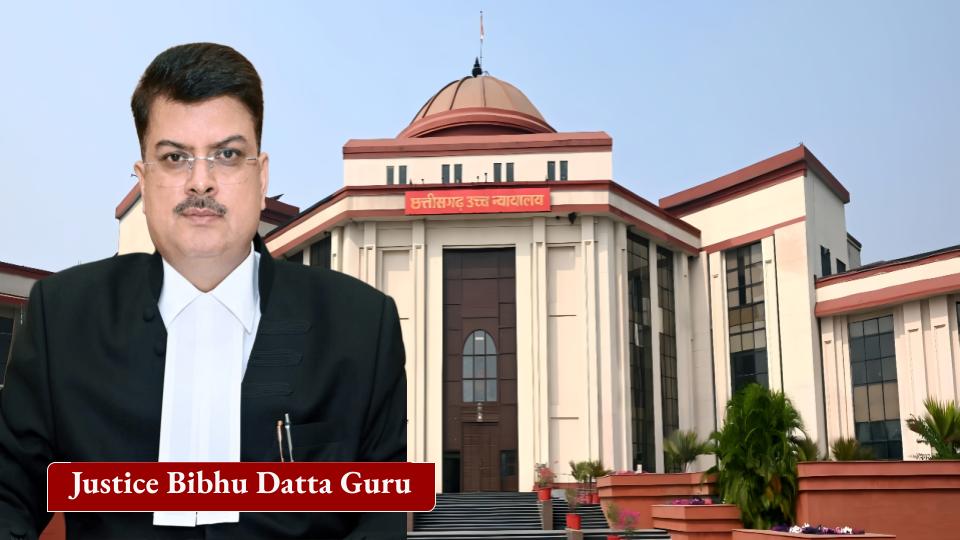
Justice Bibhu Datta Guru passed the common order on September 26, 2026, in WPS No. 7094 of 2026, Bhupesh Verma v. State of Chhattisgarh & Others, and WPS No. 7095 of 2026, Vikash Kumar Gupta v. State of Chhattisgarh & Others. The two matters were heard together because they involved common questions of law and facts.
The petitioners had participated in the recruitment process for Junior Engineer (Electrical) posts in the Chhattisgarh State Power Transmission Company Limited, Chhattisgarh State Power Distribution Company Limited and Chhattisgarh State Power Generation Company Limited. The recruitment was initiated through Advertisement No. 01-01/PD-03/4786 dated September 15, 2023. Both petitioners had applied under the Other Backward Classes category, but their names did not appear in the selection list issued in October 2024.
The petitioners argued that some candidates selected through the recruitment process had subsequently resigned after joining service. According to them, this resulted in vacancies that could have been offered to candidates from the waiting list. They also relied on an alleged past practice of preparing a waiting list or Phase-II list and submitted representations before the authorities. They further stated that they had sought information under the Right to Information Act but no effective action was taken. On this basis, they contended that the authorities’ inaction was arbitrary and violated Articles 14 and 16 of the Constitution.
The respondents opposed the petitions, arguing that the recruitment process had already concluded in 2024 and the selected candidates had joined their respective posts. They relied on a Board Resolution dated August 22, 2023, under which the validity of the select list was limited to one year. According to the respondents, even if a waiting list had existed, its validity would have expired in October 2025. They further argued that vacancies arising because selected candidates resigned after joining were subsequent vacancies and did not create an enforceable right in favour of candidates who had not originally been selected.
The High Court accepted the respondents’ legal position. The Court examined whether candidates who were unsuccessful in the original selection could claim appointment against vacancies subsequently created by the resignation of candidates who had already joined service.
Relying on the Supreme Court’s judgment in Sudesh Kumar Goyal v. State of Haryana and Others, reported in (2023) 10 SCC 54, the High Court held that a vacancy created after a selected candidate joins service and subsequently resigns is a fresh vacancy. It cannot ordinarily be filled by operating the earlier selection or waiting list. Instead, the vacancy has to be dealt with according to the applicable recruitment procedure, including a fresh advertisement and selection process where required.
The Court explained the principle in clear terms: “If any vacancy arose on account of resignation of an employee, the same has to be filled up by issuing the fresh advertisement alone.” The Court also emphasized that a person who was not selected in the original recruitment cannot claim appointment merely because a vacancy subsequently becomes available.
The distinction between non-joining and resignation was particularly important. The Court noted that the vacancies in the present case did not arise because selected candidates failed to join. Instead, the candidates had already been selected, appointed and joined service before resigning. Therefore, the resulting vacancies were treated as subsequent vacancies and could not be used to revive the earlier selection process in the absence of a specific provision permitting such action.
The petitioners’ reliance on an alleged past practice of issuing a waiting list also failed to persuade the Court. Justice Guru observed that no enforceable right can arise merely from an alleged past practice, particularly after the original recruitment process has attained finality and the prescribed validity period of the select list has expired.
The ruling is significant for government recruitment because it clarifies that an unsuccessful candidate does not acquire a vested right to appointment simply because vacancies become available later. The decision also reinforces the principle that recruitment authorities cannot ordinarily use a concluded selection process to fill vacancies that arise independently after selected candidates have joined and later left service.
The Court ultimately held that the petitioners had “no enforceable right to seek issuance of a First Waiting List/Phase-II List” or consideration against vacancies arising from the subsequent resignations. It therefore refused to direct the respondents to prepare or operate a fresh waiting list for the 2023 recruitment. However, the Court clarified that if the authorities intend to fill the subsequently arising vacancies, they must deal with them according to the applicable recruitment rules and procedure.
Consequently, both writ petitions were dismissed at the motion stage as being devoid of merit. The Court’s headnote summarizes the legal position by stating that a vacancy arising from the resignation of a duly appointed candidate after joining cannot be filled from the previous selection list and requires fresh recruitment through advertisement.
Case Reference : Bhupesh Verma v. State of Chhattisgarh & Others, WPS No. 7094 of 2026, along with Vikash Kumar Gupta v. State of Chhattisgarh & Others, WPS No. 7095 of 2026. For the petitioners, Mr. Naveen Nirala and Mr. Arpan Pradhan, Advocates appeared. For the State, Mr. Shreyansh Mehta, Panel Lawyer appeared. For respondents 2 to 4, Mr. Amrito Das, Senior Advocate, through video conferencing, along with Mr. Mayank Chandrakar, Advocate, appeared. For respondent No. 5, Mr. Rohan Shukla appeared on behalf of Mr. Avinash Singh, Advocate.