 111
111 2
2 34
34 5
5 67
67 8
8 910
910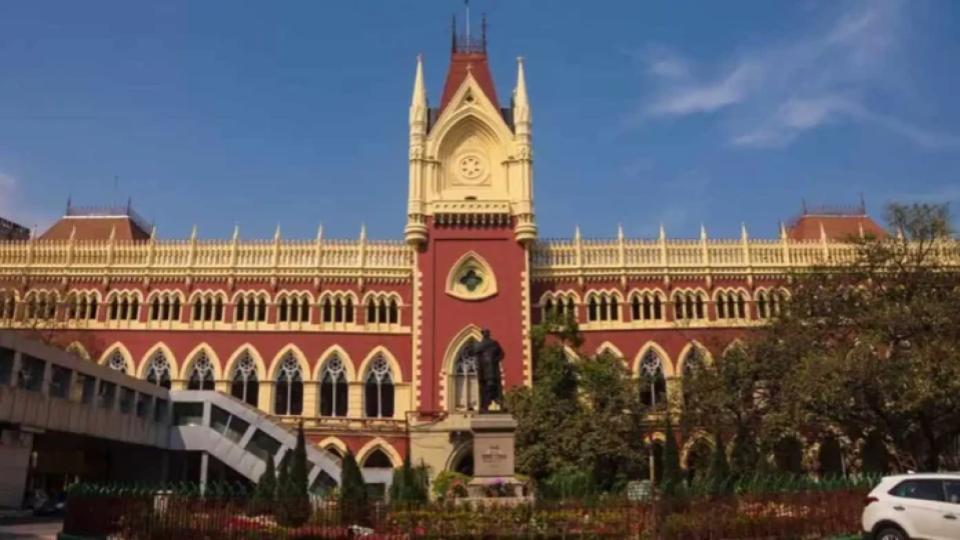
March 31, 2026 : The Calcutta High Court on Tuesday dismissed a public interest litigation challenging the decision of the Election Commission of India to transfer several senior police and administrative officials in West Bengal ahead of the State Assembly elections.
A Division Bench comprising Chief Justice Sujoy Paul and Justice Partha Sarathi Sen observed that the officers who were transferred had already been replaced, ensuring continuity in administration. The Court rejected the argument that the reshuffle had created an institutional vacuum or disrupted governance.
The Bench also noted that the newly appointed Chief Secretary and Home Secretary were senior to their predecessors. This, according to the Court, reinforced the position that administrative functioning remained stable and effective during the electoral period, particularly as the transfers were intended to facilitate free and fair elections.
On the issue of alleged impeachment proceedings against Chief Election Commissioner Gyanesh Kumar, the Court declined to examine the matter, holding that no proximate or substantive connection had been established between those allegations and the impugned transfers.
The petition, filed by advocate Arka Kumar Nag, contended that the ECI had undertaken a large-scale reshuffle involving key positions such as the Chief Secretary, Director General of Police, Home Secretary, District Magistrates, and Superintendents of Police, along with several IAS and IPS officers. It was further argued that many senior IPS officers from the West Bengal cadre had been deputed to other States, including Tamil Nadu, Kerala, and Nagaland, for election-related duties.
The petitioner claimed that these actions effectively dismantled the State’s administrative framework and amounted to an arbitrary and punitive exercise of power under Article 324 of the Constitution, allegedly violating federal principles.
The Court, however, held that a practising advocate cannot maintain a grievance against transfer orders unless a clear injury to public interest is demonstrated. It emphasized that temporary transfers during elections do not, by themselves, indicate that the State’s administrative machinery has been paralysed. The Bench further observed that the scale of transfers does not render them arbitrary or mala fide, particularly when similar or larger exercises have been carried out in other parts of the country.
While dismissing the petition, the Court clarified that individual officers remain free to challenge their respective transfer orders in accordance with law.
Senior Advocate Kalyan Bandopadhyay, appearing for the petitioner, argued that even officials with no direct electoral responsibilities had been transferred. He questioned the necessity of deploying officers from West Bengal when elections were being conducted in only a few States, suggesting that personnel could have been sourced elsewhere. Concerns were also raised regarding the potential impact of such transfers on governance, development activities, and emergency response mechanisms within the State.
He further submitted that although the ECI has supervisory authority over elections, its powers are subject to the rule of law and must not be exercised in a manner that undermines the federal structure or interferes with the functioning of an elected State government. He also questioned the criteria and urgency behind the transfers, particularly of officers with unblemished service records, and alleged that the measures appeared selectively directed at West Bengal.