 111
111 23
23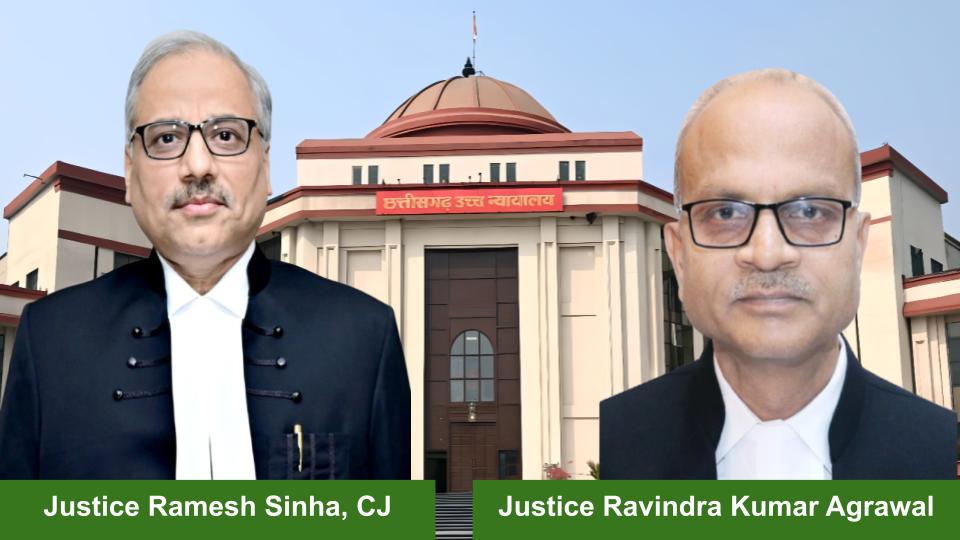 4
4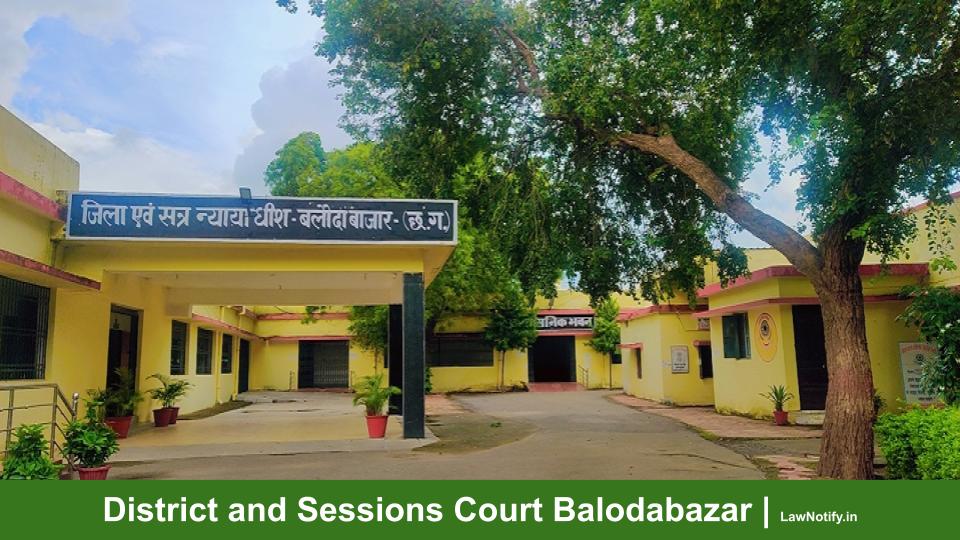 56
56 7
7 8
8 9
9 10
10 News Citation : 2026 LN (HC) 249 | 2026:CGHC:16334-DB
April 9, 2026 : The Chhattisgarh High Court has held that a charge of kidnapping cannot be sustained if a minor girl voluntarily leaves her home and accompanies a person without any inducement or coercion. The ruling came in Deepak Vaishnav vs State of Chhattisgarh, where the Court set aside the conviction of a 24-year-old man previously sentenced to 20 years under the POCSO Act.
A Division Bench of Chief Justice Ramesh Sinha and Justice Ravindra Kumar Agrawal allowed the criminal appeal and acquitted the accused of all charges, including kidnapping and offences under the Protection of Children from Sexual Offences (POCSO) Act.
The case originated in September 2022, when the father of a 15-year-old girl reported her missing after she failed to return home from school. Investigation later revealed that she had met the accused on the way and travelled with him across multiple locations including Mungeli, Raipur, Hyderabad, Vijayawada and Agrapalli, where the two lived together for nearly a month.
The trial court had convicted the accused under Sections 363 and 366 of the IPC and Section 6 of the POCSO Act, sentencing him to 20 years of rigorous imprisonment.
However, the High Court found significant gaps in the prosecution’s case. It noted that the girl had been in regular contact with the accused and had voluntarily accompanied him. Importantly, the Court emphasised that there was no evidence showing that the accused had “taken” or “enticed” her away from lawful guardianship, which is a key ingredient for establishing kidnapping under Section 361 IPC.
Relying on the Supreme Court’s ruling in S. Varadarajan v. State of Madras, the Bench observed that mere accompaniment by a minor, without inducement or persuasion by the accused, does not amount to kidnapping.
The Court also scrutinised the evidence related to the alleged sexual offence. While the girl stated that they had lived together and engaged in physical relations, the medical examination did not reveal any injuries, and no conclusive opinion regarding sexual intercourse was given. The forensic report was also negative.
These evidentiary gaps, combined with the girl’s own statements indicating voluntary participation, created reasonable doubt in the prosecution’s case. The Court held that the charges under the POCSO Act were not proved beyond reasonable doubt.
Accordingly, the High Court set aside the trial court’s judgment and ordered the immediate release of the accused, who had been in custody since October 2022.
Case Reference : CRA No. 119 of 2024, Deepak Vaishnav vs State of Chhattisgarh; Counsels: For Appellant – Mr. Syed Majid Ali, Advocate; For Respondent/State – Mr. Nitansh Jaiswal, Dy. Govt. Advocate.