 11
11
Bilaspur, January 22, 2026 : The Chhattisgarh High Court on Monday held that only 50 percent of seats in postgraduate medical courses across government and private medical colleges in the state can be filled under institutional preference, with the remaining 50 percent reserved for open, merit-based admissions.
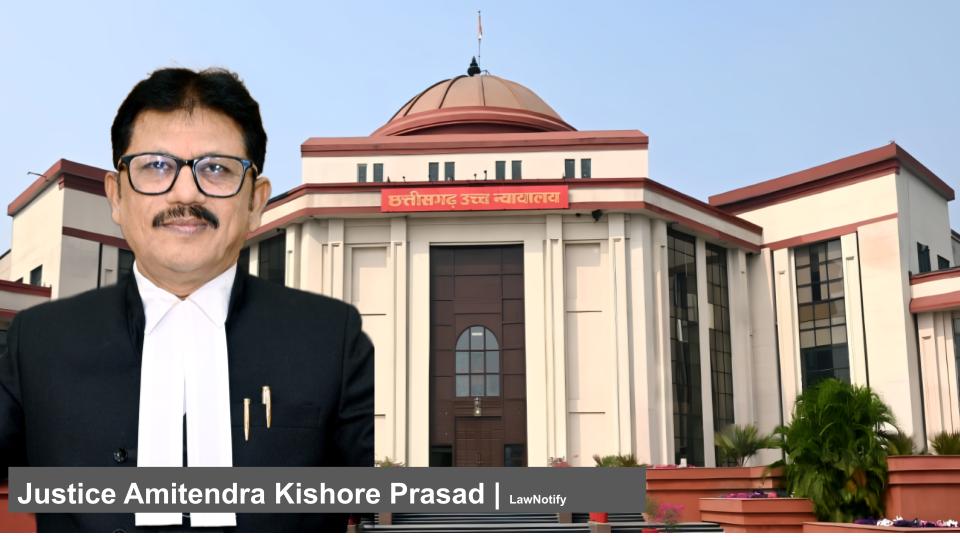
A division bench led by Chief Justice Ramesh Sinha and Justice BD Guru clarified that the institutional quota will apply exclusively to candidates who completed their MBBS from National Medical Commission recognised medical colleges within Chhattisgarh, as well as in-service candidates. Admissions under this quota must be strictly on the basis of merit among eligible institutional candidates.
The remaining half of the seats will be treated as open category seats and filled through a state-level merit list, open to all eligible candidates without any institutional reservation.
The clarification came on an application filed by the state government seeking modification of directions issued by the bench in its November 20, 2025 order. Additional Advocate General Shashank Thakur, appearing for the state, urged the court to ensure preference for candidates who obtained their degrees from Chhattisgarh-based institutions or Ayush University under the state quota.
Opposing the plea, senior advocate Rajeev Srivastava and counsel Sandeep Dubey, representing petitioner Dr Samridhi Dubey, argued that no further modification was required. They submitted that the High Court’s earlier order already followed the principles laid down by the Supreme Court in the Tanvi Behl case.
The case originated from a challenge by Dr Dubey to the Chhattisgarh Medical Postgraduate Admission Rules, 2021. A permanent resident of the state, she completed her MBBS from Salem in Tamil Nadu through the All India Quota. Despite securing an All India Rank of 75,068 in NEET PG 2025, she was disadvantaged under the 2021 rules, which prioritised graduates of Chhattisgarh colleges over state residents who studied elsewhere.
Dr Dubey contended that this framework resulted in discrimination based solely on the place of study. The High Court agreed, noting that the Supreme Court has consistently held that domicile-based reservation in postgraduate medical admissions is impermissible, though a limited degree of institutional preference is constitutionally valid.
Striking down the discriminatory provisions, the bench directed the state to adhere to the law laid down by the apex court. It further ordered that any seats left vacant under the institutional quota must be converted to the open category during the mop-up round of counselling.
Earlier, on November 20, 2025, the High Court had quashed Rules 11(a) and 11(b) of the 2025 Rules as violative of Article 14 of the Constitution. The state challenged that decision before the Supreme Court of India, which on December 18, 2025, allowed the state to approach the High Court for clarification on the permissible extent of institutional reservation.