News Citation : 2026 LN (HC) 176 | 2026:CGHC:10684
March 02, 2026 : The High Court of Chhattisgarh has set aside a Raigarh sessions court order and directed that gold and silver ornaments seized in a 2003 robbery case be returned to the complainant’s legal heirs, holding that the lower court erred in refusing custody after the accused were acquitted.
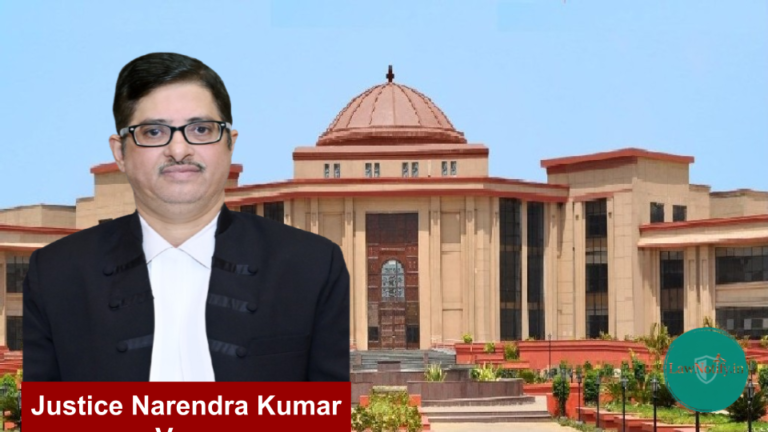
In a judgment delivered on March 2, 2026, Justice Narendra Kumar Vyas allowed a criminal appeal filed by the legal representatives of late Buddha Prakash Soni. The appeal challenged a 2005 order of the Fourth Additional Sessions Judge, Raigarh, which had rejected an application under Section 452 of the Code of Criminal Procedure (CrPC) seeking release of the seized property.
The case dates back to August 15, 2003, when Soni alleged that seven men robbed him of 15 kilograms of silver, five tolas of gold, and ₹4,000 in cash while he was returning from Bhatgaon market. The accused were tried for offences under Sections 395 and 412 of the Indian Penal Code but were acquitted by the trial court.
During investigation, police recorded memorandum statements under Section 27 of the Indian Evidence Act and recovered several silver and gold ornaments from the accused. The items were seized under multiple seizure memos and later identified during trial. However, an earlier application for interim custody under Section 457 CrPC had been rejected by the magistrate.
After the acquittal, the complainant moved the sessions court under Section 452 CrPC, which governs disposal of property at the conclusion of trial. The sessions court declined relief, observing that the complainant could pursue a civil suit to establish ownership.
The High Court disagreed with that approach. It clarified that proceedings under Sections 451 and 457 CrPC, which deal with interim custody during trial, operate in a different sphere from Section 452, which applies after the trial concludes. An earlier rejection of interim custody does not bar a fresh determination of entitlement once evidence has been fully recorded.
The court noted that the seizure memos had been duly proved during trial and that the accused, in their statements under Section 313 CrPC, did not assert ownership over the recovered ornaments. The recovery, made pursuant to disclosure statements under Section 27 of the Evidence Act, was found relevant for determining custody.
Relying on precedents including Mahesh Kumar v. State of Rajasthan, the court reiterated that information leading to discovery under Section 27 can be considered in proceedings for disposal of property under Section 452 CrPC. Even if the accused are acquitted on benefit of doubt, stolen property recovered at their instance and disclaimed by them should ordinarily be returned to the rightful owner.
The High Court held that the sessions court committed a legal error by refusing to consider the proved seizure memos and by directing the complainant to seek civil remedies without properly exercising jurisdiction under Section 452 CrPC.
Setting aside the 2005 order, the court directed that the ornaments detailed in the relevant seizure memos be handed over to the legal heirs of the complainant, subject to usual conditions and satisfaction of the sessions court at Raigarh.
With this, the appeal was allowed, bringing to a close a dispute over custody of the seized property that had lingered for more than two decades.
Case Reference : CRA No. 653 of 2005, Buddha Prakash Soni (Died) Through Legal Heirs vs State of Chhattisgarh and Other; Counsel for the Appellants: Mr. Amit Soni, Advocate; Counsel for the Respondents: Mr. Sanjeev Pandey, Deputy Advocate General, along with Mr. Manish Kashyap, Panel Lawyer.