 111
111 2
2 3
3 45
45 6
6 78
78 9
9 10
10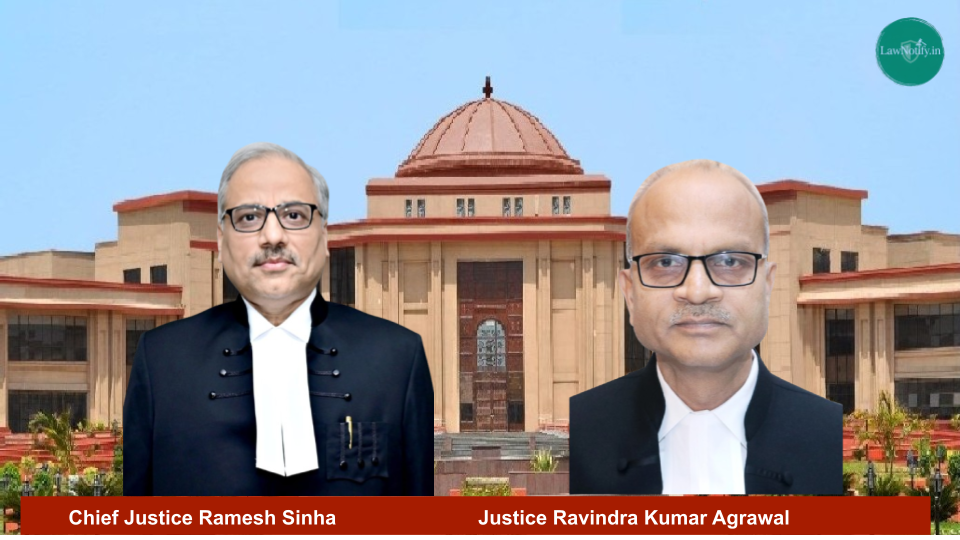
News Citation : 2026 LN (HC) 117 | 2026:CGHC:6454-DB
February 05, 2026 : The High Court of Chhattisgarh has set aside the Chhattisgarh government’s decision to remove and disqualify the President of the Sarangarh Municipal Council, holding that the action was arbitrary, discriminatory, and taken in violation of statutory safeguards.
A Division Bench headed by Chief Justice Ramesh Sinha and Justice Ravindra Kumar Agrawal allowed a writ appeal filed by Smt. Soni Ajay Banjare, who was elected President of the Sarangarh Municipal Council in January 2022. The court overturned an earlier order of a single judge that had upheld the state government’s decision under Section 41-A of the Chhattisgarh Municipalities Act, 1961.
The case arose from allegations relating to the allotment of small parcels of municipal land on lease to private individuals for shop construction or expansion. These allotments were approved through resolutions of the President-in-Council and later placed before the Municipal Council’s general body. However, complaints were made that possession of the land was handed over before obtaining mandatory approval from the state government and before completing procedures under the 1996 rules governing transfer of municipal property.
Following an inquiry, the Urban Administration and Development Department issued a show cause notice to the municipal president in March 2025. In July 2025, the state government ordered her removal and disqualified her from holding the office for the next term, citing violations of statutory procedure and public interest concerns.
The High Court found serious legal flaws in this action. It noted that the decisions under scrutiny were collective in nature and that no specific finding had been recorded showing individual culpability, mala fide intent, or abuse of power by the elected president. Relying on settled Supreme Court jurisprudence, the bench reiterated that removal of an elected representative is an exceptional measure that can be justified only for grave and weighty reasons, not for procedural lapses or technical irregularities.
The court also took note of discriminatory treatment. While the inquiry report allegedly found multiple councillors responsible for the same decisions, relevant documents were supplied only to the appellant. Other councillors successfully challenged similar proceedings on the ground that they were denied these materials, leading to remand of their cases. The bench observed that singling out the municipal president for removal, without proportionate action against others or against officials who executed the decisions, reflected arbitrariness and a predetermined approach.
The judges further held that the requirement of a meaningful opportunity of hearing had not been satisfied, stressing that supply of all relied-upon material is an essential component of natural justice. The court concluded that the statutory threshold for invoking Section 41-A had not been met.
Accordingly, the Division Bench quashed both the July 2025 removal order and the December 2025 single-judge judgment. While restoring the appellant’s position, the court clarified that it had not expressed any opinion on the merits of the allegations and granted liberty to the state government to initiate fresh proceedings strictly in accordance with law, if warranted, within two weeks.
Case Reference : WA No. 109 of 2026, Smt. Soni Ajay Banjare v. State of Chhattisgarh & Others; counsel for the appellant: Mr. Rajeev Shrivastava, Senior Advocate, with Mr. Jitendra Pali, Advocate; counsel for the State: Mr. Praveen Das, Additional Advocate General; counsel for respondent No. 5: Mr. R.S. Patel, Advocate.