News Citation : 2017 LN (HC) 1
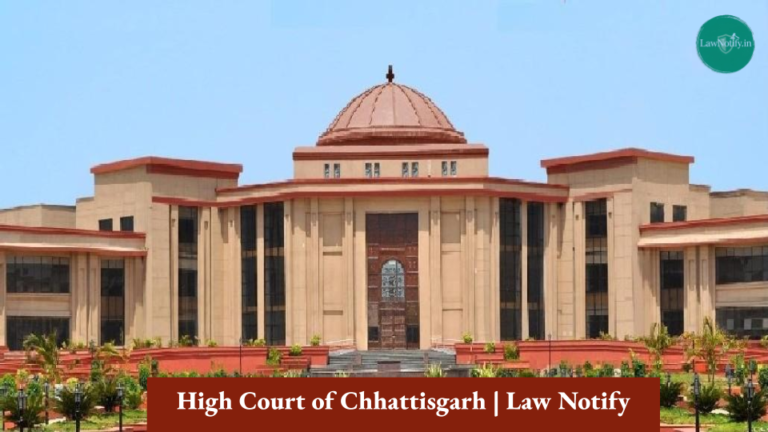
August 03, 2017 : In a significant ruling on the definition of “employee” under labour law, the High Court of Chhattisgarh has dismissed a writ petition filed by Mohan Jute Mill Limited and upheld an order directing reinstatement of a former worker with full back wages.
The case arose from a dispute between Mohan Jute Mill Limited, Raigarh, and its former employee, Ram Pratap Tiwari. According to the court record, the jute mill had gone into a lockout and later resumed operations. The management claimed that it had issued a notice asking Tiwari to rejoin duty. However, when he reported for work after some time, he was told that the post he had previously held was no longer vacant.
Challenging the denial of rejoining, Tiwari approached the Labour Court at Raigarh under Section 31(3) of the Chhattisgarh Industrial Relations Act. The Labour Court dismissed his claim in January 2012, holding that he did not fall within the statutory definition of an “employee” under Section 2(13) of the Act. The court reasoned that he was designated as a supervisor and was drawing wages exceeding Rs. 1,600 per month, which, in its view, placed him outside the Act’s protection.
Tiwari appealed to the State Industrial Court, Bilaspur. The appellate forum set aside the Labour Court’s order and ruled that the management’s refusal to allow him to rejoin was illegal. It directed the company to reinstate him within 60 days with full back wages.
Mohan Jute Mill then moved the High Court, arguing that the Industrial Court had contradicted itself. The company contended that once it was held that Tiwari was not an “employee” under the Act, the Industrial Court had no jurisdiction to grant relief on merits.
The High Court, however, rejected this interpretation. After examining the findings of the Industrial Court, Justice P. Sam Koshy observed that the appellate authority had not concluded that Tiwari was outside the definition of an employee. Instead, it had found that the Labour Court’s conclusion was flawed because the management had failed to lead any evidence about the nature of duties performed by him.
The court noted that the management had been proceeded against ex parte before the Labour Court and had not produced evidence to show that Tiwari’s work was predominantly supervisory in nature or that he exercised administrative control. In the absence of such evidence, the mere designation of “supervisor” or the salary drawn could not determine his status.
To reinforce this principle, the High Court referred to precedents including the Supreme Court’s ruling in Triveni Engineering & Industries Ltd. v. Jaswant Singh, which held that whether a person is a workman depends primarily on the nature of duties performed, not on title or pay structure. It also cited decisions of the Madhya Pradesh and Bombay High Courts emphasizing that job profile and actual responsibilities are decisive in determining employee status.
Applying these settled principles, the court concluded that the burden was on the employer to prove that the employee fell outside the statutory definition. Since Mohan Jute Mill had led no evidence on the character of Tiwari’s duties, the Industrial Court was justified in overturning the Labour Court’s decision.
Finding no legal infirmity in the appellate order, the High Court dismissed the writ petition as devoid of merit, thereby affirming the direction to reinstate Tiwari with full back wages.
Case Reference : Writ Petition (L) No. 143 of 2012, Mohan Jute Mill Limited, Raigarh v. Ram Pratap Tiwari; Counsel for the Petitioner: Mr. Amrito Das, Advocate; Counsel for the Respondent: Mr. S.P. Kale, Advocate.