News Citation : 2026 LN (HC) 180 | 2026:CGHC:10933-DB
March 03, 2026 : In a significant ruling on the applicability of personal laws to tribal communities, the High Court of Chhattisgarh has held that members of a Scheduled Tribe who voluntarily follow Hindu customs and rites cannot be denied relief under the Hindu Marriage Act, 1955.
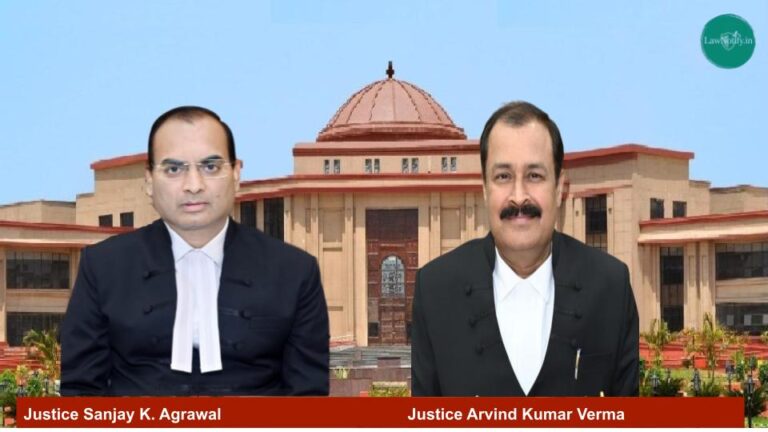
The Division Bench comprising Justice Sanjay K. Agrawal and Justice Arvind Kumar Verma set aside an order of the Family Court, Bastar at Jagdalpur, which had rejected a mutual consent divorce petition filed under Section 13B of the Hindu Marriage Act on the ground that one of the spouses belonged to a Scheduled Tribe. 180
The case arose from a matrimonial dispute between a wife belonging to a Scheduled Caste and a husband belonging to a Scheduled Tribe. The couple married on April 15, 2009, according to Hindu rites and ceremonies, including the performance of saptpadi. They have a son born in 2011 and have been living separately since April 6, 2014. 180
When the parties jointly approached the Family Court seeking dissolution of marriage by mutual consent, their plea was rejected. The Family Court relied on Section 2(2) of the Hindu Marriage Act, which excludes members of Scheduled Tribes from the Act’s application unless the Central Government issues a notification extending it to them. 180
Before the High Court, counsel for the appellants argued that the husband had voluntarily chosen to follow Hindu customs and that the marriage was solemnised strictly in accordance with Hindu traditions. The amicus curiae also relied on judicial precedents to submit that once parties are “Hinduised” and follow Hindu rites, they cannot be excluded from the scope of codified Hindu law.
The Bench examined Section 2(2) of the Act, which states that the statute does not apply to members of Scheduled Tribes unless notified otherwise by the Central Government. However, the Court clarified that this exclusion is a protective measure meant to preserve tribal customary practices, not a blanket bar preventing access to statutory remedies.
Relying on the Supreme Court’s decision in Labishwar Manjhi v. Pran Manjhi (2000) 8 SCC 587 and subsequent High Court rulings, the Bench reiterated that if members of a Scheduled Tribe are found to be following Hindu customs and traditions, they can be governed by Hindu personal law. The Court also referred to decisions of the Delhi High Court and Andhra Pradesh High Court supporting the view that Hinduised tribal members are not automatically excluded from the Hindu Marriage Act.
The judges noted that the parties had consistently stated in their pleadings and statements before the Family Court that their marriage was performed as per Hindu customs, including saptpadi, and that they were following Hindu traditions. In such circumstances, the Court held, they could not be relegated to customary forums or denied recourse under the Act.
The High Court concluded that Section 2(2) is intended to protect tribal customs but cannot be used to deny relief when a tribal member voluntarily submits to Hindu law and marries according to Hindu rites. Accordingly, the appeal was allowed, the Family Court’s judgment dated August 12, 2025 was set aside, and the matter was remitted for fresh consideration of the mutual consent divorce petition on merits. 180
The ruling clarifies the interplay between tribal identity and codified personal law, reaffirming that voluntary adoption of Hindu customs can bring parties within the ambit of the Hindu Marriage Act.
Case Reference : FA(MAT) No. 344 of 2025, Smt. Gudiya Nagesh v. Muniraj Mandavi; For Appellants: Mr. Ishan Verma, Advocate; Amicus Curiae: Mr. Manoj Paranjpe, Senior Advocate, with Mr. Kabeer Kalwani, Advocate.