News Citation : 2024 LN (HC) 1
Bilaspur, November 05, 2024 : The High Court of Chhattisgarh has dismissed a writ appeal filed by former Vice-Chancellor of Bastar Vishwavidyalaya, Professor N.D.R. Chandra, affirming the State government’s decision to invoke emergency powers under the Chhattisgarh Vishwavidyalaya Adhiniyam, 1973, and remove him from office.
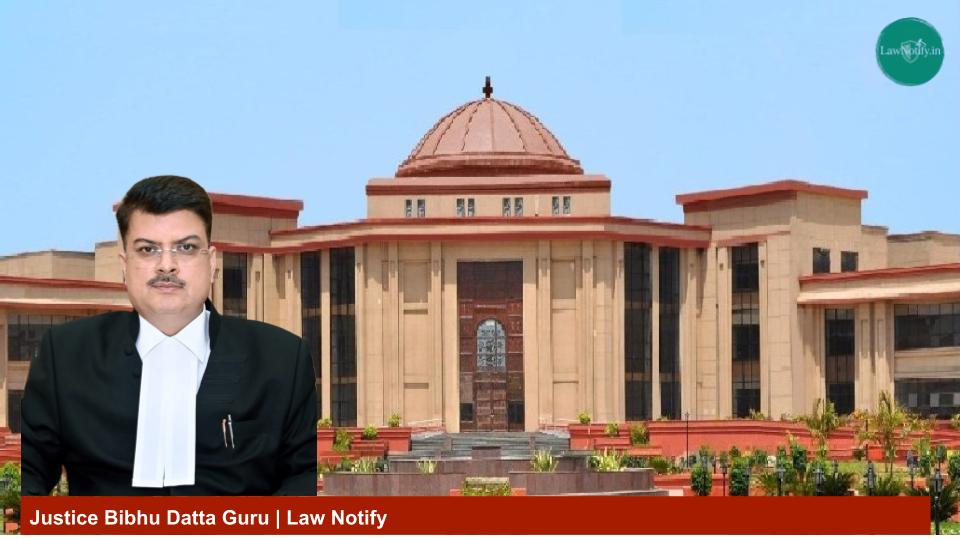
A Division Bench comprising Chief Justice Ramesh Sinha and Justice Bibhu Datta Guru held that there is no judicially prescribed standard to reassess the “subjective satisfaction” reached by the Governor and the State government while invoking Section 52 of the Act. The Bench ruled that once the State is satisfied, based on available material, that a university’s administration cannot be carried on in accordance with the law, courts exercising writ jurisdiction cannot substitute their own assessment for that satisfaction.
The appeal arose from the dismissal of a writ petition in May 2024, which had challenged a series of notifications issued in September 2016. Through those notifications, the State government applied modified provisions of the University Act, removed Professor Chandra from the post of Vice-Chancellor, and appointed the Commissioner of Bastar Division as the new head of the university.
Professor Chandra argued that the State had bypassed the detailed procedure laid down under Section 14 of the Act, which governs removal of a Vice-Chancellor, and had wrongly resorted to the emergency provision under Section 52. He contended that he was not given a fair opportunity of hearing and that the drastic power under Section 52 was used only to unseat him from office.
The State, however, defended its decision by pointing to multiple enquiry reports that found serious administrative and financial irregularities during the petitioner’s tenure, including violations in faculty recruitment, procurement processes, and expenditure beyond sanctioned budgets. These reports, the State submitted, were forwarded to the Governor, who repeatedly advised the government to act under Sections 51 and 52 if mismanagement was found to be affecting the university’s functioning.
After examining the original records and the sequence of events, the Division Bench agreed with the Single Judge’s view that sufficient material existed for the State to form its satisfaction. The Court relied on established constitutional principles that subjective satisfaction of the executive, particularly in emergency-like statutory provisions, is not open to judicial re-evaluation unless shown to be mala fide or wholly unsupported by record.
The Bench also noted that Section 52 operates as an exception to the normal removal procedure and is intended to address situations where the overall administration of a university is in jeopardy. In such circumstances, the Court held, individual protections under Section 14 must yield to the larger institutional interest.
Finding no illegality or procedural infirmity in the State’s action or in the earlier judgment, the High Court dismissed the writ appeal, bringing the long-running dispute to a close.
Case Reference : WA No. 320 of 2024, Professor N.D.R. Chandra vs State of Chhattisgarh and Others; Counsels: for the appellant, Shri Kishore Bhaduri, Senior Advocate, along with Shri Harishankar Patel, Shri Pankaj Singh and Shri Harsh Dave, Advocates; for the State, Shri Yashwant Singh Thakur, Additional Advocate General; and for respondent No. 2, Shri Neeraj Choubey, Advocate.