 1112
1112 3
3 4
4 5
5 678
678 9
9 10
10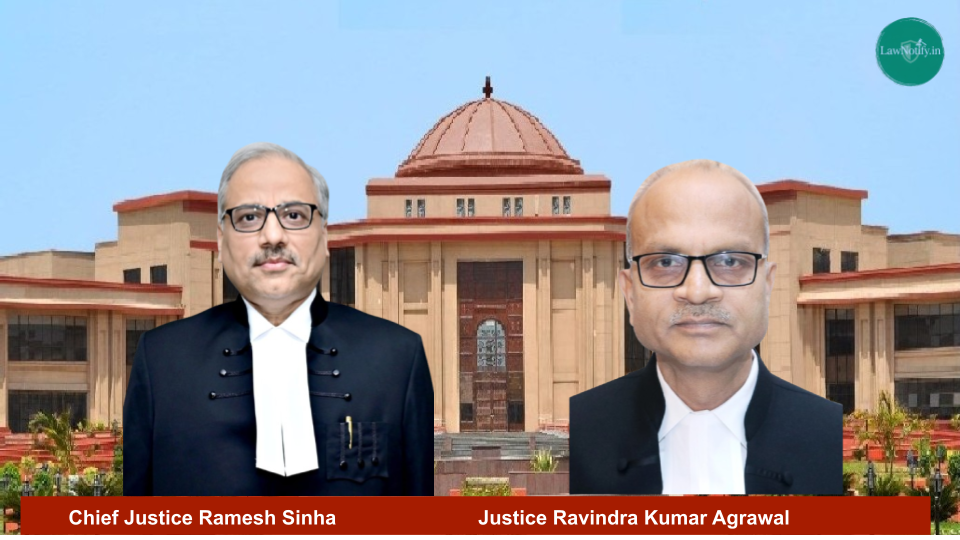
Bilaspur : The Chhattisgarh High Court has stepped in to ensure pension benefits continue to the elderly mother of a police constable who was killed in a Naxal attack more than two decades ago, calling the denial of such support “highly unjust.”
For nearly four years after losing her husband, 68-year-old Filisita Lakra from Jashpur district had been seeking continuation of the family pension that was originally sanctioned following the martyrdom of her son, Ignatius Lakra. Her plea was simple: the financial support granted to the family after her son’s death should not cease merely because her husband, the initial recipient, had passed away.
A Division Bench comprising Chief Justice Ramesh Sinha and Justice Ravindra Kumar Agrawal directed the state authorities to process her claim within six weeks and grant her the extraordinary family pension along with arrears.
Ignatius Lakra, a constable with the 10th Battalion of the Chhattisgarh Armed Force in Surajpur, was just 21 years old when he was killed in an encounter with Naxals on December 11, 2002. He was unmarried at the time. After his death, his father, Lobin Lakra, was granted family pension, which he continued to receive until his demise on August 23, 2020.
Following her husband’s death, Filisita Lakra applied for transfer of the pension in her name. The Treasury Officer rejected her application, citing the Chhattisgarh Police Karmchari Varg Asadharan Parivar Nirvritti Vetan Niyam, 1965. According to the authorities, the 1965 Rules did not provide for continuation of pension to a successor after the death of the original beneficiary.
Her counsel, Ashish Beck, argued that the 1965 Rules were discriminatory. He pointed out that under the Chhattisgarh Civil Services (Extraordinary Pension) Rules, 1963, which apply to non-police government employees, there is a clear provision that if pension is sanctioned to the father of a deceased employee, it shall pass on to the mother after his death.
Representing the state, Deputy Advocate General Prasun Kumar Bhaduri maintained that the 1965 Rules were special provisions applicable to police personnel and did not contain a similar clause.
The High Court, however, observed that the 1965 Rules were intended to align with the 1963 Rules. The bench noted that police personnel serve in particularly high-risk conditions, especially in Naxal-affected areas, and their families cannot be placed in a worse position than other government employees.
The court held that the state ought to have made similar amendments to the 1965 Rules, as were made to the 1963 Rules, and described the denial of pension to the mother of a martyr as unjust. Instead of striking down the 1965 Rules, the bench applied the doctrine of harmonious construction and read the beneficial provisions of the 1963 Rules into the 1965 Rules.
With the order, Filisita Lakra will now receive the extraordinary family pension along with arrears, bringing long-awaited relief and reaffirming the principle that the families of those who die in the line of duty must be supported in both letter and spirit.