 111
111 2
2 34
34 5
5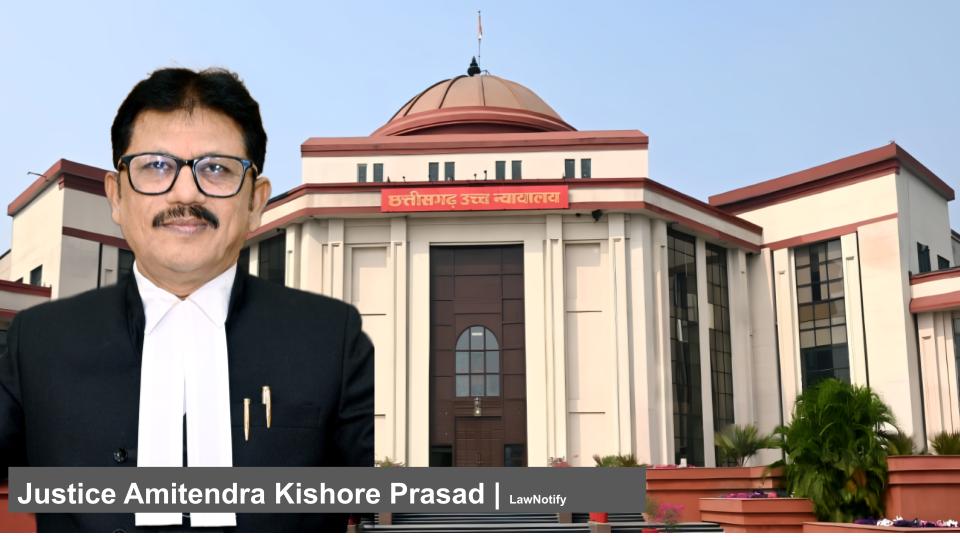 67
67 8
8 910
910
News Citation : 2026 LN (HC) 88 | 2026:CGHC:6157-DB
February 04, 2026 : The High Court of Chhattisgarh has granted a decree of divorce to a husband, holding that the filing of a false criminal case under Section 498A of the Indian Penal Code by the wife, which ended in acquittal, amounted to mental cruelty under the Hindu Marriage Act.
A Division Bench comprising Justice Sanjay K. Agrawal and Justice Arvind Kumar Verma allowed the husband’s appeal and set aside a 2023 judgment of the Family Court, Dhamtari, which had earlier refused to dissolve the marriage. The judgment was delivered on February 4, 2026.
The couple was married in April 2009 and has two daughters. In 2017, the wife lodged a criminal complaint alleging cruelty and dowry harassment against her husband, his brother, and his mother. The FIR led to a prolonged criminal trial that lasted nearly five years. In April 2022, the Judicial Magistrate First Class acquitted all the accused, holding that the allegations were not proved beyond reasonable doubt. The wife’s appeal against acquittal was dismissed in 2023, and a criminal revision was later rejected by the High Court.
Following the acquittal, the husband approached the Family Court seeking divorce on grounds of cruelty and desertion. The Family Court dismissed the plea, citing the pendency of criminal proceedings at that time. The husband then challenged that decision before the High Court.
Reversing the Family Court’s findings, the High Court held that forcing a spouse and his family to undergo a long criminal trial on unfounded allegations causes deep mental anguish and social harm. The Bench relied on Supreme Court precedents to conclude that while merely filing a complaint does not by itself amount to cruelty, a false complaint that results in acquittal after years of prosecution does constitute mental cruelty.
The Court observed that the husband faced continuous fear of arrest, damage to reputation, and prolonged psychological stress due to the criminal case. These factors, taken together, met the legal threshold of cruelty under Section 13(1)(ia) of the Hindu Marriage Act.
Accordingly, the High Court dissolved the marriage solemnized in 2009. Since the wife had not sought permanent alimony during the proceedings, the Court granted her liberty to file a separate application for maintenance under Section 25 of the Hindu Marriage Act.
Case Reference : FA(MAT) No. 257 of 2023, Dharmendra Sahu v. Smt. Sandhya Sahu; Counsel for the Appellant: Mr. Yogesh Pandey, Advocate; Counsel for the Respondent: Mr. T.K. Jha and Mr. Shashi Kumar Kushwaha, Advocates.