
News Citation : 2026 LN (HC) 171 | 2026:CGHC:10635
February 28, 2026 : The High Court of Chhattisgarh has ruled that the post of Kotwar is not hereditary and that preference to a family member of a former Kotwar does not create any automatic or enforceable right to appointment. Dismissing a writ petition filed by Pardeshi Ram, the Court held that appointments to the post are strictly governed by statutory rules and must be based on eligibility and suitability, not lineage.
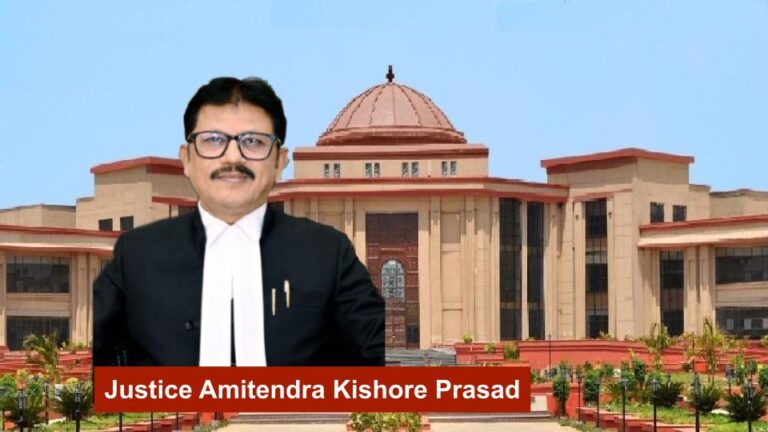
The judgment, delivered on February 28, 2026 by Justice Amitendra Kishore Prasad, arose from a long-running dispute over the appointment of a Kotwar in Village Ganiyari, Tahsil Nawagarh, District Bemetara.
Pardeshi Ram’s father had served as Kotwar until his death in November 2010. After the vacancy arose, the Tahsildar initiated the process to fill the post. Another candidate was initially appointed, but following his death during the pendency of litigation, a fresh proclamation was issued in 2018 inviting applications. Both the petitioner and a private respondent applied.
After verification of character and antecedents through the police and consideration of eligibility criteria under the Chhattisgarh Land Revenue Code, 1959 and the Kotwar Rules framed under it, the Tahsildar appointed the private respondent as Kotwar. The petitioner challenged the appointment before the Sub-Divisional Officer, then before the Commissioner, and subsequently before the Board of Revenue. His revision and later review application were dismissed, prompting him to approach the High Court under Article 226 of the Constitution.
Before the High Court, the petitioner argued that as the son of the deceased Kotwar, he was entitled to preference under Rule 4(2) of the Kotwar Rules. He also contended that educational qualification was not a mandatory requirement and that past preventive proceedings under Sections 107 and 116 of the Code of Criminal Procedure should not disqualify him.
The Court, however, made it clear that the statutory scheme does not recognize any hereditary claim. It observed that the post of Kotwar is a statutory position created and regulated by Section 230 of the Chhattisgarh Land Revenue Code, 1959 and the Rules framed under it. Preference to a near relative of an ex-Kotwar is discretionary and applies only when other conditions are equal. It does not confer a vested right.
The Court noted that eligibility under Rule 2 requires the candidate to be of good character and antecedents. The record showed that there were criminal proceedings under Sections 107 and 116 of the CrPC against the petitioner and complaints from villagers, including an order by an Executive Magistrate directing him to execute a bond to maintain peace. These aspects were considered relevant by the competent authority while assessing suitability.
In contrast, the selected candidate had no adverse criminal antecedents and was younger and better educated. While education may not be a strict statutory requirement, the Court held that comparative merit and capacity to discharge village-level responsibilities are legitimate considerations for the appointing authority.
The High Court emphasized that its role under Article 226 is limited to examining the legality and fairness of the decision-making process, not reassessing comparative merit as an appellate body. It found that the Commissioner and the Board of Revenue had recorded concurrent findings after examining the material on record and that there was no patent illegality, perversity, or procedural impropriety.
The Court also noted that the petitioner had not independently challenged the subsequent order appointing the private respondent as permanent Kotwar, which had attained finality.
Finding no violation of statutory provisions or principles of natural justice, the Court dismissed the writ petition. The ruling reinforces that statutory appointments in village administration must strictly adhere to prescribed rules and that claims based solely on family connection cannot override eligibility and suitability requirements.
Case Reference : WPS No. 7497 of 2023, Pardeshi Ram v. State of Chhattisgarh & Others; Counsels: Ms. Renu Kochar for the Petitioner, Mr. Anand Dadariya, Deputy Advocate General for the State, and Mr. Rajkumar Pali for Respondent No. 6.