
News Citation : 2026 LN (HC) 183 | 2026:CGHC:11156
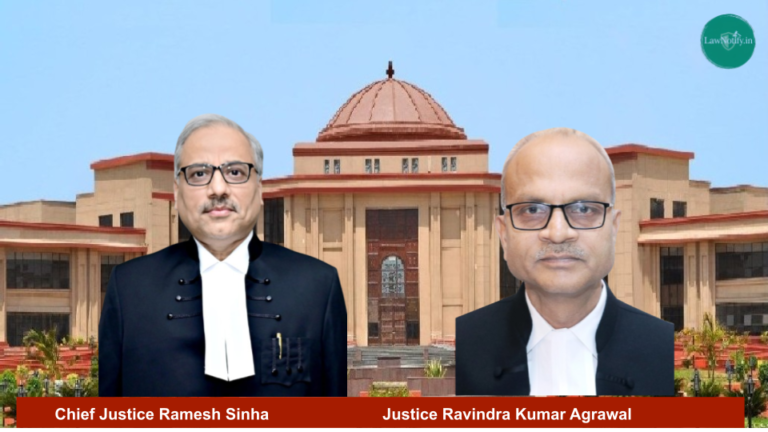
March 09, 2026 : The Chhattisgarh High Court has set aside charges under the Scheduled Castes and Scheduled Tribes (Prevention of Atrocities) Act, 1989 against two accused in a criminal case from Balod district, holding that the prosecution record did not prima facie show that the alleged acts were committed on the basis of the complainant’s caste.
Justice Sanjay Kumar Jaiswal delivered the ruling while deciding Criminal Appeal No. 2621 of 2025 filed by Ashish Gupta and Hiramn Kumar Sahu. The appeal challenged an order dated September 26, 2025 passed by the Special Judge (SC/ST Act) in Balod, which had framed charges against the accused under provisions of the SC/ST Act along with sections of the Bharatiya Nyaya Sanhita, 2023.
According to the prosecution, the incident occurred on June 2, 2025 near Sheetla Mandir Chowpati in Balod. It was alleged that the accused abused complainant Madhavan Dongre with obscene language, assaulted him and Lata Dongre, and threatened them with death. The prosecution also claimed that the accused were aware that the complainants belonged to the Mahar community, which is a Scheduled Caste, and therefore the offence attracted provisions of the SC/ST Act.
During the proceedings, the defence argued that the case initially led to two similar FIRs being registered. One was lodged at Dondi police station on June 4, 2025 and another at Balod police station the same day. Later, the first was treated as a Zero FIR and merged into the Balod case. The defence contended that neither the FIR nor the statements recorded during investigation contained the essential ingredients required to invoke offences under the SC/ST Act. They also argued that the investigating officer had added the special law provisions merely after collecting the caste certificate of the complainant, without any material indicating that the accused targeted the victims because of their caste.
The High Court examined the legal requirements under Sections 3(1)(d) and 3(2)(va) of the SC/ST Act and referred to Supreme Court precedents including Hitesh Verma v. State of Uttarakhand and Shajan Skaria v. State of Kerala. These rulings clarify that merely knowing the victim belongs to a Scheduled Caste or Scheduled Tribe is not sufficient. The prosecution must show that the alleged offence was committed specifically because of the victim’s caste identity.
After reviewing the FIR and witness statements, the High Court found no indication that the accused acted with the intention of insulting or targeting the complainants due to their caste. The court also observed that the records did not establish that the accused had prior knowledge of the complainants’ caste at the time of the incident.
In view of the absence of these essential elements, the High Court held that the charges framed under the SC/ST Act could not be sustained. It therefore quashed Charge Nos. 4 and 5 relating to the special law.
However, the court clarified that other charges under the Bharatiya Nyaya Sanhita would continue. The matter has been sent to the court of the Chief Judicial Magistrate in Balod for trial on the remaining offences. The appeal was accordingly allowed in part.
Case Reference : CRA No. 2621 of 2025, Ashish Gupta v. State of Chhattisgarh; Counsel for the Petitioner: Hemant Gupta, Advocate; Counsel for the Respondent: Anish Tiwari, Deputy Government Advocate.