 111234
 56
56 7
7 8
8 9
9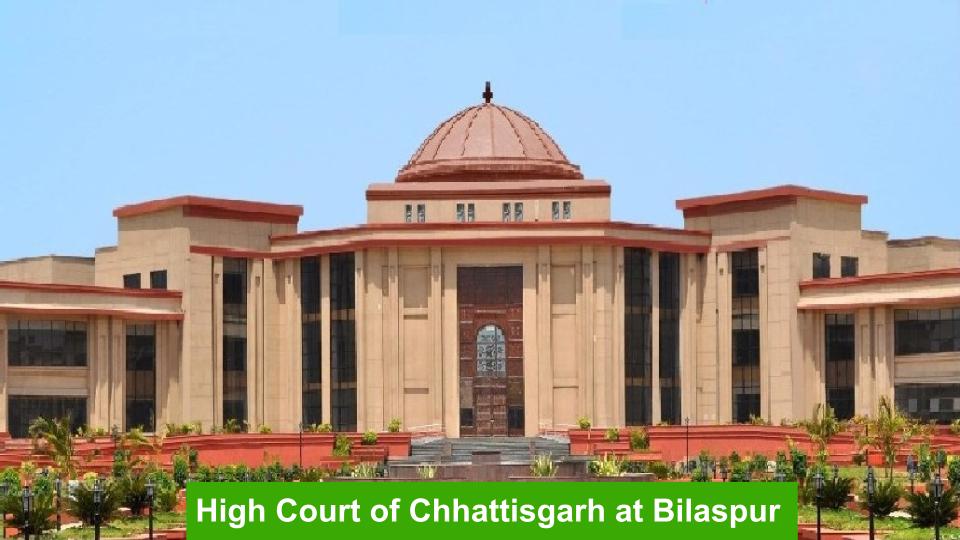 10
10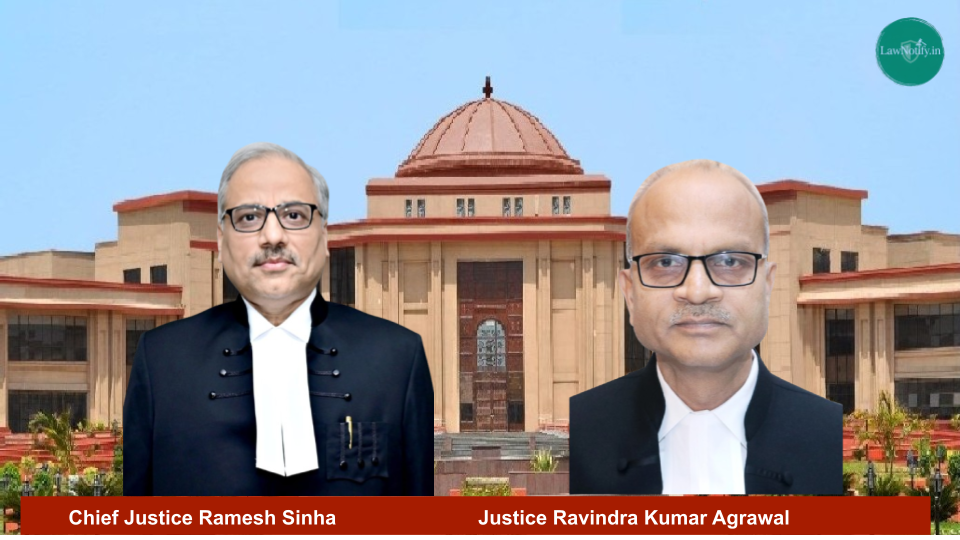
News Citation : 2026 LN (HC) 77 | 2026:CGHC:5236-DB
January 30, 2026 : The High Court of Chhattisgarh has declined to interfere with a government tender for the supply of school and office furniture, holding that courts have a very limited role in reviewing procurement conditions framed through the Government e-Marketplace (GeM) portal.
A Division Bench headed by Chief Justice Ramesh Sinha and Justice Ravindra Kumar Agrawal dismissed a writ petition filed by Singhaniya Furniture Manufacturing Business Pvt. Ltd., a Janjgir-Champa-based startup, which had challenged eligibility criteria in a ₹780-lakh furniture procurement tender issued by the State government.
The petitioner argued that the tender unfairly excluded startups and micro and small enterprises by denying relaxation in experience, turnover, and past performance requirements, despite such relaxations being provided under the Chhattisgarh Store Purchase Rules, 2002, as amended in 2025. The company claimed that the tender conditions violated constitutional guarantees of equality and freedom of trade, and effectively created a closed market favouring established bidders.
The impugned tender, issued on January 9, 2026 through the GeM portal, required bidders to demonstrate an average annual turnover of ₹780 lakh and prior supply of at least 80 percent of the total bid quantity of similar furniture to a government organisation in any one of the previous three financial years. The petitioner contended that these conditions neutralised statutory benefits intended for startups and MSMEs, and were contrary to national procurement policies encouraging their participation.
Opposing the plea, the State government maintained that the tender was issued strictly in accordance with GeM norms under Rule 3 of the Store Purchase Rules. It argued that startup incentives under Rule 4.2 are discretionary and do not create an enforceable right to relaxation, especially in high-value procurements where uninterrupted supply is critical. The State also pointed out that the petitioner had not challenged the underlying policy decision to procure through GeM.
After examining the rival submissions, the Bench held that the eligibility conditions were uniformly applicable to all bidders and were neither arbitrary nor discriminatory. The Court observed that procurement through the GeM portal is a statutorily recognised mode and that policy decisions on qualification benchmarks fall within the exclusive domain of the tendering authority.
Relying on a long line of Supreme Court precedents, including Tata Cellular and Banshidhar Construction, the High Court reiterated that judicial review in tender matters is confined to examining the decision-making process. Courts cannot act as appellate authorities over commercial terms unless mala fides, bias, or manifest arbitrariness is clearly established. Finding no infirmity in the process and noting that the petitioner had failed to challenge the relevant procurement rules themselves, the Court dismissed the writ petition.
Case Reference : WPC No. 382 of 2026, Singhaniya Furniture Manufacturing Business Pvt. Ltd. and another vs. State of Chhattisgarh and others; counsels: for the petitioners, Mr. B. P. Sharma, Advocate; for the respondents, Mr. Shashank Thakur, Additional Advocate General.