 111
111 2
2 34
34 5
5 67
67 8
8 910
910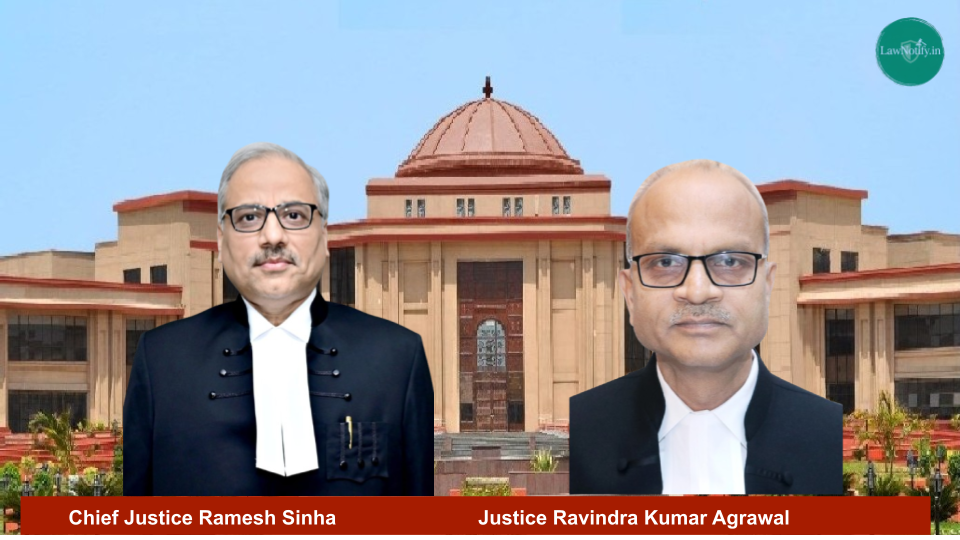
News Citation : 2026 LN (HC) 98 | 2026:CGHC:1861-DB
January 13, 2026 : The Chhattisgarh High Court has declined to quash criminal proceedings against a government employee accused of facilitating the creation and use of an allegedly fake death certificate and forged Will in a long-running land dispute in Surajpur district.
A Division Bench headed by Chief Justice Ramesh Sinha and Justice Ravindra Kumar Agrawal dismissed a petition filed by a Gram Panchayat Secretary who sought quashing of an FIR and charge sheet registered under Sections 420, 467, 468, 471, 120-B read with Section 34 of the Indian Penal Code.
The case arises from a dispute over agricultural land belonging to late Shiva, the uncle of both the complainants and the accused. The prosecution alleges that the accused procured a false death certificate and fabricated a Will to illegally secure mutation of land records and subsequently sell the property. According to the FIR, a death certificate showing Shiva’s death as March 30, 2008 was fraudulently obtained, even though the complainants claimed he had died much earlier in April 1989.
Complicating the matter, official revenue records indicated that Shiva personally appeared before the Tehsildar in January 1990 and was granted a patta, suggesting that he was alive after the alleged 1989 date of death. Parallel proceedings before revenue authorities also resulted in two conflicting death certificates being issued, both of which were later set aside by the Sub-Divisional Officer (Revenue). The Commissioner, Sarguja Division, subsequently upheld one of those orders.
The petitioner argued that he had no statutory role in issuing death certificates, which fall exclusively within the authority of the Tehsildar. He also contended that the disputed death certificate had already been annulled by revenue authorities and that he was neither a beneficiary of the land transaction nor had gained any personal advantage. Terming the prosecution malicious, the petitioner claimed the criminal case was an abuse of process aimed at settling a civil land dispute.
The State opposed the plea, submitting that the investigation had revealed active facilitation by the petitioner in preparing and forwarding documents that formed the basis for issuance of the disputed death certificate. It was further argued that issues such as conspiracy, forgery, and use of fabricated documents could not be examined at the quashing stage and must be tested at trial.
Agreeing with the State, the High Court held that quashing jurisdiction must be exercised sparingly and only in exceptional cases. The Bench observed that the petitioner’s alleged role went beyond mere issuance of documents and included facilitation and conspiracy, which attracted criminal liability even in the absence of personal gain.
The Court also clarified that orders passed by revenue authorities setting aside death certificates are administrative in nature and do not determine criminal culpability. It noted that the FIR and charge sheet disclosed cognizable offences supported by witness statements and documentary evidence, making the case fit for trial.
Relying on settled Supreme Court jurisprudence, including the decision in Neeharika Infrastructure Pvt. Ltd. v. State of Maharashtra, the Bench held that evaluating disputed facts or assessing the defence at this stage would amount to conducting a mini trial, which is impermissible. Accordingly, the petition seeking quashing of the FIR and criminal proceedings was dismissed, clearing the way for the trial to proceed before the Judicial Magistrate First Class, Surajpur.
Case Reference : CRMP No. 107 of 2026, Parasnath Rajavade v. State of Chhattisgarh and Others; counsel for the petitioner was Mr. Rahil Arun Kochar, Advocate, and counsel for the respondents was Mr. Dharmesh Shrivastava, Deputy Advocate General.