News Citation : 2026 LN (HC) 193 | 2026:CGHC:11872
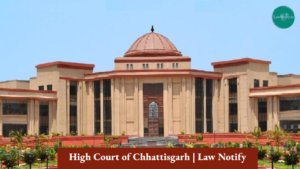
March 12, 2026 : The High Court of Chhattisgarh at Bilaspur has allowed an appeal filed by the Railway Administration and set aside a trial court judgment that had declared a man to be the adopted son of a deceased railway employee. The Court held that the plaintiff failed to prove a valid adoption in accordance with the requirements of the Hindu Adoptions and Maintenance Act, 1956.
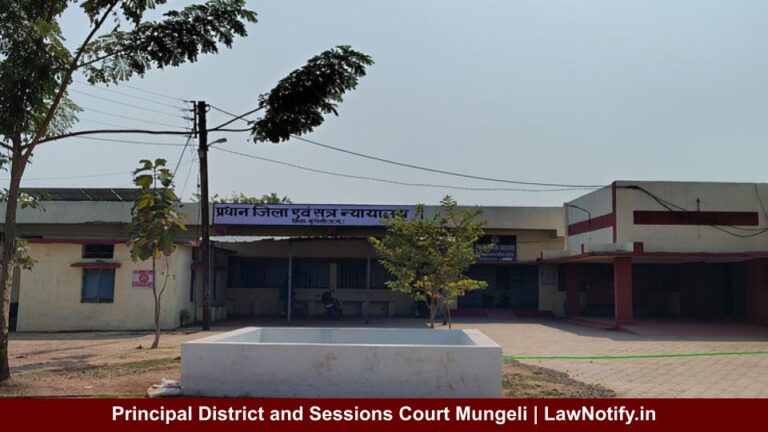
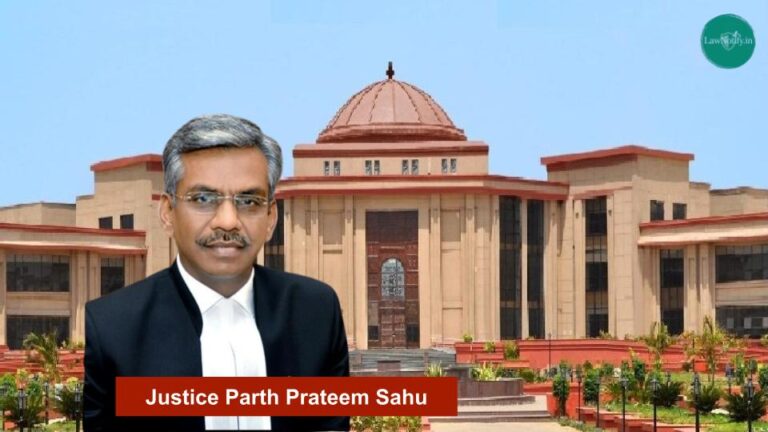
The decision was delivered on 12 March 2026 by Justice Parth Prateem Sahu in First Appeal No. 43 of 2012. The appeal had been filed by the Union of India and officials of the South East Central Railway challenging the judgment of the Third Additional District Judge, Manendragarh, which had earlier declared the plaintiff as the adopted son of late Papa Rao.
According to the plaintiff, Papa Rao and his wife Laxmibai were childless and had adopted him when he was about five or six years old. He claimed that his biological parents had given him in adoption according to the customs of their community, and that he was subsequently raised by the couple. He further relied on a registered adoption deed executed in 1998, nomination entries in the provident fund records, and other documents to support his claim.
However, the Railway Administration disputed the claim and argued that the adoption was not legally valid. It pointed out that the adoption deed had been registered many years after the alleged adoption and that the age mentioned in the deed indicated the plaintiff was already over 21 years old at the time of registration, raising doubts about the validity of the adoption. The appellants also contended that the plaintiff failed to establish the mandatory “giving and taking” ceremony required under Section 11 of the Hindu Adoptions and Maintenance Act.
After examining the evidence on record, the High Court noted significant inconsistencies in the testimony of witnesses. The witnesses could not clearly describe the circumstances of the alleged adoption ceremony, including where it took place or who was present. Some witnesses even contradicted each other regarding the season during which the ceremony allegedly occurred. The Court also observed that no independent members of the community who were present at the ceremony were examined to corroborate the claim.
The Court further noted that the adoption deed relied upon by the plaintiff was registered nearly 22 years after the alleged adoption date of 25 March 1976. It also found that several documents produced by the plaintiff, including service record entries and provident fund nominations, were created only after the registration of the adoption deed in 1998. There were no earlier records, such as school documents, showing the plaintiff as the adopted son of Papa Rao.
Referring to Supreme Court precedents, the High Court emphasized that although a registered adoption deed can create a presumption of adoption, that presumption is rebuttable and the fact of adoption must still be proved through reliable evidence, particularly the essential ceremony of giving and taking the child in adoption.
The Court concluded that the plaintiff failed to discharge the heavy burden of proving a valid adoption. It also held that the trial court had wrongly relied on the registered adoption deed without properly examining whether the statutory conditions under the 1956 Act had been fulfilled.
Setting aside the earlier decree, the High Court allowed the appeal and dismissed the declaration granted by the trial court recognising the plaintiff as the adopted son of the deceased employee.
Case Reference : FA No. 43 of 2012, Union of India, Railway Administration, General Manager, South East Central Railway, Bilaspur Zone, Bilaspur (CG) & Another vs. Lakhi Ram Yadav, Adopted Son of Late Shri Papa Rao; Counsels: For Appellants – Mr. Ramakant Mishra, Dy. Solicitor General with Mr. Rishabh Dev Singh, Advocate; For Respondent – Ms. Meena Shastri, Advocate.