
News Citation : 2026 LN (HC) 175 | 2026:CGHC:10669
March 02, 2026 : In a major relief to retired employees across Chhattisgarh, the High Court of Chhattisgarh has ruled that the Employees’ Provident Fund Organisation (EPFO) cannot withdraw higher pension benefits that were granted in compliance with Supreme Court directions and after due verification.
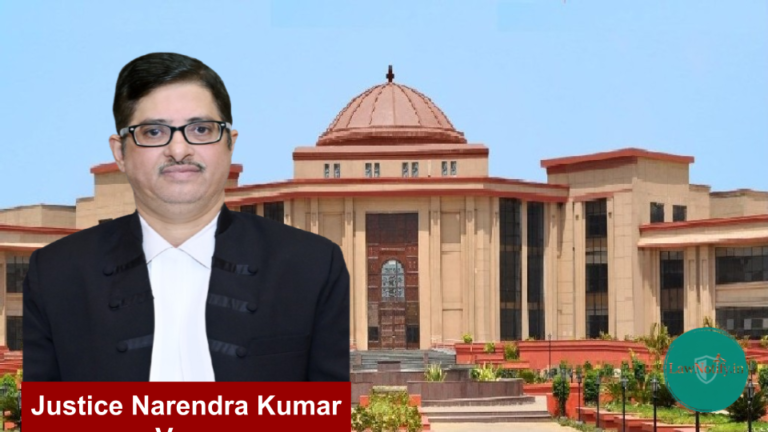
The judgment, delivered on March 2, 2026 by Justice Narendra Kumar Vyas, decided a batch of writ petitions filed by retired employees of cooperative banks and state institutions. These pensioners had challenged the EPFO’s decision to reduce their enhanced pensions and revert them to their original lower amounts.
The dispute traces back to the interpretation of the Employees’ Pension Scheme, 1995. The petitioners had retired before September 1, 2014. At the time of retirement, their pensions were fixed under the statutory wage ceiling, resulting in relatively modest monthly payments. However, following the Supreme Court’s decision in R.C. Gupta vs. Regional Provident Fund Commissioner, the legal position shifted. The Supreme Court held that there was no cut-off date under the unamended scheme for exercising the option to contribute on higher wages for the purpose of pension calculation.
In response to that ruling, the EPFO issued a circular on March 23, 2017 inviting eligible employees to submit joint options with their employers for pension on actual salary. Acting under this circular, the petitioners submitted the required joint declarations, deposited differential provident fund contributions, and underwent scrutiny by the authorities. After verification, the EPFO issued revised Pension Payment Orders granting substantially higher pensions. In some cases, the pension rose from around ₹2,000 per month to over ₹8,000 or more. The enhanced pension was paid for several years.
The situation changed after the Supreme Court delivered its later judgment in Employees Provident Fund Organisation vs. Sunil Kumar B.. Relying on paragraph 50.7 of that ruling, the EPFO took the position that employees who had retired before September 1, 2014 without exercising option under the pre-amendment scheme were not entitled to enhanced pension. The Organisation concluded that such retirees had already exited membership upon attaining 58 years of age and therefore could not claim the benefit of higher pension under the amended framework.
Based on this reasoning, the EPFO withdrew the enhanced pensions and restored the original lower amounts. The petitioners approached the High Court, arguing that they had exercised the option pursuant to the 2017 circular, deposited the required contributions, and were lawfully granted revised pension orders. They contended that once the higher pension was granted in compliance with Supreme Court directions, it could not be withdrawn arbitrarily.
The High Court examined the provisions of the Employees’ Pension Scheme, particularly paragraphs 11(3) and 11(4), along with paragraph 26(6) of the EPF Scheme, 1952. The Court noted that in R.C. Gupta, the Supreme Court had clearly ruled that the scheme did not prescribe any cut-off date for exercising option under the unamended provision. It also observed that the EPFO itself had implemented that decision by issuing the 2017 circular and inviting joint options.
While considering the impact of the Sunil Kumar B. judgment, the High Court focused on the expression “without exercising any option” used in paragraph 50.7. The Court reasoned that this phrase refers to cases where no option whatsoever had been exercised under paragraph 11(3) of the pre-amendment scheme. In the present cases, the petitioners had submitted joint options pursuant to a valid circular issued in compliance with R.C. Gupta and had deposited additional amounts as required. Their cases, therefore, could not be equated with those who had never exercised any option at all.
The Court further noted that the enhanced pensions were granted after due scrutiny and were paid for a considerable period. In such circumstances, the unilateral withdrawal of higher pension without specific statutory backing or explicit direction from the Supreme Court was held to be arbitrary and unsustainable.
Accordingly, the High Court concluded that the EPFO’s action in reducing the pension of these retirees was not legally justified. The ruling reinforces the principle that benefits granted in compliance with binding judicial decisions cannot be withdrawn on a later reinterpretation unless clearly mandated.
The judgment is expected to have wider implications for similarly placed retirees who had exercised joint options under the 2017 circular and were subsequently subjected to pension rollback.
Case Reference : In WPS No. 4132 of 2023 (Lalman Sahu vs Employees Provident Fund Organization and Another) and connected matters including WPS Nos. 7763/2024, 8104/2024, 8225/2024, 1381/2025, 12334/2025, 4659/2023, 5556/2023, 5484/2023, 5106/2023, 4703/2023, 4391/2023 and 4458/2023, the petitioners were represented by Mr. Govind Ram Miri, Senior Advocate, along with Mr. Yogesh Chandra Sharma, Mr. S.P. Sannat, Mr. Basant Kaiwartya and Mr. Neeraj Choubey, Advocates, while the respondents were represented by Mr. Sunil Pillai, Mr. Bhupendra Shrivas (for Mr. Vinay Pandey), Mr. Jitendra Shrivastava with Mr. Amit Kumar Verma, Mr. V. Jayant Kumar (for Mr. Prakash Tiwari), Mr. Keshav Dewangan and Mr. Om P. Sahu, Advocates.