 111
111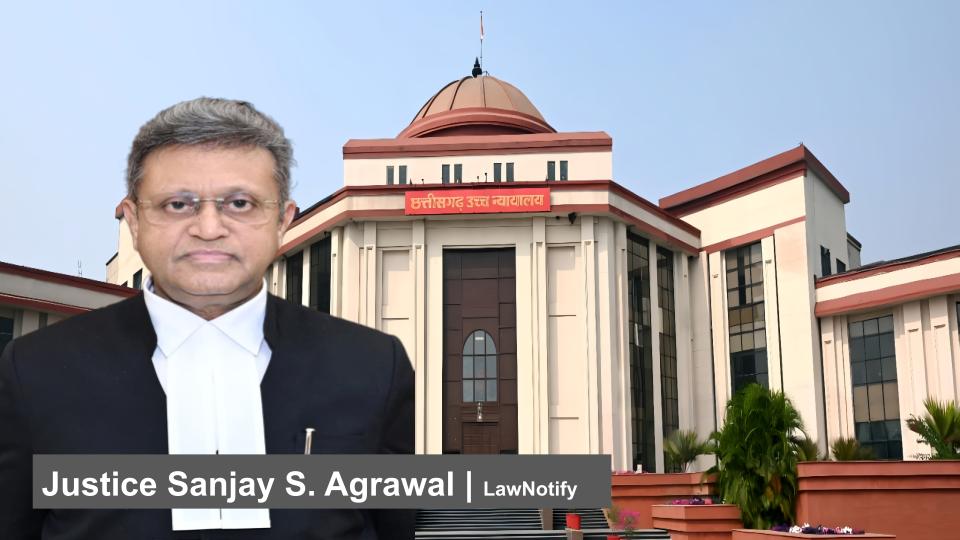 2
2 3
3
July 12, 2002 : The Chhattisgarh High Court has taken a clear, statute-focused view in an election dispute that turned on a simple procedural question: can a Returning Officer be made a party to an election petition? After hearing argument and reviewing Supreme Court authority, the court ruled that the Returning Officer is not a proper party under the Representation of the People Act, 1951.
The dispute began when the petitioner accused the Returning Officer of partiality during counting. The respondent’s written statement made the point explicitly: while the allegations targeted the Returning Officer’s conduct, the respondent argued that the Returning Officer was not one of the persons Section 82 or Section 86(4) of the Representation of the People Act permits as parties to an election petition. The respondent urged dismissal on that ground.
Fakhruddin J. agreed, leaning on settled Supreme Court precedent. The court cited the line of authority beginning with Jyoti Basu v. Debi Ghosal and followed by later decisions including B. Sundara Rami Reddy and Michael B. Fernandes v. C. K. Jaffar Sharief. Those rulings underline a consistent policy: election petitions are statutory creatures, and the statutes tightly limit who can be joined. Sections 82 and 86(4) name the candidates and certain contesting parties as respondents; the legislative structure and public policy behind the Representation of the People Act aim to keep election disputes focused and finite. Allowing the Civil Procedure Code to expand the roster of parties, the court said, would defeat that statutory design.
The judgment reiterated the Supreme Court’s language that “concepts familiar to Common Law and equity must remain strangers to Election Law unless statutorily embodied.” In practical terms, that means allegations of unfairness aimed at officials like Returning Officers cannot convert those officials into formal respondents in an election petition unless the statute provides for it. The court therefore decided issue No. 3 against the respondents: the Returning Officer is not a proper party to the election petition. The court declined to make any order as to costs and listed the matter for further hearing on August 26, 2002.
The ruling is both narrow and important. Narrow, because it addresses a technical question of joinder and party status. Important, because it reinforces the principle that election law proceedings are governed by the specific rules Parliament laid down; courts cannot enlarge the field by importing general civil procedures where the statute draws a different boundary. For petitioners who feel wronged by election officials, the decision is a reminder that remedies must be framed within the statutory scheme; the route of naming officials as respondents will normally be closed.
Readers tracking election litigation should note the practical consequence: challenges that hinge primarily on the conduct of election officials may need to be reframed either by targeting the returned candidate or other contesting candidates where appropriate under Section 82, or by pursuing separate administrative or disciplinary remedies against officials outside the election petition framework.
Case Details : Election Petn. No. 17 of 1999, Shakuntala Singh vs. Dauram Ratankar and Ors.
Counsels: For Appellant/Petitioner/Plaintiff: Rajesh Pandey, Adv. For Respondents/Defendant: M.D. Dhote, Adv.