 1112
1112 3
3 4
4 5
5 678
678 9
9 10
10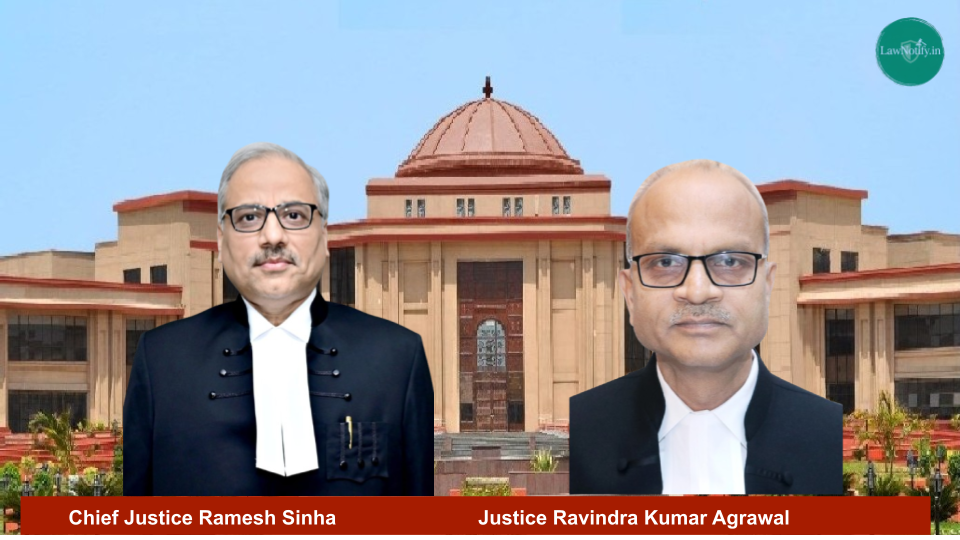
News Citation : 2026 LN (HC) 134 | 2026:CGHC:2166-DB
January 14, 2026 : The High Court of Chhattisgarh has acquitted three men who were convicted nearly a decade ago in a 2011 kidnapping and rape case from Raigarh district, ruling that the prosecution failed to prove the charges beyond reasonable doubt.
A division bench of Chief Justice Ramesh Sinha and Justice Ravindra Kumar Agrawal set aside the November 28, 2016 judgment of the Additional Sessions Judge, Fast Track Court, Raigarh, which had convicted Rakesh Khunte, Anil Khanna and Madanlal Dadsena under Sections 363, 366 and 376(1)/34 of the Indian Penal Code and sentenced them to 10 years’ rigorous imprisonment.
The case originated from a missing complaint lodged on April 10, 2011, by the father of a teenage girl who had allegedly gone missing during the intervening night of April 7 and 8. According to the prosecution, the girl was abducted and later sexually assaulted by the accused. She was recovered a few days later and, in her statement, alleged that all three men had raped her. Medical examination did not reveal any external injuries, though forensic analysis reportedly detected semen on certain articles.
Before the trial court, the prosecution relied on a school register and a certificate issued by the school principal to establish that the girl was a minor at the time of the incident. On that basis, the trial court held that even if there was consent, it would be legally immaterial and proceeded to convict the accused.
However, the High Court found that the evidence relating to age was not legally sufficient. Referring to settled Supreme Court principles on age determination, including the ruling in Alamelu v. State, the bench observed that a school register entry has limited evidentiary value unless the basis of the recorded date of birth is properly proved. In the present case, no birth certificate, primary school record or medical age determination test was produced. The court held that the prosecution failed to conclusively establish that the victim was below 16 years of age at the time of the alleged offence.
On the allegation of rape, the bench carefully examined the testimony of the prosecutrix and noted significant contradictions and omissions when compared with her earlier statement under Section 161 CrPC. The judges observed that she had left her house at night without informing family members, did not raise any alarm while being taken through inhabited areas, and stayed for several days at a co-accused’s house without disclosing the alleged assault to anyone, including the co-accused’s wife who was present there.
The court also found it significant that although the father claimed to have brought his daughter back earlier, the police formally recorded her recovery only on April 14, 2011. There was no satisfactory explanation for the delay in reporting the alleged sexual assault despite a missing report already having been filed.
Reiterating that a conviction in a rape case can rest on the sole testimony of the prosecutrix if it inspires confidence, the High Court stressed that such testimony must meet the standard of a “sterling witness.” In this case, it concluded that the evidence did not inspire such confidence and that the prosecution had not discharged its burden of proof.
Holding that the trial court’s findings on minority and guilt were unsustainable, the High Court allowed the criminal appeals and acquitted the three men by granting them the benefit of doubt. The appellants, who were already on bail, were directed to continue their bail bonds for six months under the Bharatiya Nagarik Suraksha Sanhita, 2023.
Case Reference : CRA No. 1540 of 2016 (Rakesh Khunte vs State of Chhattisgarh) with CRA No. 128 of 2017 (Anil Khanna and Another vs State of Chhattisgarh); for the Appellants: Mr. Dheerendra Pandey, Advocate (in CRA No. 1540/2016) and Mr. Avinash K. Mishra, Advocate (in CRA No. 128/2017); for the Respondent/State: Mr. Shaleen Singh Baghel, Government Advocate; for the Complainant/Objector: Mr. Kamlesh Kumar Pandey, Advocate.