 111
111 2
2 34
34 5
5 67
67 8
8 910
910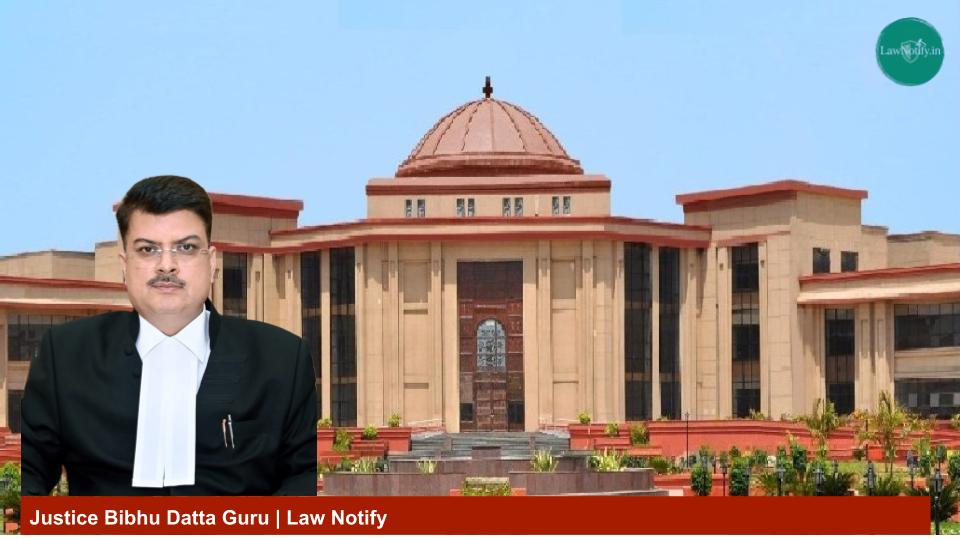
News Citation : 2026 LN (HC) 82 | 2026:CGHC:5625
Feb. 02, 2026 : The High Court of Chhattisgarh has set aside concurrent judgments of two lower courts in a long-running property dispute from Korba, holding that a Muslim testator cannot bequeath more than one-third of his estate through a will without the post-death consent of other legal heirs.
Allowing a second appeal filed by Smt. Jaibun Nisha, widow of late Abdul Sattar Lodhiya, Justice Bibhu Datta Guru ruled that the trial court and first appellate court committed serious errors of law by dismissing the widow’s claim in its entirety, despite her undisputed status as a lawful heir under Muslim personal law.
The dispute concerned a small parcel of land and a house in Korba that stood in Abdul Sattar’s name during his lifetime. After his death in 2004, his nephew, Mohd. Sikandar, claimed rights over the property on the basis of a will dated 27 April 2004. The widow challenged the will, alleging that it was forged, executed without her consent, and contrary to settled principles of Muslim law.
Both the trial court and the first appellate court upheld the will and dismissed the suit, reasoning that since the widow had sought a declaration of exclusive ownership rather than a limited share, she was not entitled to any relief. While the first appellate court acknowledged that a Muslim can ordinarily dispose of only one-third of his property by will, it still declined to mould relief in favour of the widow.
Reversing those findings, the High Court held that Sections 117 and 118 of Mahomedan Law are mandatory and leave no scope for presumption. A bequest in favour of an heir is invalid unless other heirs give consent after the death of the testator, and any bequest exceeding one-third of the estate cannot take effect without such consent.
The Court found that the burden of proving compliance with these requirements lay squarely on the beneficiary of the will, not on the widow. Mere delay, silence, or handing over of documents could not be treated as valid consent under Muslim law. The evidence on record did not establish that the widow had ever consented, after her husband’s death, to a bequest exceeding the permissible one-third share.
Justice Guru also held that misdescription or overstatement of relief cannot defeat a lawful inheritance claim. Once the widow’s status as a legal heir was admitted, the lower courts were duty-bound to protect her statutory share instead of non-suiting her altogether.
Setting aside the judgments dated 7 February 2015 and 28 January 2016, the High Court allowed the second appeal and directed that a decree be drawn accordingly.
Case Reference : SA No. 195 of 2016, Smt. Jaibun Nisha v. Mohd. Sikandar and Another; Counsels: for the Appellant, Mr. Parag Kotecha, Advocate; for Respondent No. 1, Ms. Meera Ansari, Advocate, along with Mr. Aman Ansari, Advocate; and for the State/Respondent No. 2, Mr. Anand Gupta, Deputy Government Advocate.