 111
111 2
2 3
3 45
45 6
6 78
78 9
9 10
10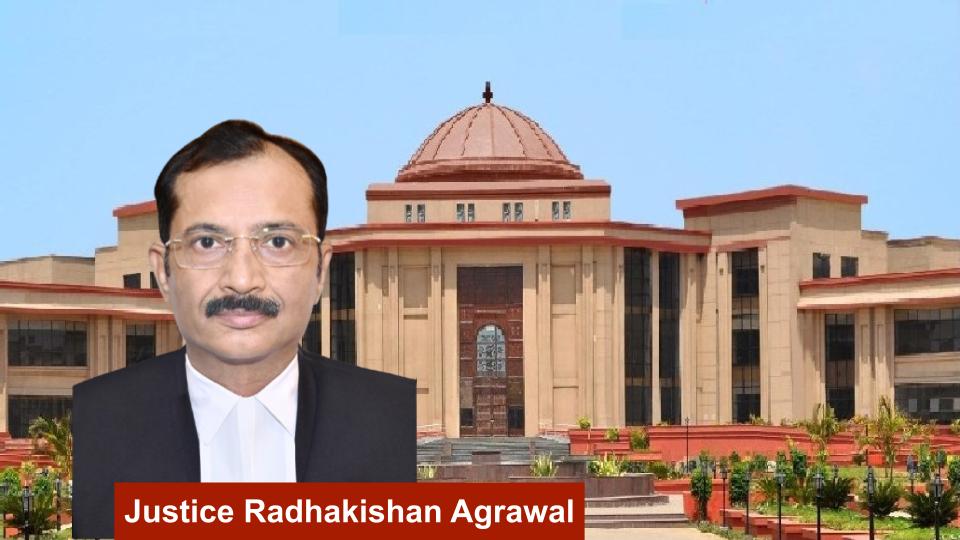
News Citation : 2026 LN (HC) 127 | 2026:CGHC:752
January 05, 2026 : High Court of Chhattisgarh has dismissed a state appeal challenging the acquittal of a husband and his father in a case involving the alleged abetment of a young woman’s suicide in Durg district.
In its judgment delivered on January 5, 2026, Justice Radhakishan Agrawal upheld the November 2014 decision of the Sessions Judge, Durg, which had cleared the accused of charges under Sections 498-A and 306 of the Indian Penal Code. The case is recorded as ACQA No. 198 of 2015.
According to the prosecution, on the morning of March 15, 2013, Seema Suryavanshi lodged a complaint at Police Station Anda alleging that her husband and father-in-law had assaulted her on suspicion of her character. A medical examination conducted the same day noted swelling near her wrist and a superficial scratch on her face. The injuries were described as simple in nature.
Later that evening, her mother-in-law informed the police that Seema had been found hanging from a plum tree in a nearby field. A post-mortem examination confirmed that the cause of death was asphyxia due to hanging, and the death was ruled suicidal.
The State argued before the High Court that the timing of the alleged assault and the suicide on the same day clearly pointed to harassment and cruelty that drove the woman to take her life. It contended that the trial court had erred in acquitting the accused despite what it described as strong and direct evidence.
However, the High Court found that the prosecution had failed to establish the essential ingredients required to prove abetment of suicide under Section 306 IPC or cruelty under Section 498-A IPC.
The deceased’s parents, examined as prosecution witnesses, did not support the case. Both stated that their daughter had never informed them of any harassment, cruelty, or dowry demand. Her father admitted that when he had visited her earlier, she appeared to be living happily and had refused to return with him.
The court also noted that apart from a minor scratch recorded in the medical report earlier that day, the post-mortem did not reveal any significant external injuries. The judge observed that such minor injuries, by themselves, could not establish instigation or abetment to commit suicide.
Relying on established Supreme Court precedents, the High Court emphasized that to sustain a conviction under Section 306 IPC, there must be clear evidence of instigation, conspiracy, or intentional aid that compelled the victim to commit suicide.
The court referred to decisions such as Pinakin Mahipatray Rawal vs State of Gujarat and Ghusabhai Raisangbhai Chorasiya vs State of Gujarat, which clarify that even immoral or objectionable conduct does not automatically amount to legal cruelty or abetment unless it reaches a threshold that would drive a person to suicide.
The judgment also cited Jafarudheen vs State of Kerala to underline the limited scope of appellate interference in acquittal cases. An acquittal strengthens the presumption of innocence, and appellate courts must be slow to overturn such findings unless there is clear perversity or illegality.
After examining the entire record, the High Court concluded that there was no cogent, consistent, or reliable evidence showing that the accused had instigated or abetted the suicide or subjected the deceased to legally defined cruelty.
Finding no illegality or perversity in the trial court’s reasoning, the High Court dismissed the State’s appeal and upheld the acquittal.
Case Reference : ACQA No. 198 of 2015, State of Chhattisgarh vs Devkumar Suryawanshi and Another; For Appellant: Mr. Ram Narayan Sahu, Deputy Government Advocate; For Respondents: Mr. Vinod Kumar Sharma, Advocate.