News Citation : 2026 LN (HC) 64 | 2026:CGHC:3713-DB
Bilaspur, January 21, 2026 : The High Court of Chhattisgarh has dismissed a writ petition challenging the promotion of work-charged Public Works Department employees to the post of Sub-Engineer (Civil), holding that the State’s amendment to service rules was a valid exercise of power under Article 309 of the Constitution and did not violate Articles 14 or 16.
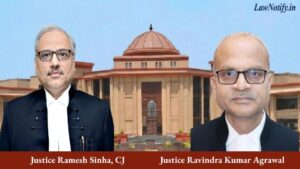
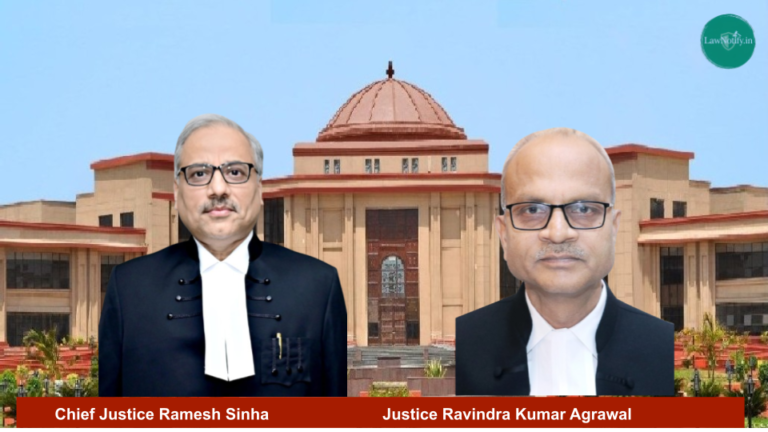
A Division Bench comprising Chief Justice Ramesh Sinha and Justice Ravindra Kumar Agrawal rejected the plea filed by Tracers and Assistant Draftsmen employed in the PWD, who had questioned the constitutional validity of an amendment dated 22 January 2022 to the Chhattisgarh Public Works Department (Non-Gazetted) Service Recruitment Rules, 2016. The amendment expanded the feeder cadre for promotion to include diploma or degree holder Field Assistants working under the work-charged establishment.
The petitioners argued that work-charged and contingency-paid employees are not regular government servants and therefore cannot be considered for promotion to regular cadre posts. They contended that such employees are governed by a different service regime, lack regularisation, and do not fulfil the requirement of five years of regular service. According to them, equating work-charged employees with regularly appointed staff amounted to treating unequals as equals, in violation of the equality clauses of the Constitution. They also sought quashing of promotion orders issued in July and August 2023 by which several Field Assistants were promoted as Sub-Engineers.
The State opposed the challenge, asserting that the amendment was a policy decision taken to remove stagnation and provide career progression to qualified technical staff who had earlier been excluded due to an omission in the 2016 Rules. It was submitted that the State has wide latitude under Article 309 to frame and amend service rules, and that courts can interfere only on limited grounds such as lack of competence, manifest arbitrariness, or violation of fundamental rights. The State also pointed out that the petition was filed more than two years after the amendment and over a year after the promotions, rendering it liable to dismissal on grounds of delay and laches.
Accepting the State’s submissions, the Court held that the authority competent to frame service rules is equally competent to amend them, and that no government servant has a vested right to promotion. At best, an employee has a right to be considered for promotion under the rules prevailing at the time of consideration. The Bench reiterated that a mere reduction in chances of promotion does not amount to infringement of Articles 14 or 16.
The Court further observed that the classification introduced by the amendment was based on educational qualifications and experience, not merely on the nature of establishment. Field Assistants from the work-charged establishment were included in the feeder category only if they possessed the same diploma or degree and the prescribed experience. This, the Court held, satisfied the test of reasonable classification and had a clear nexus with the object of improving efficiency and removing stagnation within the department.
On the issue of delay, the Bench noted that the petitioners were aware of both the amendment and the subsequent promotions but chose not to challenge them promptly. Instead, they had submitted representations seeking enhancement of the promotional quota, which amounted to acquiescence. Relying on settled Supreme Court precedent, the Court held that stale service claims should not be entertained as they unsettle settled positions and disrupt administrative certainty.
Concluding that the amendment was neither arbitrary nor unconstitutional, the Court dismissed the writ petition both on merits and on the ground of delay, and upheld the validity of the promotion orders.
Case Reference : WPS No. 6899 of 2024, Bashil Minj and Others v. State of Chhattisgarh and Others; counsel for the petitioners was Mr. Mateen Siddiqui, Advocate, while the State (respondent nos. 1 to 4) was represented by Mr. Shashank Thakur, Additional Advocate General, and the private respondents were represented by Mr. Chandresh Shrivastava, Advocate (respondent nos. 5, 6, 9, 10, 13, 15–19, 21–23, and 24–32 & 34) and Mr. Pawan Shrivastava, Advocate (respondent nos. 7, 8, 14, 20, 33, and 35).