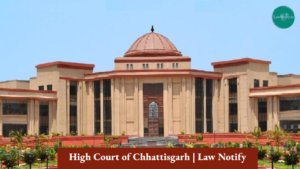

Bilaspur, January 01, 2026 : The Chhattisgarh High Court has reaffirmed that compassionate appointment is strictly governed by the policy applicable on the date of an employee’s death and cannot be granted where one dependent is already in employment. The Court made it clear that sympathy or financial hardship, however genuine, cannot override binding policy provisions.
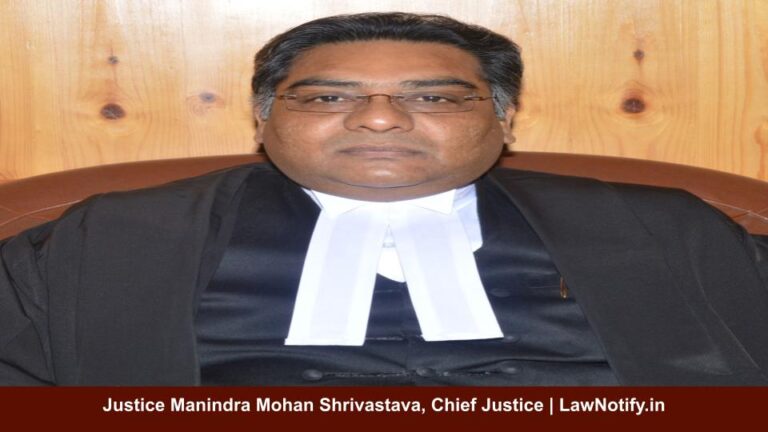
A Division Bench comprising Chief Justice Ramesh Sinha and Justice Arvind Kumar Verma dismissed a writ appeal challenging the rejection of a compassionate appointment claim by South Eastern Coalfields Limited (SECL). The appeal arose from an order of a Single Judge who had earlier upheld SECL’s decision to deny employment to the son of a deceased employee.
The case concerned the death of Lakhan Lal Chandra, who was working as a Subordinate Engineer with SECL. Following his death, his son applied for compassionate appointment. SECL rejected the request on the ground that the deceased employee’s widow was already employed as a teacher and was drawing a regular salary along with pensionary benefits. The family challenged this decision before the High Court, arguing that they continued to face financial hardship.
Before the Division Bench, the appellants contended that their claim ought to have been considered under an amended circular issued in June 2024, which permitted compassionate appointment even where another dependent was employed. They also argued that the deceased employee was governed by the National Coal Wage Agreement, as he had originally been appointed in a non-executive cadre and was reverted before his death. Relying on earlier precedent, they maintained that the mere existence of another earning member should not defeat their claim.
SECL opposed the appeal, asserting that the applicable policy was the executive circular dated March 13, 1981, which was in force on the date of the employee’s death. Clause (vii) of this circular expressly bars compassionate appointment if one dependent of the deceased employee is already in employment. The company further submitted that the 2024 circular had no retrospective effect and could not be applied to a claim that arose years earlier.
Agreeing with SECL, the Division Bench reiterated settled law that compassionate appointment is not a matter of right but an exception to the normal recruitment process, intended only to alleviate immediate financial distress caused by the death of a breadwinner. The Court observed that the policy in force at the time of death alone governs such claims, unless a subsequent amendment expressly provides for retrospective application.
The Bench noted that the deceased employee had been consistently treated as an executive employee for service benefits and compassionate appointment purposes. It held that the mere fact of an earlier non-executive appointment or subsequent reversion did not displace the applicability of the executive policy. Importantly, the Court pointed out that the 1981 circular does not distinguish between temporary and permanent employment, nor does it restrict the bar only to employment within SECL.
In a firm observation, the Court held that the presence of an earning member in the family disentitles the claimant from consideration under the compassionate appointment scheme. It added that the plea of financial hardship had been raised in a general manner, without cogent material to demonstrate acute indigence warranting any deviation from the governing policy. Sympathy or hardship, the Bench emphasized, cannot justify directions contrary to binding circulars.
Finding no illegality or perversity in the Single Judge’s order, the Division Bench dismissed the appeal and upheld the denial of compassionate appointment.
Case Title: Minketan Chandra & Anr. v. South Eastern Coalfields Limited & Ors.
Neutral Citation: 2026:CGHC:805-DB
Counsel for Appellants: Yogesh Kumar Chandra, Advocate
Counsel for Respondents: Vaibhav Shukla, Advocate