News Citation : 2026 LN (HC) 45
Bilaspur, January 14, 2026 : The High Court of Chhattisgarh has dismissed an appeal challenging the rejection of a civil suit seeking declaration of paternity and marital status, holding that statutory presumptions under family and evidence law cannot be overridden by admissions alone.
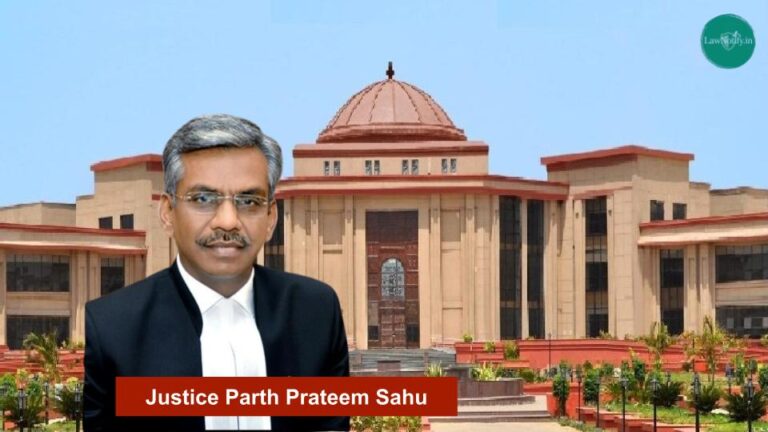
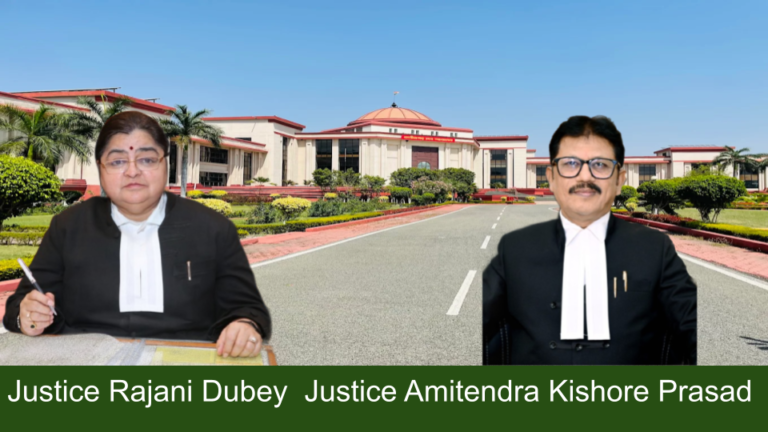
The Division Bench comprising Justice Rajani Dubey and Justice Amitendra Kishore Prasad delivered the judgment on 14 January 2026, affirming the 2019 decision of the Family Court, Bilaspur. The appeal arose from a suit filed by two women who claimed to be the daughters of the late Brajmohan Duwa and sought a declaration that their mother, Chandrakali, was his legally wedded wife.
According to the plaintiffs, Chandrakali had been married at a young age to Atmaprakash, who later abandoned the matrimonial home in 1984 and remained untraceable thereafter. They claimed that Chandrakali and Brajmohan Duwa had been living together as husband and wife since 1971, and that the appellants were born from this relationship. It was also asserted that Duwa had supported the upbringing of both women but refrained from formally acknowledging them due to social stigma surrounding inter-caste relationships.
Notably, Brajmohan Duwa, during his lifetime, filed a written statement admitting the claims in full and expressed no objection to the reliefs sought. The appellants argued that this admission should have been sufficient to grant a declaration under Section 58 of the Indian Evidence Act, which states that admitted facts need not be proved.
The High Court, however, rejected this argument, holding that admissions cannot override mandatory statutory provisions. The Bench emphasized that Chandrakali’s marriage to Atmaprakash in 1960 was undisputed and remained legally subsisting, as there was no evidence of divorce or proof of death. In such circumstances, any subsequent marriage or marital claim with another person would be void under Sections 5 and 11 of the Hindu Marriage Act, 1955.
The Court further relied on Section 112 of the Indian Evidence Act, which creates a conclusive presumption of legitimacy for children born during the continuance of a valid marriage. Since the appellants were born during the period when Chandrakali was admittedly cohabiting with her lawful husband, the presumption could not be displaced merely by an admission from a third party, even if voluntary.
The Bench also noted that Atmaprakash was never impleaded as a party to the suit, despite being shown as the husband and father in official records, including Aadhaar documents. This omission, coupled with the timing of the written statement filed by Duwa on the very day the suit was instituted, weakened the credibility of the plaintiffs’ case.
Citing recent Supreme Court decisions on legitimacy and the solemnization of Hindu marriages, the Court reiterated that legal status flows from compliance with statutory requirements, not from private arrangements or acknowledgments made outside the framework of law.
Finding no perversity or illegality in the Family Court’s reasoning, the High Court concluded that the appeal lacked merit and dismissed it, directing that a decree be drawn accordingly.
Case Reference : FA(MAT) No. 25 of 2019: Ku. Durgesh Nandani, D/o Brajmohan Duwa, Bilaspur & Others v. Neelam Sharma, D/o Late Brijmohan Dua and W/o Shri Rajendra Sharma, Bilaspur & Another; Counsels: For Appellants – Mr. B.P. Sharma with Mr. K.N. Singh, Advocates; For Respondent No.1 – Mr. H.V. Sharma, Advocate; For Respondent No.2 – Mr. Sandeep Jha with Ms. Gunjan Tiwari, Advocates.