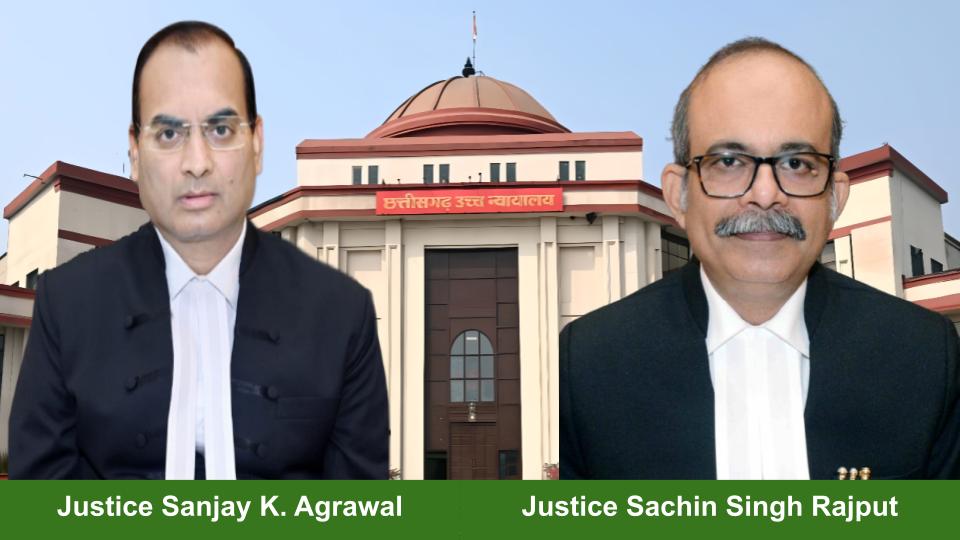
 111
111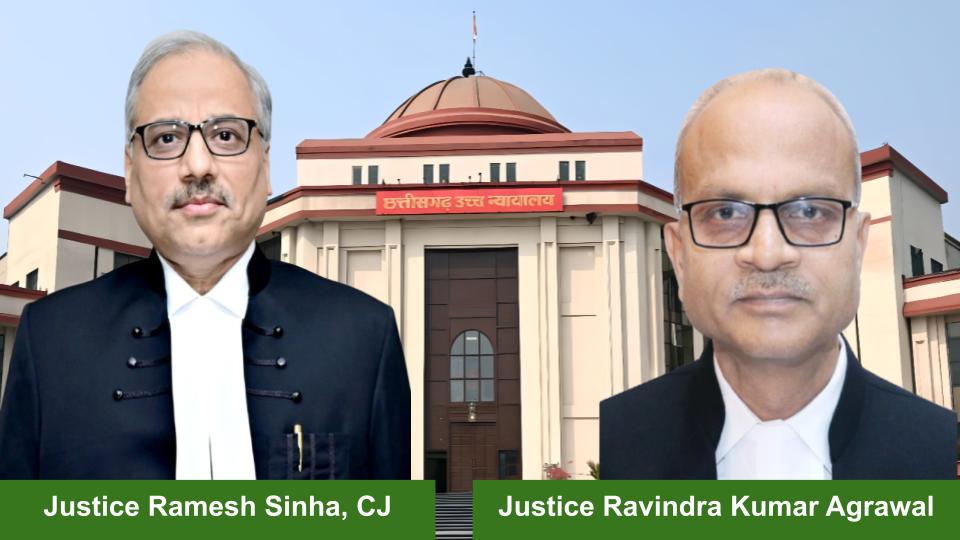 23
23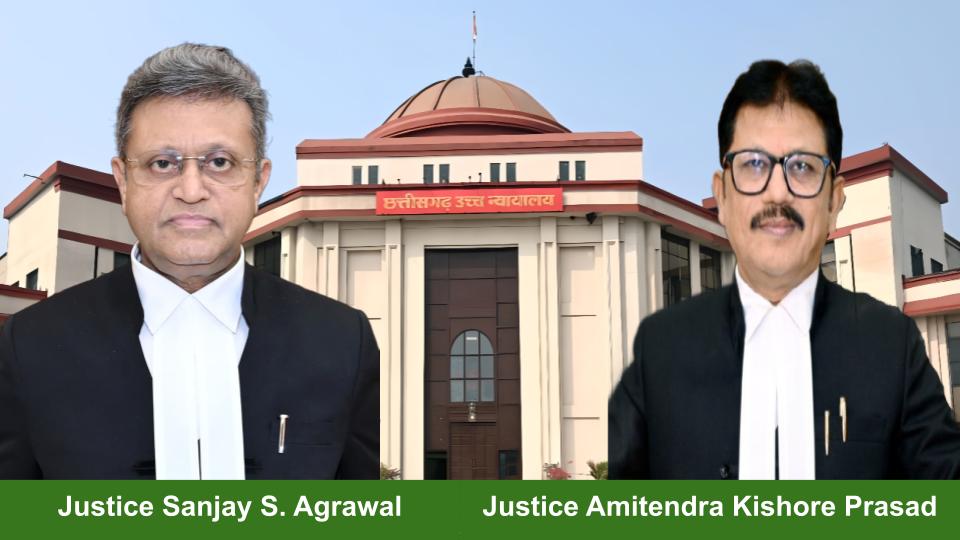 45
45 6
6 7
7 8
8 9
9 10
10 News Citation : 2026 LN (HC) 236 | 2026:CGHC:15519-DB
April 6, 2026 : The High Court of Chhattisgarh has reaffirmed the life imprisonment sentence for a man convicted of the brutal murder of his wife, ruling that a credible dying declaration serves as a powerful and sufficient basis for conviction. The division bench, comprised of Chief Justice Ramesh Sinha and Justice Ravindra Kumar Agrawal, dismissed the appeal filed by Santosh, alias Golu Srivas, finding no grounds to interfere with the lower court’s original verdict.
The harrowing incident dates back to November 2019 in village Rabeli. According to prosecution records, Santosh, fueled by alcohol and a deep-seated suspicion regarding his wife Lata’s character, engaged in a violent altercation. In a calculated act of cruelty, he locked the doors of their home, doused Lata in kerosene, and set her on fire. Despite her catastrophic injuries, Lata managed to flee the house and submerge herself in a nearby pond to extinguish the flames. She eventually succumbed to septic shock from her burns on December 9, 2019, following weeks of treatment.
During the appeal, the defense argued that the testimony of eyewitnesses was unreliable and that the dying declaration should be disregarded due to a lack of evidence regarding Lata’s mental fitness at the time. However, the High Court noted that the declaration was recorded by an Executive Magistrate and was accompanied by a medical certification of fitness from a doctor. The court emphasized the legal maxim nemo moriturus praesumitur mentire the belief that a person will not meet their maker with a lie in their mouth.
The bench further pointed to corroborating forensic evidence, noting that the State Forensic Science Laboratory found traces of kerosene on both the victim’s burnt saree and a T-shirt seized from the accused. In its final judgment, the court held that the act of locking the door before setting the victim on fire clearly demonstrated a murderous intent. The ruling serves as a stern reminder of the judiciary’s reliance on the sanctity of “truth sits upon the lips of a dying man” when such statements are found to be voluntary and authentic.
Case Reference : CRA No. 206 of 2022, Santosh @ Golu Srivas vs. State of Chhattisgarh, represented by Mr. Saurabh Dangi, Advocate for the Appellants, and Mr. Priyank Rathi, Govt. Advocate for the Respondent/State.