 111
111 2
2 3
3 4
4 567
567 8
8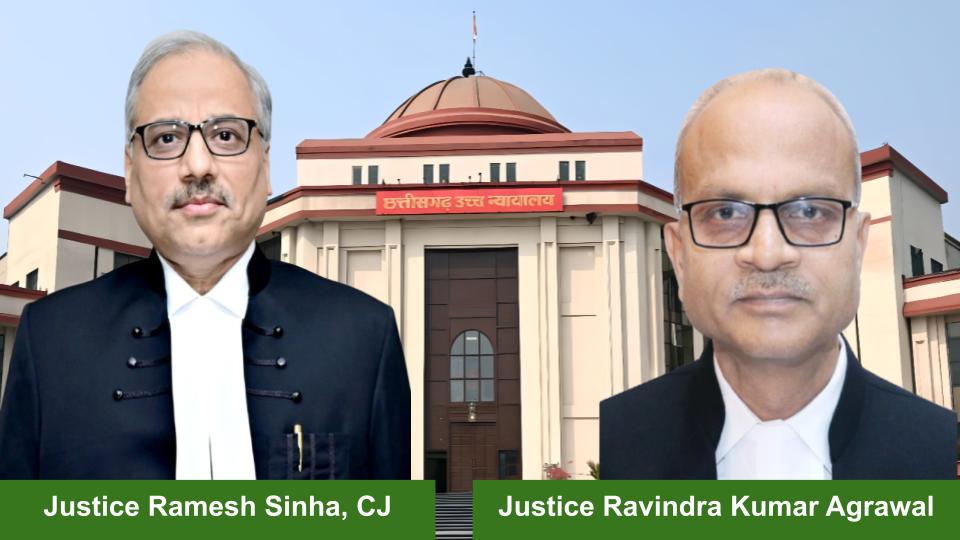 9
9 10
10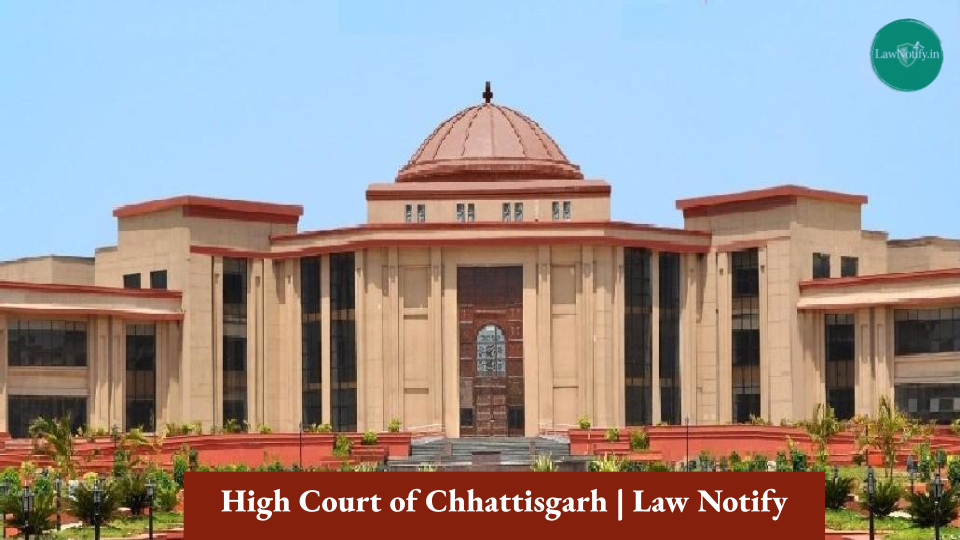
News Citation : 2026 LN (HC) 165 | 2026:CGHC:9411
February 23, 2026 : In a significant ruling on limitation and amendment of pleadings, Justice Ravindra Kumar Agrawal of the High Court of Chhattisgarh at Bilaspur has dismissed a second appeal in a decades-old agricultural land dispute, affirming a decree for recovery of possession in favour of the plaintiffs.
The case, registered as SA No. 204 of 2014, concerned 9.75 acres of agricultural land located in Village Kerju, Tahsil Sitapur, District Surguja. The dispute arose between descendants of two real brothers, Jagan Sai and Lagan Sai, with both sides claiming rights over the property.
The plaintiffs, descendants of Jagan Sai, filed a civil suit in 1989 seeking declaration of title and permanent injunction. However, they did not initially seek recovery of possession, even though the defendants were found to be in possession since 1954-55 based on revenue records.
The trial court in 1996 declared title in favour of the plaintiffs but refused the relief of injunction due to their failure to claim possession. Over the years, the matter saw multiple appeals and remands. Eventually, the plaintiffs moved an application under Order VI Rule 17 of the Code of Civil Procedure to amend the plaint and include a prayer for recovery of possession.
After prolonged litigation, the 2nd Additional District Judge, Ambikapur, in 2014 reversed the trial court’s finding on limitation and decreed recovery of possession in favour of the plaintiffs. The defendants then approached the High Court under Section 100 CPC, raising substantial questions of law on limitation and the permissibility of amendment introducing a time-barred relief.
The primary question before the High Court was whether the suit for possession was barred under Article 65 of the Limitation Act, 1963, which prescribes a 12-year limitation period from the date possession becomes adverse to the true owner.
The defendants argued that their names were entered in revenue records in 1954-55 and that they had been in open and continuous possession since then. According to them, any claim for possession made decades later was clearly time-barred.
However, the plaintiffs countered that mere mutation entries do not confer title or amount to proof of hostile possession. They maintained that the defendants’ possession was permissive in nature and that adverse possession had neither been specifically pleaded nor proved.
A central aspect of the case was whether the amendment adding the relief of possession would relate back to the date of filing the original suit in 1989.
The High Court relied on the Supreme Court’s ruling in Prithi Pal Singh v. Amrik Singh, which clarified that once an amendment is allowed without restriction, it ordinarily relates back to the date of institution of the suit. The Court also referred to Sampath Kumar v. Ayyakannu, where it was held that an amendment seeking declaration and recovery of possession may be permitted to avoid multiplicity of proceedings, provided it is based on the same foundational facts.
The High Court observed that in the present case, the amendment did not introduce a new cause of action but merely sought consequential relief flowing from the already pleaded title claim. Since no restriction was imposed while allowing the amendment, the doctrine of relation back applied.
The Court noted that the burden of proving adverse possession lies heavily on the defendant. Mutation entries, it reiterated, are fiscal in nature and do not establish ownership or hostile possession. In this context, reliance was placed on Suraj Bhan v. Financial Commissioner, which held that revenue entries do not confer title.
Importantly, the High Court found that the defendants had not clearly established the essential ingredients of adverse possession, such as open and hostile assertion of title against the true owner for the statutory period.
The first appellate court had concluded that the cause of action arose in 1986 when the dispute surfaced formally, and the suit was filed within 12 years of that date. The High Court held that this finding was based on appreciation of evidence and did not suffer from perversity.
Reiterating settled principles, the Court emphasized that in a second appeal under Section 100 CPC, interference is permissible only on substantial questions of law. Since the first appellate court is the final court on facts, its findings cannot be disturbed unless shown to be perverse or legally unsustainable.
The High Court concluded that the appellate court was justified in reversing the trial court’s decree and holding the suit to be within limitation. Accordingly, the second appeal was dismissed, and the decree for recovery of possession was upheld.
Case Reference : SA No. 204 of 2014, Pal Sai S/o Gyan Sai and Another v. Girvar S/o Hawal Sai and Another – For Appellants: Mr. Shahid Ahmed Ansari, Advocate; For Respondents No. 1A & 1B: Mr. Ashok Kumar Shukla and Mr. Vikas Dhritlahare, Advocates; For Respondent No. 2/State: Mr. Kalpesh Ruparel, Panel Lawyer.