 1112
1112 3
3 4
4 5
5 6789
6789 10
10
News Citation : 2026 LN (HC) 145 | 2026:CGHC:4550
January 27, 2026 : The Chhattisgarh High Court has dismissed a writ petition filed by Suman Kumari, a Biology teacher appointed under the OBC category, holding that reservation benefits are strictly State-specific and cannot be claimed on the basis of migration or marriage.
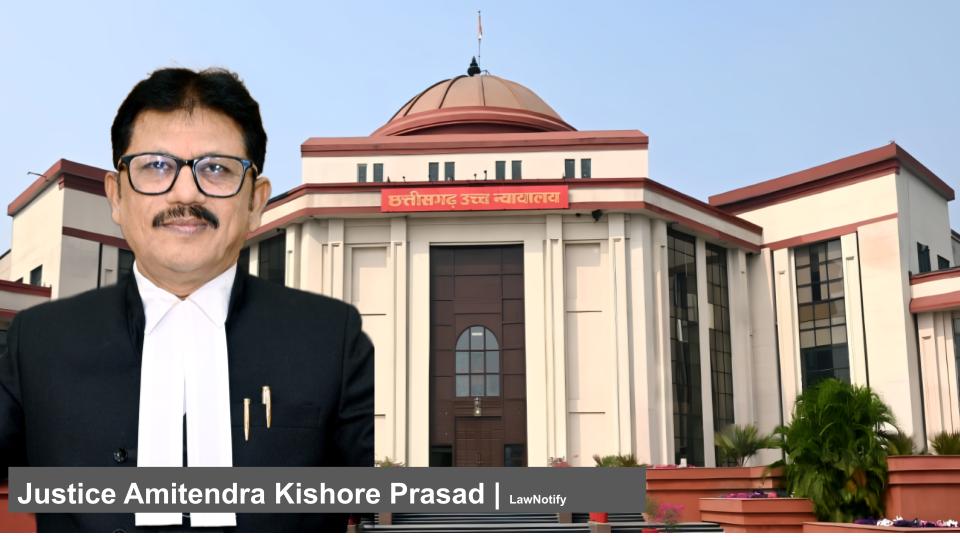
The case, WPS No. 2987 of 2023, was decided by the High Court of Chhattisgarh at Bilaspur on January 27, 2026. Justice Amitendra Kishore Prasad ruled that the petitioner failed to produce a valid permanent caste certificate issued by the competent authority of Chhattisgarh as required under State law and the recruitment advertisement.
Suman Kumari, originally from Ballia district in Uttar Pradesh, belongs to the Nai (Hajjam) community, which is recognized as Other Backward Class in both Uttar Pradesh and Chhattisgarh. After her marriage, she moved to Durg, Chhattisgarh, obtained domicile status, completed higher education including B.Ed. and M.A., and later applied for the post of Teacher (E-Cadre) in a 2019 recruitment drive conducted by Chhattisgarh Vyapam.
She was selected for the Biology subject under the OBC category and served for over a year before authorities issued a show-cause notice in January 2023. The notice alleged that she had secured appointment on the basis of an invalid caste certificate. Subsequently, her services were terminated.
The petitioner argued that since her caste is recognized as OBC in both States, her entitlement should not lapse due to marriage or migration. She also contended that she had not misrepresented any facts and had relied on a caste certificate issued by the competent authority.
However, the State opposed the plea, arguing that reservation benefits are confined to the territorial limits of the State for which the caste is notified. It pointed out that the recruitment advertisement clearly required a permanent caste certificate issued under the Chhattisgarh Scheduled Castes, Scheduled Tribes and Other Backward Classes (Regulation of Social Status Certification) Act, 2013. According to the State, the certificate relied upon by the petitioner was valid only for Central Government employment and could not be used for State service.
The High Court agreed with the State’s submissions. Referring extensively to Supreme Court rulings including Marri Chandra Shekhar Rao, Action Committee on Issue of Caste Certificate, Bir Singh v. Delhi Jal Board, and more recent judgments, the Court reiterated that social status certification is State-specific. Even if a caste with the same name is recognized in two States, reservation benefits cannot automatically travel from one State to another.
The Court clarified that the issue was not about loss of caste identity but about eligibility to claim reservation benefits in a particular State. Such entitlement flows only from a valid caste certificate issued in accordance with that State’s statutory framework.
It further held that the petitioner was given adequate opportunity to respond to the show-cause notice and that the principles of natural justice were not violated. Since she did not possess a legally valid permanent caste certificate of Chhattisgarh at the relevant time, her appointment under the reserved category was found to be contrary to the terms of the advertisement.
Observing that writ jurisdiction under Article 226 is limited in scope, especially in service matters involving eligibility conditions, the Court declined to interfere and dismissed.
Case Reference : WPS No. 2987 of 2023, Suman Kumari vs State of Chhattisgarh and Others; For Petitioner: Mr. Hemant Kesharwani, Advocate; For Respondents/State: Ms. Vartika Shrivastava, Panel Lawyer.