 111
111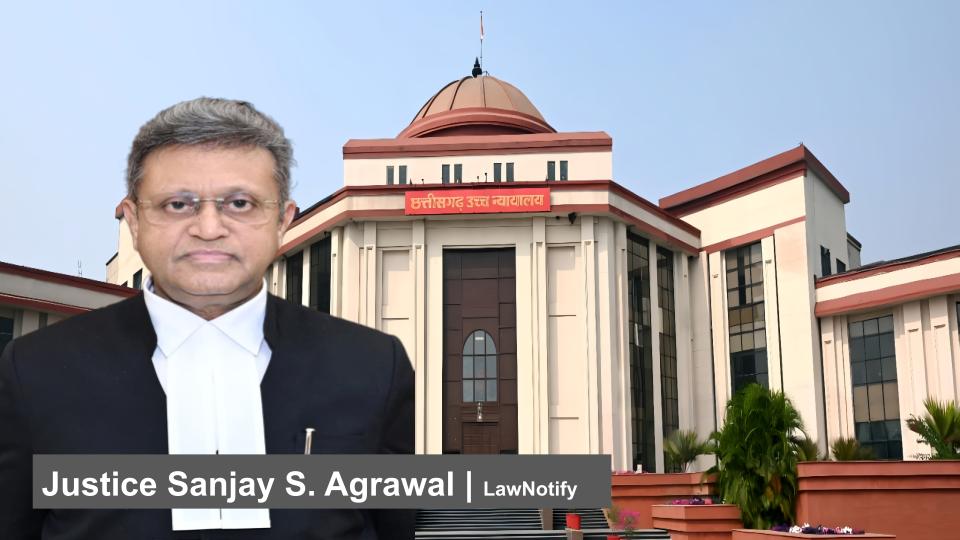 2
2 3
3
August 14, 2002 : The Chhattisgarh High Court has dismissed a revision petition from a defendant who challenged a trial court’s decision to take certain documents on the record while deferring any ruling on whether those documents were admissible. The dispute arose during a civil suit in Raigarh when the plaintiff produced several documents during his examination. The trial court accepted the papers into evidence conditionally and noted that the objection to their admissibility would be decided later, at the time of final judgment. The defendant asked the trial court to decide the objections immediately. When that request was refused, the defendant moved the revision petition.
The single-judge bench reviewed the competing positions and concluded that the trial court’s handling of the documents did not warrant interference. The judgment explains that trial courts frequently allow documents to be provisionally recorded to avoid interrupting the flow of oral evidence. The court relied on the Supreme Court’s guidance in Ram Rattan v. Bajrang Lal to observe that postponing the formal decision on admissibility is a recognized practice and need not be treated as the trial court overruling the objection. Instead, the order simply deferred the ruling, keeping the defendant’s challenge alive for later adjudication.
Justice Naik was careful to spell out the obligations that follow from postponement. The trial court must, before disposing of the suit, address the defendant’s objections to the documents. If the court ultimately rejects the objections, the documents will stand proved and may be considered when deciding the merits. If the court upholds the objections, it should then act in accordance with the procedures set out in Order XIII, Rules 6 and 7(2) of the Code of Civil Procedure. The revision was therefore dismissed, with a clear direction that the trial court complete the admissibility exercise before rendering final judgment. The bench also noted that there was no error in taking the documents on record subject to subsequent decision, and that doing so did not prejudice the defendant.
This ruling reaffirms a practical approach used by trial courts across civil practice. It confirms that conditional recording of documentary material, when accompanied by an opportunity to argue admissibility later, fits within procedural norms. At the same time, the higher court made it plain that such conditional treatment is only a temporal measure. The substantive requirement to decide admissibility remains mandatory, and the trial court must complete that task before concluding the case.
Case Details : Civil Revision No. 183/2002, Santosh Kumar Gupta and Ors. vs. Jay Prakash Agarwal
Counsels: For Appellant/Petitioner/Plaintiff: Hamida Siddiqui, Adv. For Respondents/Defendant: Prashant Mishra and B.D. Guru, Advs.