News Citation : 2026 LN (CGSCDRC) 6
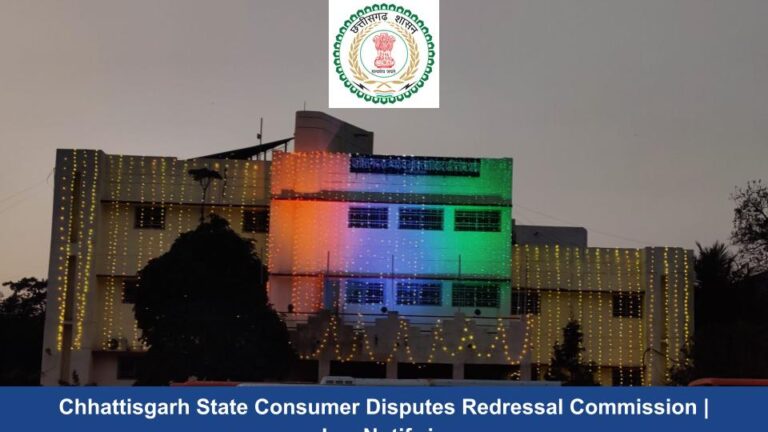
January 29, 2026 : The Chhattisgarh State Consumer Disputes Redressal Commission in Raipur has directed the Department of Posts, Union of India, to pay over ₹1.91 crore to a retired couple after finding it liable for fraud and misappropriation committed by its agents in multiple Time Deposit Receipt (TDR) accounts.
In its order dated January 29, 2026, in Complaint Case No. CC/23/07, the Commission partly allowed the complaint filed by Dr. Anil Kumar Pandey, Smt. Rama Pandey and their daughter Roli Pandey against Bhartiya Dak Vibhag (Union of India) and its officials.
Retirement Savings Allegedly Diverted
The complainants, both retired government employees, had deposited their savings and retirement benefits in 19 TDR accounts and two recurring deposit (RD) accounts at the Pt. Ravishankar Vishwavidyalaya Sub Post Office in Raipur. According to the complaint, the total maturity value of these deposits was approximately ₹1.97 crore.
They stated that all payments were made through cheques drawn in favour of the Postmaster, and passbooks bearing official seals and signatures were issued to them. The accounts were allegedly opened and managed through authorized postal agents, including a Standardized Agency System (SAS) agent and an MPKBY agent.
The dispute arose when the complainants discovered that the amounts in the TDR and RD accounts had been withdrawn without their knowledge or consent. Despite repeated written representations to postal authorities between 2021 and 2023, they claimed no effective action was taken.
Postal Department Denies Liability
In response, the postal authorities denied any deficiency in service. They argued that the complainants had never physically visited the post office to open the accounts and had instead dealt directly with agents who were appointed through the Office of the Collector.
The department contended that several passbooks were forged, alleging that discontinued RD passbooks were tampered with to create fake TDR entries. It relied on an internal investigation report which found that 17 passbooks appeared to have been manipulated by the agent.
The Postal Department also argued that under the Standardized Agency System Rules, responsibility for misappropriation by agents appointed through state government mechanisms lay with the appointing authority, not the department itself.
Commission Rejects Postal Defence
The Commission rejected these arguments. Referring to settled legal principles laid down by the Supreme Court and the National Consumer Commission, it held that the Postal Department cannot escape liability for fraudulent acts committed by its agents during the course of their engagement.
The order observed that appointment of agents through the Collector’s office was merely an administrative mechanism and did not shift responsibility away from the Postal Department. It also noted that the passbooks bore official seals and signatures, and that cheques were issued in the name of the Postmaster, making it improbable that withdrawals could occur without involvement of postal officials.
The Commission further found that although the department conducted an internal inquiry, it failed to initiate appropriate criminal proceedings in response to the complainants’ grievance. This, coupled with documentary evidence and original passbooks produced by the complainants, led the Commission to conclude that there was clear deficiency in service.
Relief Granted
Out of the 19 TDR accounts claimed, the Commission accepted proof in respect of 18 accounts. It directed the opposite parties to jointly and severally pay:
- ₹1,91,39,965 towards maturity amounts of the 18 TDRs, with simple interest at 6 percent per annum from the date of filing of the complaint,
- ₹1,00,000 as compensation for mental agony and harassment, and
- ₹15,000 as litigation costs.
The payment has been ordered within 45 days from the date of the order.
Significance of the Ruling
The ruling reinforces the principle that public financial institutions remain accountable for the acts of their agents, particularly where consumers act in good faith and transact through officially recognized channels.
For depositors, the decision underscores the importance of documentation and vigilance. For government departments, it signals that internal appointment mechanisms or administrative arrangements cannot be used to shield liability in cases of fraud affecting consumers.