 11123
11123 45
45 6
6 7
7 8
8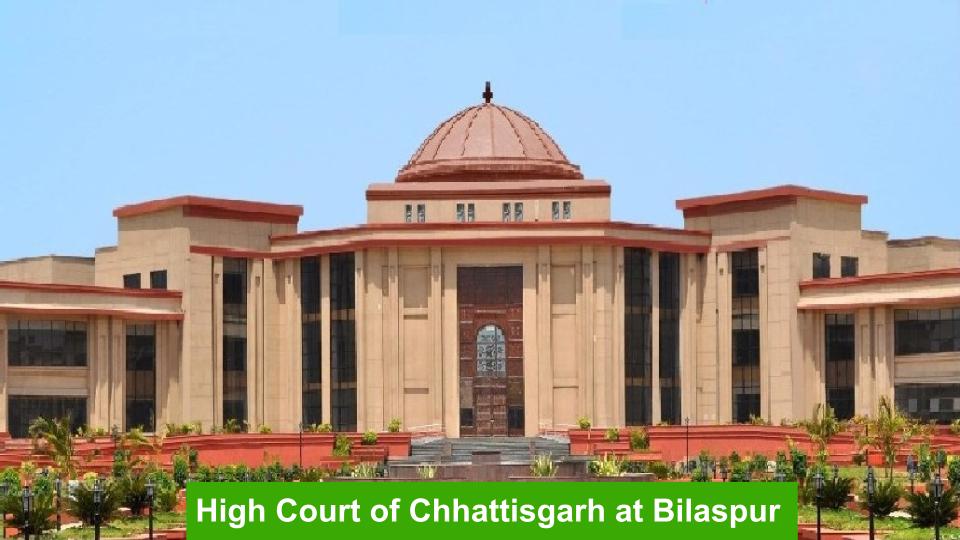 9
9 10
10
News Citation : 2026 LN (HC) 129 | 2026:CGHC:901-DB
January 07, 2026 : The High Court of Chhattisgarh has upheld the life imprisonment of two young men convicted for the brutal murder of two tribal sisters in Raipur, ruling that the chain of circumstantial evidence clearly pointed to their guilt.
In a detailed judgment delivered on January 7, 2026, a Division Bench comprising Chief Justice Ramesh Sinha and Justice Arvind Kumar Verma dismissed the criminal appeals filed by Gulam Mustafa alias Kali Bhancha and Soyeb Ahamad alias Saif. The court affirmed the January 8, 2024 conviction order passed by the Special Judge under the SC/ST (Prevention of Atrocities) Act in Raipur.
The two men had been convicted under Section 302 read with Section 34 of the Indian Penal Code for murder and under Section 3(2)(v) of the SC/ST Act. They were sentenced to life imprisonment, along with fines. The sentences were directed to run concurrently.
The case dates back to December 10, 2019. Manisha Sidar and Manju Sidar, real sisters belonging to a Scheduled Tribe community, were living as tenants in a multi-storey building in Godavari Nagar, Raipur.
According to the prosecution, neighbours heard loud quarrelling and screams from the sisters’ room late in the morning. The landlord, Indarchand Sahu, was alerted. When he reached the spot and looked through the window, he saw the sisters lying in a pool of blood. As the door opened, two young men ran out and fled.
The sisters were rushed to Mekahara Hospital, where doctors declared them dead.
Postmortem reports confirmed that both women had suffered multiple blunt-force injuries to the head and face and had been strangled. The doctor who conducted the autopsy testified that the deaths were homicidal and caused by shock and hemorrhage due to severe injuries and neck compression.
There were no direct eyewitnesses to the assault. The prosecution case rested entirely on circumstantial evidence. The High Court examined whether those circumstances formed a complete and unbroken chain pointing to the accused and ruling out any other possibility.
The court noted that neighbours had consistently testified to hearing a violent altercation. The landlord and two women living in the same building stated that they saw the accused running out of the room immediately after the incident. The accused were later identified in a test identification parade.
Forensic evidence also played a key role. A frying pan recovered from the scene was found to contain human blood. Human blood was also detected on the pants seized from both accused. The forensic report linked several articles from the scene and the accused to the crime.
The defence argued that the test identification parade was defective and that seizure witnesses had turned hostile. It also claimed there were contradictions in witness statements and no clear motive. The High Court, however, found that the prosecution had successfully established the chain of circumstances.
A significant aspect of the case was the prior harassment of one of the deceased, Manju Sidar.
Evidence showed that Soyeb Ahamad had allegedly been posting her photographs on social media and harassing her despite repeated objections. Complaints had been made at Chakradhar Nagar Police Station in Raigarh. At one point, he had reportedly given a written undertaking on stamp paper that he would not trouble her in the future.
The court observed that while motive is not always essential in cases based on circumstantial evidence, it becomes an important reinforcing factor. In this case, the prior hostility and harassment provided a clear motive, strengthening the prosecution’s case.
The judges concluded that the evidence did not merely suggest suspicion but formed a coherent and complete chain leading to only one conclusion: the guilt of the appellants.
Finding no merit in the appeals, the High Court dismissed them and directed that the convicts continue serving their life sentences. It also informed them of their right to approach the Supreme Court through legal services authorities if they choose to challenge the verdict.
Case Reference : CRA No. 1953 of 2025 (Gulam Mustafa @ Kali Bhancha vs State of Chhattisgarh) along with CRA No. 419 of 2025 (Soyeb Ahamad @ Saif vs State of Chhattisgarh); for the Appellants: Ms. Akanksha Jain, Advocate (Cr.A. No. 1953/2025) and Mr. Akash Kumar Kundu, Advocate (Cr.A. No. 419/2025); for the Respondent/State: Mr. Shashank Thakur, Additional Advocate General.