
March 26, 2026 : More than twenty years after the killing of NCP leader Ramavatar Jaggi, the case has returned to the spotlight, with the Chhattisgarh High Court reopening proceedings following directions from the Supreme Court of India. The development places Amit Jogi back at the centre of a case that has long blended law, politics and questions of accountability.
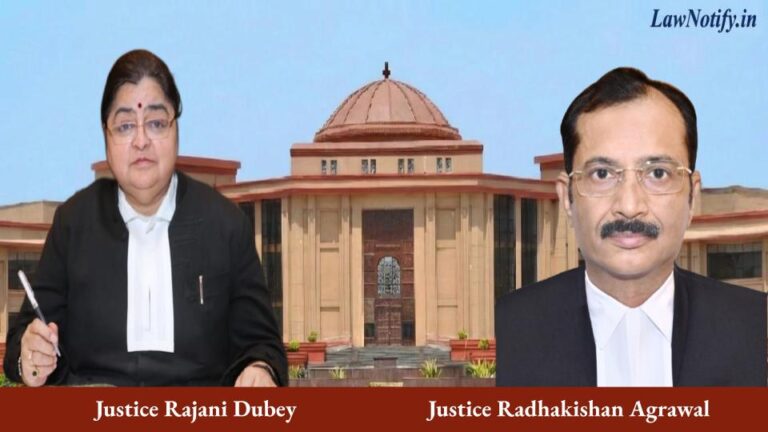
A Division Bench led by Chief Justice Ramesh Sinha and Justice Arvind Kumar Verma issued notices to both Amit Jogi and Satish Jaggi, directing them to appear with their counsel. The matter is now listed for April 1, 2026, setting the stage for a renewed legal contest over Jogi’s earlier acquittal.
The case dates back to 2003, when Ramavatar Jaggi, a prominent political figure in Raipur, was shot dead. The investigation was initially handled by the state police but later transferred to the Central Bureau of Investigation amid allegations of political interference. The CBI’s chargesheet claimed that Amit Jogi, son of former Chief Minister Ajit Jogi, conspired in the murder. While several co-accused were convicted, the trial court acquitted Amit Jogi due to lack of sufficient evidence.
Subsequent appeals by the state, the victim’s family, and the CBI were all dismissed by the High Court, seemingly bringing the matter to a close. That changed in November 2025, when the Supreme Court intervened, condoned a delay of over 1,300 days in the CBI’s appeal, and directed the High Court to reconsider the case strictly on its merits. The court made it clear that serious criminal allegations, particularly those involving political violence, should not be set aside on procedural grounds alone.
Following the latest hearing, Amit Jogi publicly expressed confidence in the judicial process, maintaining that he had already been acquitted and would continue to rely on the courts for justice. At the same time, the reopening of proceedings has revived his legal exposure, with the possibility that he may need to secure fresh bail as the case progresses. Satish Jaggi has asserted that Jogi now stands once again as an accused in the matter.
Beyond its immediate facts, the case raises broader legal and constitutional issues. One key question is whether a state government retains an independent right to challenge an acquittal in cases investigated by the CBI. This issue, noted by the Supreme Court, could eventually require consideration by a larger bench.
For now, attention turns to the April 1 hearing, where the High Court will consider whether to grant leave for the CBI’s appeal against the acquittal. The outcome will likely shape the next phase of what is expected to be a closely watched and potentially prolonged appellate process.
The reopening of the Jaggi murder case underscores a familiar but significant principle within the Indian legal system: even after decades, cases involving serious allegations can be revived, and questions of justice may remain open until they are fully examined on their merits.