 111
111 2
2 34
34 5
5 6
6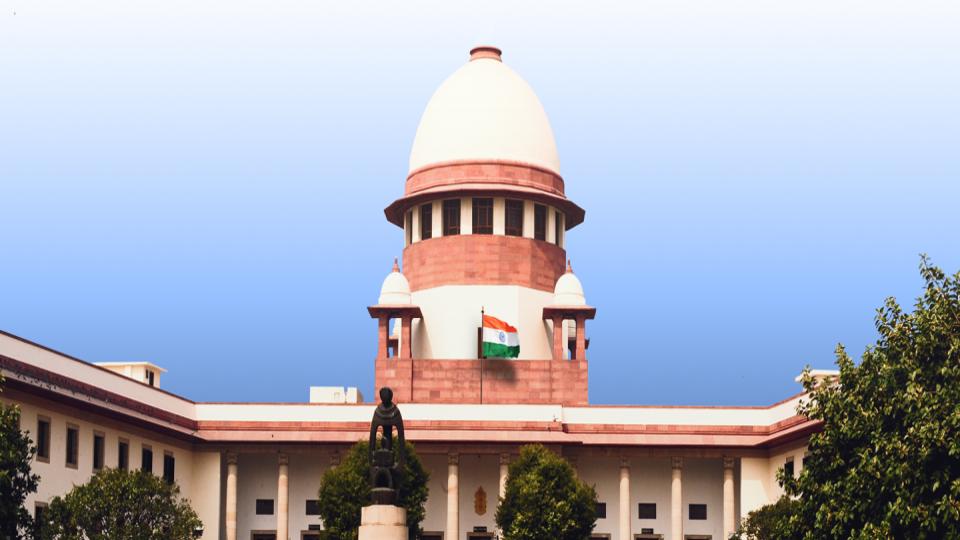 7
7 8
8 910
910 April 3, 2026 : Certain Jain organisations have approached the Supreme Court in the ongoing Sabarimala reference proceedings, contending that issues concerning religious practices should be determined by the followers of the faith rather than by courts or the State.
In their submissions, the applicants emphasised that the autonomy of religious denominations to manage their own affairs is protected under Articles 25 and 26 of the Constitution. They argued that courts should refrain from adjudicating whether a particular practice qualifies as religious, asserting that such determinations fall exclusively within the domain of the concerned faith community.
The applicants maintained that judicial intervention in religious matters should be minimal and restricted to exceptional situations, such as disputes between factions within the same religion that cannot be resolved internally. They further argued that constitutional courts should not exercise “ecclesiastical jurisdiction” to assess the validity or content of religious practices.
On the interpretation of Article 25, it was submitted that the term “practice” must be given a broad meaning, encompassing rituals, ceremonies, observances, and institutional management. Accordingly, State regulation, they argued, should be confined strictly to secular aspects and must not extend to core religious practices.
The submissions also questioned the continued application of the ‘essential religious practices’ doctrine evolved in Commissioner, Hindu Religious Endowments v. Shirur Mutt. The applicants argued that the Constitution does not employ the term “essential,” and therefore courts should not determine whether a practice is integral to a religion. Instead, they proposed that the relevant test should be whether the practice is genuinely followed by the community.
Addressing the scope of judicial review, the applicants submitted that courts may intervene only when a law enacted by the State impacts religious practices. Even in such cases, scrutiny should be limited to assessing whether the restriction is justified on grounds such as public order, morality, health, or other constitutional provisions.
On the question of morality under Articles 25 and 26, the applicants cautioned against equating it with constitutional morality. They argued that courts should avoid adopting a paternalistic approach by declaring sincerely held religious beliefs as immoral.
The submissions also drew a distinction between categories of religious property, asserting that inherently sacred places of worship cannot be acquired by the State, though properties associated with religious institutions may be subject to limited regulation.
Further, the applicants contended that Articles 25 and 26 form part of the Constitution’s basic structure, given their close connection with fundamental rights such as equality, freedom of expression, personal liberty, and the principle of secularism.
They also argued that individuals who do not belong to a particular religion should not be permitted to challenge that religion’s practices through public interest litigation.
The arguments were placed before a nine-judge Bench of the Supreme Court, which is examining broader constitutional questions relating to the scope of religious freedom and the limits of judicial review. Similar submissions have earlier been advanced by the All India Muslim Personal Law Board, opposing judicial determination of what constitutes essential religious practices.