 111
111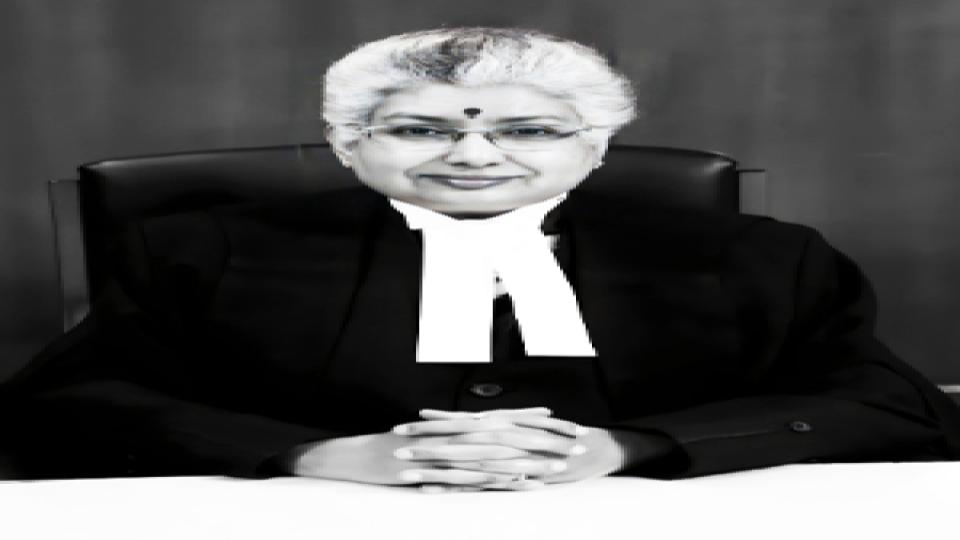 2
2 3
3 4
4 5678
5678 9
9 10
10 April 4, 2026 : Justice B. V. Nagarathna emphasised that constitutional failure does not occur suddenly through overt rights violations but begins with the gradual weakening of institutional structure. Delivering the Dr. Rajendra Prasad Memorial Lecture at Chanakya National Law University, she highlighted that when institutions cease to check one another, the constitutional framework starts to erode.
Speaking on the theme “Constitutionalism beyond Rights: Why Structure Matters,” Justice Nagarathna noted that even if elections continue, courts function, and laws are passed, the absence of structural discipline renders power unchecked. She stressed that safeguarding the Constitution is not limited to defending rights during crises but lies equally in the routine functioning of institutions within their defined constitutional boundaries.
She pointed out that constitutional health depends on whether institutions such as the Election Commission inspire public trust, whether financial bodies maintain balance without external pressure, and whether regulators act independently rather than aligning with executive preferences. Similarly, legislatures must engage in meaningful debate, the executive must adhere to legal limits, and the judiciary must preserve its independence.
Justice Nagarathna warned that when independence is compromised for convenience and accountability is replaced by expediency, the constitutional structure begins to weaken subtly but steadily.
Reflecting on Rajendra Prasad, she described his role in shaping India’s constitutional framework and his conduct as a model of institutional restraint. His tenure as the first President demonstrated that constitutional offices are meant to function with independent judgment, not mechanically. His willingness to question executive actions and withhold assent to legislation illustrated this principle.
Returning to constitutional theory, she explained that the Constitution is not merely a catalogue of rights but a framework for regulating and limiting power. Fundamental rights, though essential, rely on institutional mechanisms for enforcement. Liberty, she observed, is secured through a system where power is divided and controlled.
Justice Nagarathna traced the evolution of constitutional jurisprudence through landmark rulings such as Shankari Prasad v. Union of India and Sajjan Singh v. State of Rajasthan, where Parliament’s amending power was viewed broadly. This approach was reconsidered in I.C. Golaknath v. State of Punjab, reflecting judicial concern over unchecked power.
The doctrine reached maturity in Kesavananda Bharati v. State of Kerala, where the Supreme Court introduced the basic structure doctrine, ensuring that constitutional amendments cannot alter the foundational framework. She also cited Minerva Mills v. Union of India to underline that even Parliament’s powers are subject to constitutional limits.
Explaining separation of powers, she noted that authority is divided both horizontally among the legislature, executive, and judiciary, and vertically between the Union, States, and local bodies. This distribution prevents concentration of power and ensures accountability.
She described the executive as the primary instrument of state power, subject to legislative oversight and judicial review, while the judiciary remains a central but constitutionally bounded authority whose effectiveness depends on institutional cooperation.
Highlighting federalism as a key safeguard, Justice Nagarathna stressed that States are not subordinate to the Union but equal participants in governance. She advocated for cooperative federalism, encouraging dialogue and negotiation over adversarial litigation in Centre-State disputes.
She also underscored the importance of decentralisation through Panchayats and Municipalities, which bring governance closer to citizens and enhance accountability.
Further, she emphasised the role of independent bodies like the Election Commission, Comptroller and Auditor General, and Finance Commission in maintaining neutrality and fairness. Referring to cases such as T.N. Seshan v. Union of India and Union of India v. R. Gandhi, she highlighted the need to preserve the independence of regulatory and tribunal institutions.
Justice Nagarathna also pointed to the Directive Principles of State Policy as essential to achieving social and economic justice, noting that their implementation depends on legislative and executive action.
Concluding her lecture, she cautioned that constitutional identity can erode without formal invalidation. The Constitution, she said, is sustained not just by its text but by institutional discipline, accountability, and restraint in the exercise of power.