
 111
111 2
2 3
3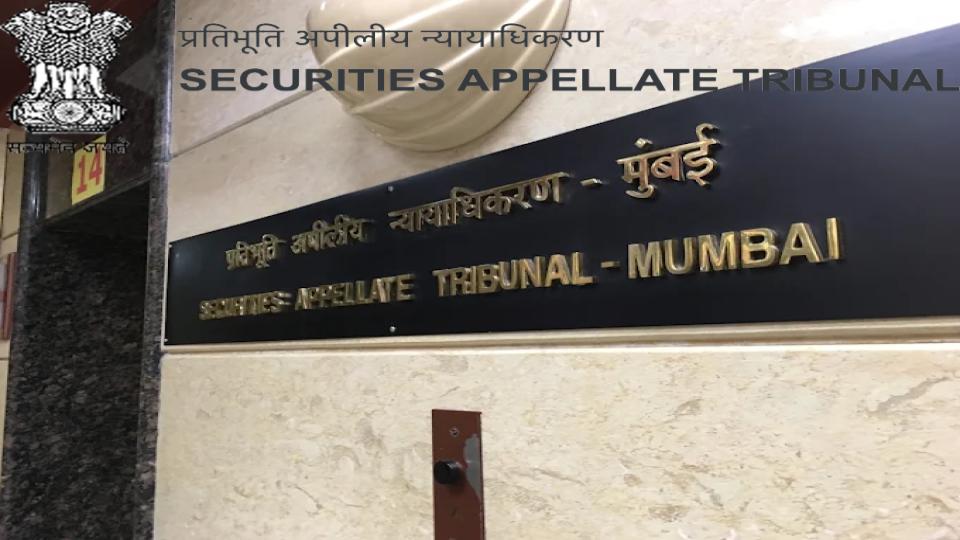
January 16, 2026 : The Securities Appellate Tribunal (SAT), Mumbai, in a significant 2:1 ruling, has held that penalties imposed under the SEBI Act, 1992 can, in appropriate cases, be reduced below the statutory minimum by applying mitigating factors under Section 15J.
The decision came in Sukhraj Kaur Rajbans v. SEBI & connected matters, where the Tribunal examined whether the minimum penalty prescribed under Section 15HA could be relaxed. While the Presiding Officer Justice P. S. Dinesh Kumar dissented, the majority comprising Meera Swarup and Dr. Dheeraj Bhatnagar held that the statutory scheme allows such flexibility.
The majority undertook a detailed analysis of Chapter VIA of the SEBI Act and emphasized that Section 15J mandates adjudicating authorities to give “due regard” to mitigating factors such as disproportionate gain, investor loss, and the repetitive nature of the default. It held that these factors are not merely relevant for determining penalty above the minimum but can also justify reducing the penalty below the prescribed threshold when read harmoniously with specific penalty provisions.
Rejecting a rigid interpretation of Section 15HA, the Tribunal observed that the provision does not override Section 15J, as it lacks a non-obstante clause. It further noted that the Supreme Court’s ruling in Adjudicating Officer, SEBI v. Bhavesh Pabari did not directly address whether penalties could be reduced below statutory minimums in all contexts, leaving room for interpretation.
The Tribunal also highlighted the peculiar nature of illiquid stock options (ISO) cases, where many small investors often lacking financial literacy were drawn into reversal trades orchestrated by intermediaries. It cautioned that mechanically imposing minimum penalties of ₹5 lakh in such cases could result in disproportionate hardship, especially where investors had made negligible gains or were unwitting participants.
In this backdrop, the majority held that “the provisions of Section 15J come to rescue in appropriate cases” and answered in the affirmative that penalties can indeed be reduced below the statutory minimum after considering mitigating circumstances.
Applying this principle, the Tribunal allowed Appeal Nos. 63 of 2025 and 89 of 2025, setting aside the impugned penalty orders on grounds including lack of proper service of show cause notices and violation of natural justice. However, Appeal No. 99 of 2025 was dismissed on merits, with the Tribunal finding that the appellant had engaged in non-genuine reversal trades that created artificial volumes.
The Tribunal also took note of the large volume of pending ISO-related cases and suggested that SEBI consider introducing another settlement scheme to facilitate quicker resolution of such disputes and reduce litigation burden.
In his dissent, Justice Dinesh Kumar held that post the 2014 amendment, Section 15HA prescribes a mandatory minimum penalty of ₹5 lakh that cannot be reduced by invoking Section 15J. However, the majority view prevailed.
Case Details:
Case Title: Sukhraj Kaur Rajbans v. SEBI & connected matters
Case Nos.: Appeal Nos. 63 of 2025, 89 of 2025, 99 of 2025
Decision Date: 16 January 2026