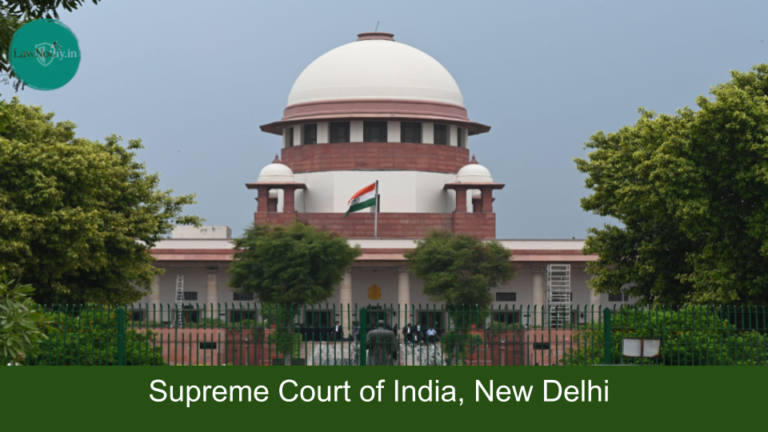
New Delhi : The Supreme Court of India has held that High Courts cannot quash cheque dishonour proceedings at the threshold by conducting a pre-trial enquiry into disputed facts, particularly when a statutory presumption under Section 139 of the Negotiable Instruments Act, 1881 operates in favour of the complainant. Such presumption, the Court clarified, can be rebutted only through evidence led during trial.
A Bench of Justices Manoj Misra and Ujjal Bhuyan delivered the ruling on December 19, 2025, while allowing an appeal filed by M/s Sri Om Sales against an order of the Patna High Court that had quashed proceedings under Section 138 of the NI Act.
The case arose from a complaint alleging that the first respondent had taken delivery of goods and issued a cheque dated March 4, 2013, for ₹20 lakh towards payment. The cheque was dishonoured twice due to insufficient funds. After issuance of a statutory demand notice and denial of liability by the respondent, the complainant approached the Magistrate, who took cognizance and summoned the accused.
The respondent then invoked the inherent jurisdiction of the Patna High Court under Section 482 of the Code of Criminal Procedure, 1973. By its order dated June 20, 2019, the High Court quashed the complaint, holding that the cheque had not been issued in discharge of any legally enforceable debt or liability.
Setting aside this order, the Supreme Court held that the High Court had exceeded its jurisdiction by examining the defence version and undertaking an enquiry into whether the cheque was issued towards discharge of liability. The Court emphasised that once a complaint discloses the essential ingredients of an offence under Section 138, courts at the pre-trial stage are confined to examining whether a prima facie case is made out.
The Bench reiterated that Section 139 of the NI Act creates a mandatory presumption in favour of the holder of the cheque, and questions as to the existence or otherwise of liability are matters of evidence to be tested during trial. Such disputed questions of fact cannot be decided in proceedings under Section 482 CrPC, except in rare cases where continuation of prosecution would amount to an abuse of process.
Relying on precedents including Maruti Udyog Ltd. v. Narender, Rangappa v. Sri Mohan, Rajeshbhai Muljibhai Patel v. State of Gujarat, and Rathish Babu Unnikrishnan v. State (NCT of Delhi), the Court reaffirmed that statutory presumptions under the NI Act cannot be diluted through pre-trial scrutiny of evidence.
Allowing the appeal, the Supreme Court restored the criminal complaint to the file of the concerned Magistrate for adjudication in accordance with law, while making it clear that it had expressed no opinion on the merits of the defence.
The ruling reinforces the settled position that cheque dishonour complaints should ordinarily proceed to trial, where the accused may rebut statutory presumptions through legally admissible evidence.
Case Title:
M/s Sri Om Sales v. Abhay Kumar @ Abhay Patel & Anr., Criminal Appeal No. 5588 of 2025 (arising out of SLP (Crl.) No. 8703 of 2019)