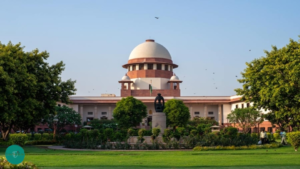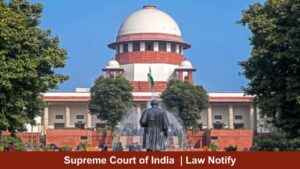
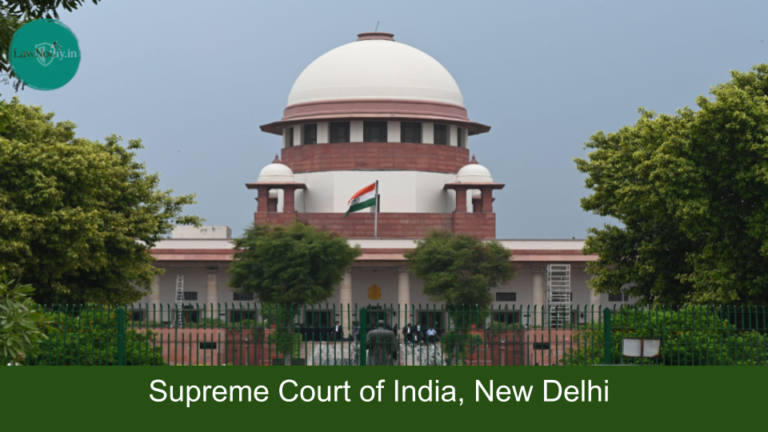
The Supreme Court of India has dismissed an arbitration petition filed by Balaji Steel Trade under Section 11(6) read with Section 11(12)(a) of the Arbitration and Conciliation Act, 1996. The firm sought the appointment of a sole arbitrator in India for a composite arbitration involving multiple contracts. The bench, comprising Justices Pamidighantam Sri Narasimha and Atul S. Chandurkar, ruled that the primary agreement between the parties established Benin as the juridical seat, which excludes the jurisdiction of Indian courts under Part I of the Act.
The conflict stems from a Buyer and Seller Agreement (BSA) dated June 6, 2019, along with an Addendum dated January 9, 2021, executed between Balaji Steel Trade and Fludor Benin S.A. The agreement included an arbitration clause requiring arbitration to be conducted in Benin. The Addendum specified that the agreement would be governed by Benin law.
Balaji Steel Trade argued that later Sales Contracts with Vink Corporations DMCC and High Seas Sales Agreements with Tropical Industries International Pvt. Ltd., both containing clauses providing for arbitration in New Delhi under the Indian Act, had effectively novated the original arbitration clause. The firm also invoked the group of companies doctrine to bring all parties into a single arbitration.
The Supreme Court rejected these arguments, holding that the BSA was the central agreement and that later contracts were limited to specific shipments and could not override the dispute resolution framework of the original agreement. The Court clarified that the matter qualifies as an international commercial arbitration under Section 2(1)(f) of the Act, and since the seat is outside India, Section 11 jurisdiction does not apply.
The Court also applied the principle of issue estoppel, observing that the Delhi High Court had already dismissed a similar plea in November 2024, determining that the contracts were separate and carried distinct arbitration clauses. Since the issues were identical, Balaji Steel Trade could not reopen them under a different statutory provision.
Significantly, the arbitration proceedings in Benin had already concluded with a final award issued on May 21, 2024. The Court found that allowing a parallel arbitral process in India would undermine the finality of arbitration.
On the group of companies doctrine, the Court reiterated that mere corporate affiliations do not bind non-signatories without clear evidence of consent to arbitrate.
The petition was accordingly dismissed.
Case Information
Case: Balaji Steel Trade v. Fludor Benin S.A. & Ors.
Citation: 2025 INSC 1342
Court: Supreme Court of India, Civil Original Jurisdiction
Date: November 21, 2025
Arbitration Petition No.: 65 of 2023
Counsel:
For Petitioner: Mr. Devadatt Kamat, Senior Counsel, with Ms. Shruti Sabharwal, Mr. Nishant Doshi, and team
For Respondent No. 1: Mr. Nakul Dewan, Senior Counsel, with Mr. Susshil Daga, Mr. Pallav Mongia, and team
For Respondent No. 2 and 3: Respective counsel