 1112
1112 3
3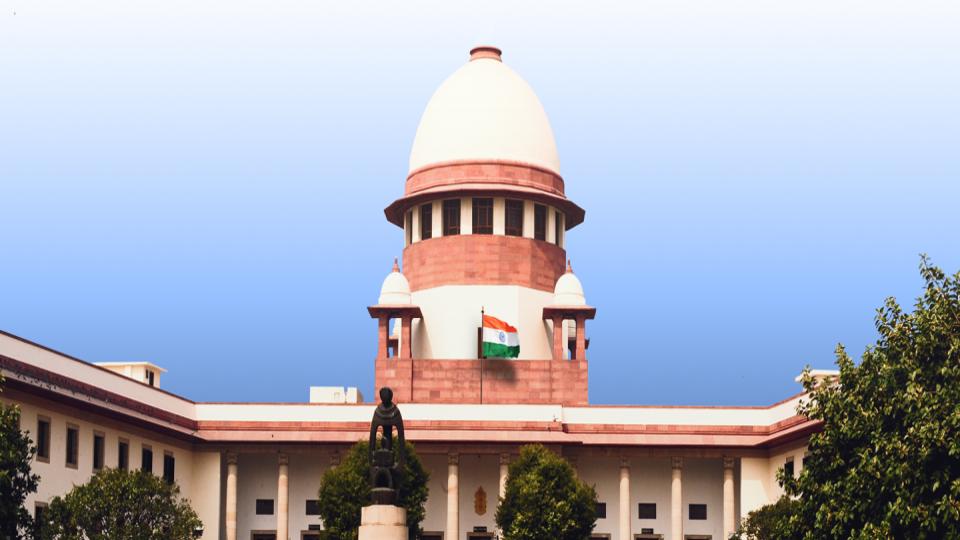 4
4 5
5 6789
6789 10
10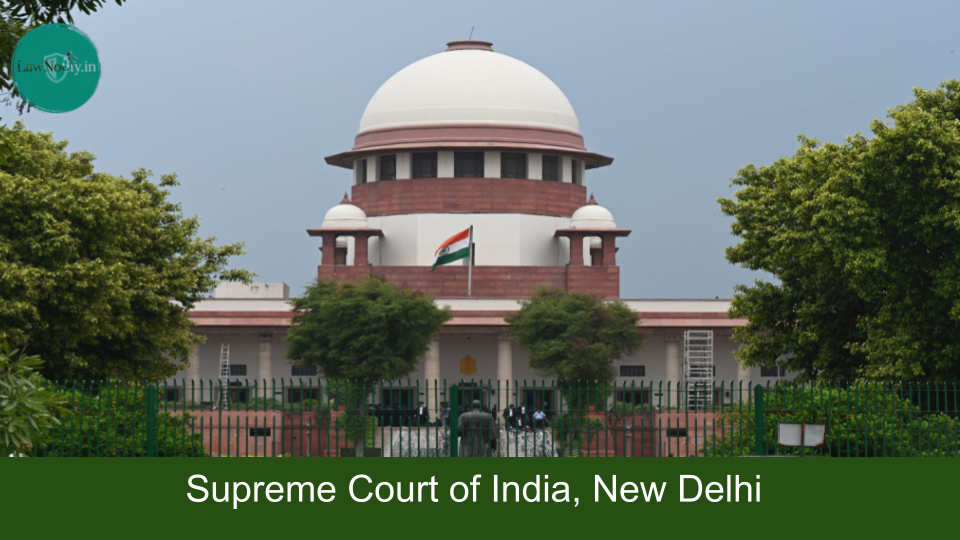
The Supreme Court on Thursday declined to lay down nationwide guidelines for crowd management at political rallies and other large public gatherings, holding that such issues primarily fall within the executive and administrative sphere and are better addressed by subject-matter experts and law enforcement agencies than through judicial directions.
A Bench comprising Chief Justice of India Surya Kant, Justice Joymalya Bagchi and Justice Vipul Pancholi passed the order while hearing a public interest petition filed under Article 32 of the Constitution. The plea sought pan-India directions to prevent stampede-related deaths at political events, religious congregations and mass gatherings.
The petitioner argued that a large number of stampede deaths were avoidable and resulted from systemic regulatory failures. Counsel submitted that nearly 4,000 people had lost their lives in stampede incidents over the past two decades, attributing the recurring tragedies to the absence of a comprehensive national policy, lack of standard operating procedures and even the absence of a statutory or regulatory definition of the term “stampede”. This regulatory vacuum, it was contended, led to ad hoc crowd control measures, weak inter-agency coordination and uneven enforcement across states.
The Bench, however, expressed serious reservations about the feasibility and enforceability of court-mandated norms. It cautioned that courts must be circumspect in issuing directions that may be incapable of effective implementation on the ground or prove unworkable in real-world situations.
The Court questioned whether it could realistically impose conditions capable of uniform compliance across diverse factual scenarios. Referring specifically to political rallies, the Bench noted that while administrative authorities may regulate protests by designating venues and ensuring minimal disruption to public order, it would be virtually impossible for courts to mandate numerical caps on attendance. It also raised concerns about how authorities could respond when crowds far exceeded a venue’s capacity, highlighting the limits of judicial oversight in dynamic crowd situations.
Counsel for the petitioner clarified that the reliefs sought were not aimed at imposing rigid numerical ceilings but at establishing baseline safety benchmarks through standardised operating procedures. He pointed out that some states, such as Tamil Nadu, had notified guidelines for political rallies, while others had no formal framework, resulting in uneven public safety standards.
The Bench remained unconvinced that such policy formulation could be judicially directed. At the same time, it acknowledged that limited regulatory measures, such as earmarking designated protest zones and ensuring crowd regulation to protect vulnerable groups including senior citizens, schoolchildren and hospital patients, were constitutionally permissible and administratively desirable.
Recording the submissions, the Court noted that the petition sought directions to the Union government and the Election Commission of India to frame mandatory crowd control norms, create a centralised digital platform to regulate political rallies nationwide, and institute a National Crowd Management and Safety Code incorporating real-time surveillance, risk assessment protocols and modern technological interventions.
The Bench observed that the substantive reliefs sought were essentially in the nature of policy formulation, an area traditionally reserved for the executive under the doctrine of separation of powers. Courts, it said, should refrain from entering the policy domain unless there was a clear constitutional or statutory vacuum of the kind addressed in exceptional cases such as Vishaka or Prakash Singh.
Accordingly, the Supreme Court declined to issue mandatory directions and disposed of the petition, while granting the petitioner liberty to submit representations to the Union government and the Election Commission for consideration.
The petitioner stated that his extensive public life and first-hand exposure to the aftermath of stampede incidents had prompted the litigation. He claimed to have witnessed deaths caused by asphyxiation and overcrowding, aggravated by the absence of medical facilities, clear signage, trained marshals and effective police deployment.
The plea also highlighted the broader civic impact of unregulated rallies and roadshows, alleging routine obstruction of ambulances, delays in medical emergencies, disruption of examinations and widespread inconvenience to commuters missing flights and trains. It argued that public roads, statutorily meant for transportation, were frequently appropriated for political events without accountability, endangering public safety and violating citizens’ right to free movement under Article 19(1)(d).
Among its principal prayers, the petition sought the formulation of a National Crowd Management and Safety Code, mandatory pre-event registration and safety certification, stringent venue audits, a ban on rallies on roads narrower than four lanes, and confinement of political events to designated grounds and maidans. It also sought enhanced supervisory powers for the Election Commission during pre-election and post-election periods, including authority to prohibit unsafe gatherings and impose penal consequences for violations.